If you wanted to know how to prevent a pregnancy, you talked to your friends or you talked to your mother, but you certainly didn’t go talk to your doctor about it.
When Canada enacted its first Criminal Code in 1892, birth control became illegal. It was now against the law to sell, distribute, and advertise any “medicine, drug or article” intended to prevent a pregnancy or cause an abortion. It was even illegal to provide birth control information.
Yet the law did not discourage everyone. Some women found creative ways of taking control of their own fertility.

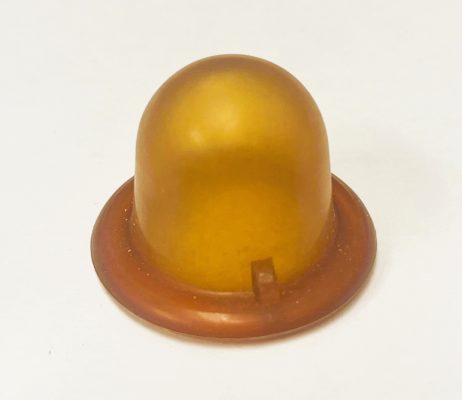
Women who were sexually active, but did not want to become pregnant, used a variety of practices. These methods were passed down from generations of women. This included withdrawal, extending breastfeeding after a baby, pessaries, and homemade douches, suppositories, spermicides, and potions. Sadly, some of these methods proved to be ineffective, and, in some cases, dangerous.
Although selling birth control was illegal, it was still available. It was just hidden in plain sight. People used code words like “feminine hygiene” or “marriage hygiene” for birth control. It was often sold in places where women commonly shopped.
Over the decades, it became easier for married women to access birth control. Especially for married women who had private doctors, money, and knowledge of these services. Also, authorities usually didn’t hassle married women who attended early birth control clinics. As Dr. Marion Powell explained, “those women who were fortunate enough to have a physician who was sensitive to their family planning needs were given a reliable method of birth control such as the Pill, IUD or diaphragm”.
![A yellowed page from a vintage Eaton's catalog. The background is light brown with small black text arranged in columns consisting of product listings and prices. In the center of the page, a bold black arrow points to a highlighted section with a black border, showcasing Rendall's [RENDELL'S] pessaries for 60 cents.](https://www.histoiresdecheznous.ca/v3/dr-marion-powell-canada-birth-control_regulation-des-naissances/wp-content/uploads/sites/168/2025/04/eatons1907-fallwinter-pg298-scaled.jpg)

Unfortunately, not all women had access to safe and effective birth control. Women who were young, unmarried, and had limited financial resources did not.
Dr. Powell believed that this system was unfair. Birth control needed to be legalized and available to everyone in Canada.