Access to abortion services is an indicator of a society’s attitude toward women and their right to reproductive choice.
While abortion and birth control are different, they are both part of reproductive health care.
Dr. Marion Powell believed that safe abortions should be available to all women in Canada. She also stressed that it should not be a substitute for contraception.


When birth control was legalized in Canada in 1969, abortion laws also changed. Abortion was now legal in Canada under special circumstances. It was called therapeutic abortion. A woman could legally end her pregnancy at an accredited hospital by a qualified medical practitioner if she met the strict criteria set out by the hospital’s therapeutic abortion committee.
Some were quick to point out that the therapeutic abortion system did not provide equal access to all women. One of its most vocal critics was Dr. Powell.
As she explained, “I feel such committees are often a farce. There is no appeal to their decision”. The wait times for a decision were lengthy. There were too few accredited hospitals in some parts of Canada. Some doctors refused to refer women to hospitals that offered therapeutic abortions.
In 1975, Dr. Powell was appointed to a three-person committee by the Canadian government to study abortion law. The committee released its findings in the Report of the Committee on the Operation of the Abortion Law (also called The Badgley Report).
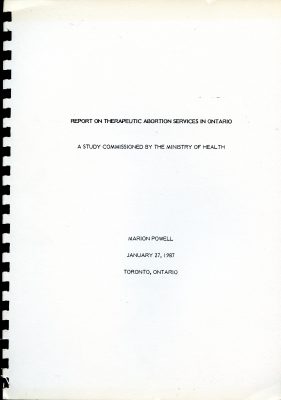
In 1986, Dr. Powell was asked by the Ontario government to study abortion services in the province. Her Report on Therapeutic Abortion Services in Ontario (also called The Powell Report) was released in January 1987.
Dr. Powell would help change abortion law in Canada. Her reports influenced the Supreme Court’s decision that struck down Canadian abortion law on January 28, 1988.