

During the last years of the Second World War, a small number of Chinese Canadians were sent to India for one of the most challenging paramilitary training programs ever designed. These men were being prepared for clandestine missions behind Japanese lines—missions in which failure meant torture and death, and where survival depended on physical strength, mental resilience, and absolute silence.
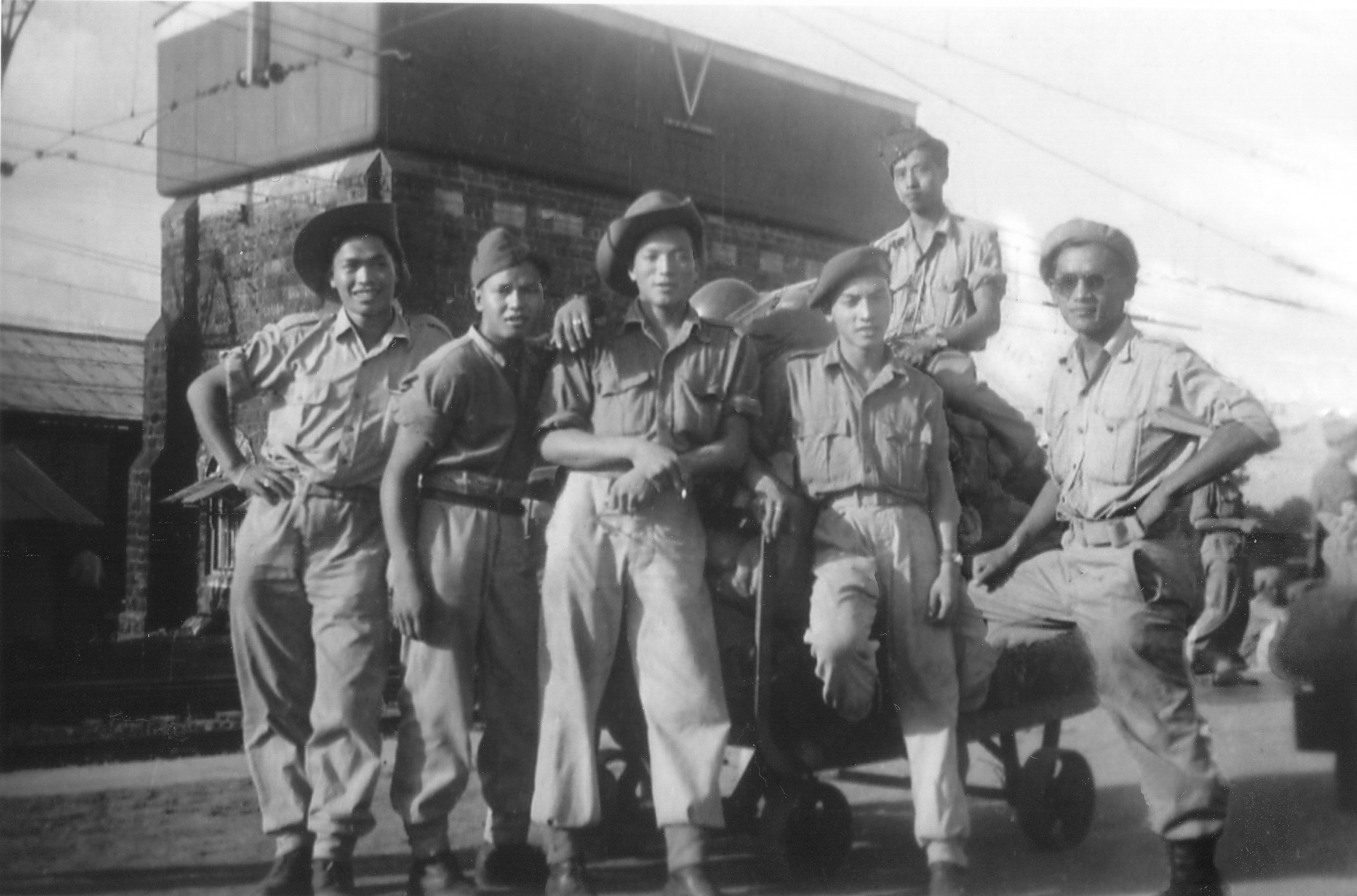
The SOE’s Eastern Warfare School in India, called E.W.S.(I) — located primarily at Poona — created a curriculum specifically for the jungles, rivers, villages, and frontiers of Southeast Asia. The result was a training system far harsher and more unforgiving than what most modern audiences imagine when they think of “special forces.” The files make one thing clear: very few people could have endured this.
Why was this program created?
By 1944, Japan occupied vast areas of Southeast Asia. The SOE needed small, highly trained teams who could operate far from friendly support—destroying supply lines, gathering intelligence, instructing local resistance, sabotaging infrastructure, and vanishing before being detected. The risk of capture was omnipresent. Students were not only trained to survive the environment; they were trained knowing that one mistake could lead them into the hands of the Kempeitai (Japanese Secret Police) or Japanese front-line troops, whose treatment of prisoners was notoriously brutal.
What Trainees Had to Master
As Real As Possible
At EWS(I), the instructors emphasized realism:
“…all training must be carried out to the highest possible standard…schemes and exercises were made as realistic as possible, with the use of live ammunition and explosives.”
Students were frequently startled by simulated ambushes, live-fire exercises, and the unpredictable introduction of “enemy forces” into their training scenarios. The goal was simple: if something could go wrong in the jungle, they must practice it first at Poona.
Would you have survived?
The SOE program required:
- Hunger tolerance
- Sleep deprivation
- Mental resilience under constant surveillance
- The ability to learn complex skills quickly
- Adaptability to tropical disease, insects, and climate
- Functioning under the knowledge that failure meant death
- Cultural sensitivity and emotional control during covert interactions with civilians
- Leadership under fear, not comfort
This course combined extreme physical hardship with clandestine work, improvisation, and the omnipresent threat of capture.
A Rare and Demanding Path
Records show that SOE training in India was not glamorous. It was dirty, exhausting, punishing work carried out at speed and with uncompromising standards. Only a small number of candidates successfully completed the program; those who did became some of the most capable operatives in the Allied war effort.
Completing the course at EWS(I) Poona—the “basic” school—was an achievement few could manage. Those who passed were then sent to even more specialized and punishing phases: parachute qualification at ME89 (Jessore)(Military Establishment 89); advanced wireless and clandestine communications at ME25 (Ceylon); and finally to ME90, where only the strongest candidates were formed into Patrol Liaison Teams (PLTs) for deployment behind Japanese lines.
This training pathway makes clear that these men were not simply well-prepared—they were the elite. Each stage stripped away all but the most resilient, adaptable, and mentally disciplined individuals. Surviving Poona alone required uncommon fortitude; reaching the PLTs meant belonging to one of the most highly trained and exceptional groups of operatives produced anywhere in the Allied war effort. People who did not make it were Returned To Unit (RTU) to become ordinary soldiers.