…a lot of these light build Chinese are probably equally as tough for military purposes as a much heavier white man.
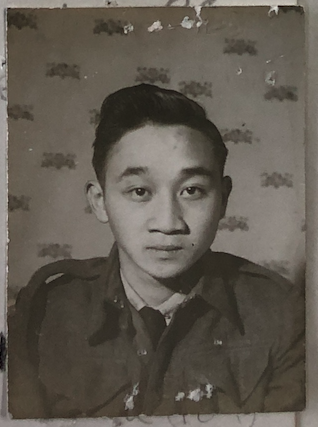
Billy Kong Lee was a second generation Canadian of Toisanese descent. He was born in Winnipeg in 1923, where his parents ran the Navin Café, serving a working class neighbourhood near the CPR. His father, Kin Sow Lee (1888-1967), worked for seventeen years before he was able bring his family together by paying $600 in head taxes. Billy’s mother, Shee Mark (1889-1929), accompanied by two daughters, joined her husband in 1920. The family did not stay in Winnipeg. When Billy was only five, his mother died, leaving Kin Sow with eight children under the age of eight. Perhaps seeking help to raise his family, Kin Sow moved to Vancouver’s Chinatown to work as a cook. Billy grew up in Vancouver and attended Strathcona Elementary, Vancouver Technical, and the Grandview High School of Commerce at First and Commercial. When he enlisted at 21, he had worked as a cook, riveter, and waiter.
Small in Stature, Strong in Will
Lee was 5’3 ½” and weighed 112 lbs. The average size of a Canadian Chinese man had limited who could enlist, but they had supporters in the SOE. Lee joined the Royal Canadian Engineers. He enlisted as a Sapper, the engineer equivalent of Private, and through combat service and attachment to the Special Operations Executive advanced to Sergeant. His promotion reflected demonstrated leadership, technical competence, and trustworthiness in high-risk special operations rather than routine seniority.
Special Operation Executive judged him “a good type for wireless transmitter training” and sent him to undergo basic training with 24 others in Chilliwack, B.C. as part of the first draft of Chinese Canadians.
You will be glad to know that London are very pleased indeed with the first draft of Chinese. They consider them very high standard and have already dispatched the majority to India by air.
Intense Survival Training
Sapper Lee, along with twenty other Canadian Chinese, arrived in India on 4 Apr 1945. They were sent to Poona, on Kharakvasla Lake, to train at the Eastern Warfare School, India, called EWS(I). Lee finished his training in four months and was promoted three ranks to Sergeant.
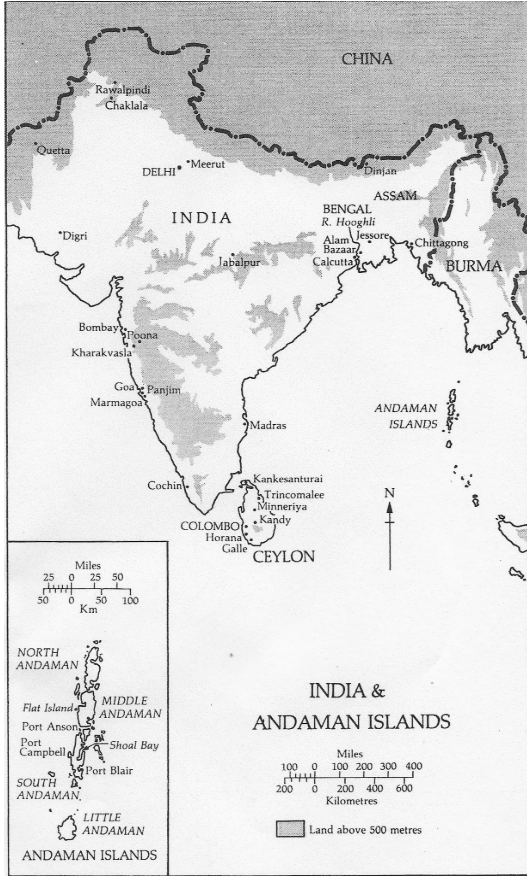
The courses were intense. The jungle course lasted three weeks and taught skills in cooking, first aid, and the uses of bamboo for shelter, trapping, and weaponry. The ten day marine course taught skills in basic navigation, beach landings, paddling, rescue work, boat handling (ex: canoes, dinghies, and “folboats,” or foldable boats), and how to tow supplies. Basic wireless transmitter training was thirteen weeks, with advanced training if the student showed aptitude for the work. A full course of wireless transmitter (W/T) training was expected to last 3-5 months on average. Speed and accuracy were tested often, in class and the field, with the goal of twenty words per minute. Men were also taught ciphers, codes, and machine maintenance. Paramilitary skills included workouts before breakfast, 2.5 hrs of ropework per week, demolitions, enemy intelligence, fieldcraft, map and compass reading, silent killing, and weapons. Unarmed combat included skills in boxing, kicking, knife handling, disarming, and prisoner handling. Over time, the school combined W/T with paramilitary, to create realistic training conditions.
Some students were chosen for training in industrial sabotage. This included lectures about industrial targets, practical demonstrations of destruction, and visits to local docks, power stations, and telecommunication grids. Students were graded on their ability to accurately assess the best method of target destruction.
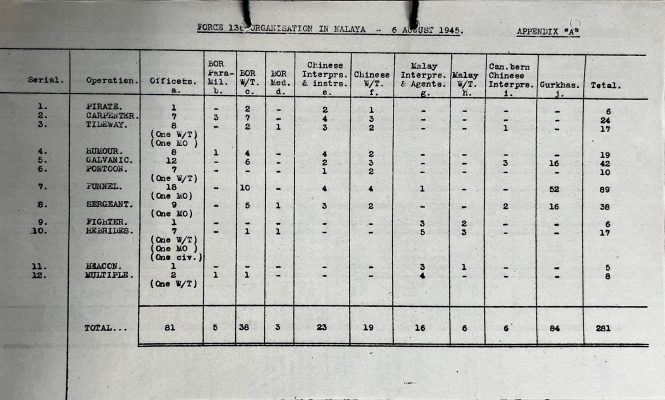
SOE planned for its teams to be trained and equipped. For every 100 men in Malaya, the equipment list was 54 x .30 carbine rifles, 42 Stens, 4 Brens, 2 PIATs, 1 anti-tank, 240 grenades, and 17 Browning pistols. Ammunitions were estimated to be (monthly) 6720 x .30 bullets, 7000 x 9 mm, 6720 x .303, 36 PIATs, and 240 grenades. Lee was an exemplary soldier, and was sent for advanced operational training at Ceylon.
Japanese Occupied Malaya
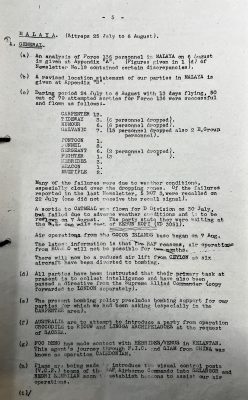
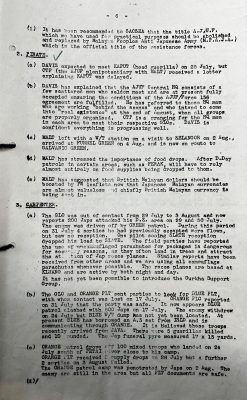
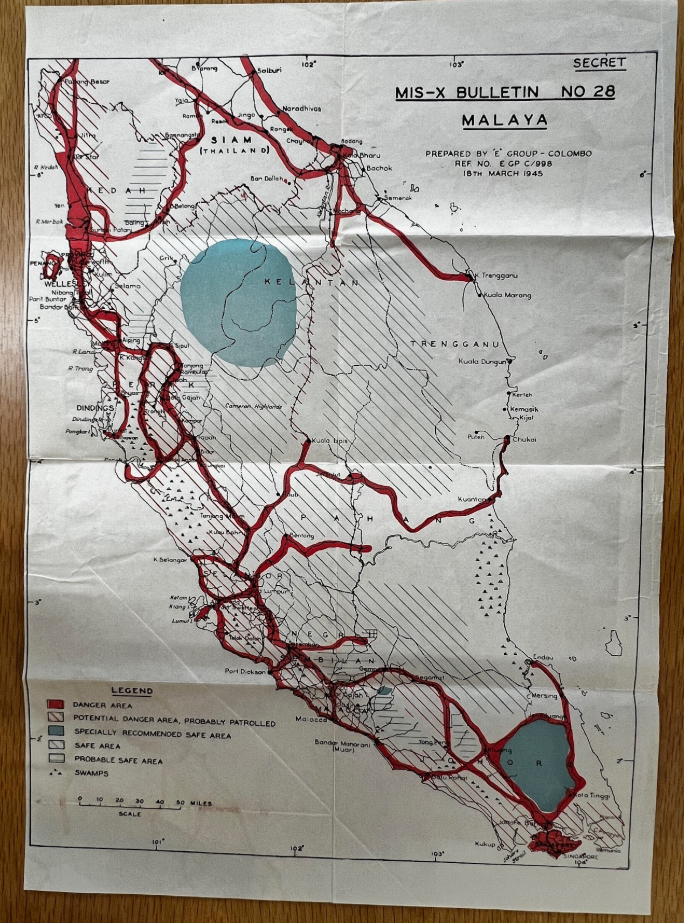
Sergeant Lee was the last Chinese Canadian to serve in Malaya, with Operation Snooper, a sub-op of Operation Carpenter. Operation Snooper’s goals were to provide wireless transmitter communications, find prisoner of war (POW) camps, suppress guerilla activity, and to prevent Japanese arms from being acquired by insurgents.
Sergeant Lee and his team parachuted into Johore on 24 Aug 1945, one week after cease fire was declared. At the time, there were over 77,000 Japanese troops in Malaya. From the drop, they worked their way to the Singapore causeway, where they met the commander of the Seventh Japanese Army, who surrendered. They were sent to the Prisoner of War camp at Changi, Singapore on 30 Aug 1945. On finding the camps unguarded, Sergeant Lee sent coded messages back to F136 HQ, requesting food and medicine. By September, there were 371 F136 in Malaya, nine of whom were Canadian Chinese. Force 136 was disbanded in January 1946 and the soldiers repatriated home.
Sergeant Billy Kong Lee, 64, died in 1988 and was buried in Lethbridge, AB.