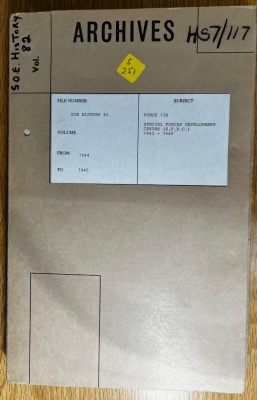
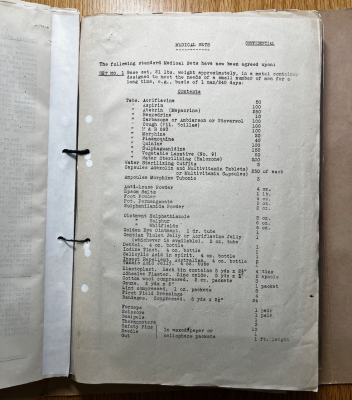
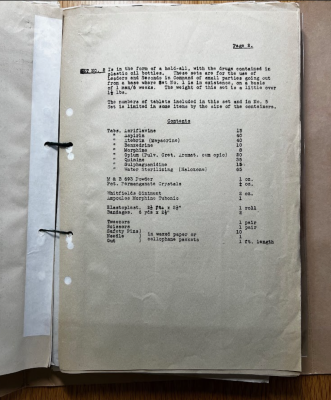
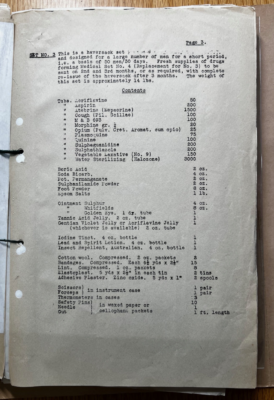
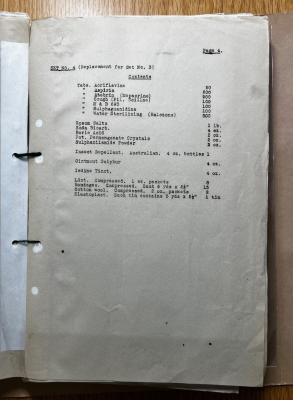
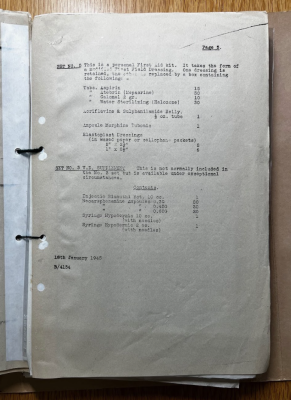
Working behind Japanese lines in Southeast Asia demanded a near impossible balance between stealth, survival, and supplies. Force 136 Patrol Liaison Teams carried everything on their backs as they moved through some of the world’s most dangerous terrain. The medical kit lists look dry on the page—quinine, sulphanilamide, morphine, iodine, bandages—but each item represented a life-or-death calculation about what might kill a man first: enemy fire, infection, disease, or exhaustion.
The big kits were built around the same fundamental threats: malaria, infected wounds, dysentery, snakebite, and traumatic injuries. Malaria alone shaped the fate of every operation. Quinine tablets were bulky, bitter, and absolutely essential. Without them, fever and delirium could end a mission within days. Too much, however, meant carrying excess weight when men were slipping through enemy patrol lines and climbing steep, wet jungle ridges.
The same tension applied to wound care. The home base kit, 21 lbs., included sulfa powders, antiseptic ointments, and dressings, but treating a deep cut or gunshot wound in the jungle was slow and painful even in ideal conditions. The haversack kit, 14 lbs, reflected this brutal reality: it held instruments, sutures, and even morphine ampoules – items that could save a life but dramatically increased both weight and the risk of breakage or loss.
No kit could prepare a patrol for everything. The jungle, the climate, and the enemy decided the rest.
In practical terms, no team could carry enough medicine for every danger. Patrols typically walked for weeks or months, often in monsoon conditions. By necessity, they gambled: they carried enough medication to deal with the most likely threats, hoping they would not encounter the rest. Malaria was nearly certain. Dysentery was common. Leech bites, festering ulcers, dental infections, and tropical fevers could disable even the strongest. Snakebites or bullet wounds were less predictable—but far more lethal.
The result was a constant trade-off between speed and preparedness. Too much equipment slowed a team to the point of danger—moving slowly made them easier to track, easier to corner, and, ultimately, easier to capture. Too little meant that even small injuries could become fatal. The Japanese maintained dense patrol networks, and capture meant torture or execution; Force 136 personnel understood that sickness could force them to stop, and stopping could mean death.
Despite careful planning, it was unlikely that any patrol carried enough medical supplies for a long or chaotic operation. Medicines spoiled in heat, bandages turned mouldy, and glass containers broke. Quinine ran out. Morphine, if carried at all, might amount to only a few doses. A look at the medical kits shows how planners tried to provide for every scenario, but the men in the field lived with the knowledge that the jungle, the climate, and the enemy often had other plans.