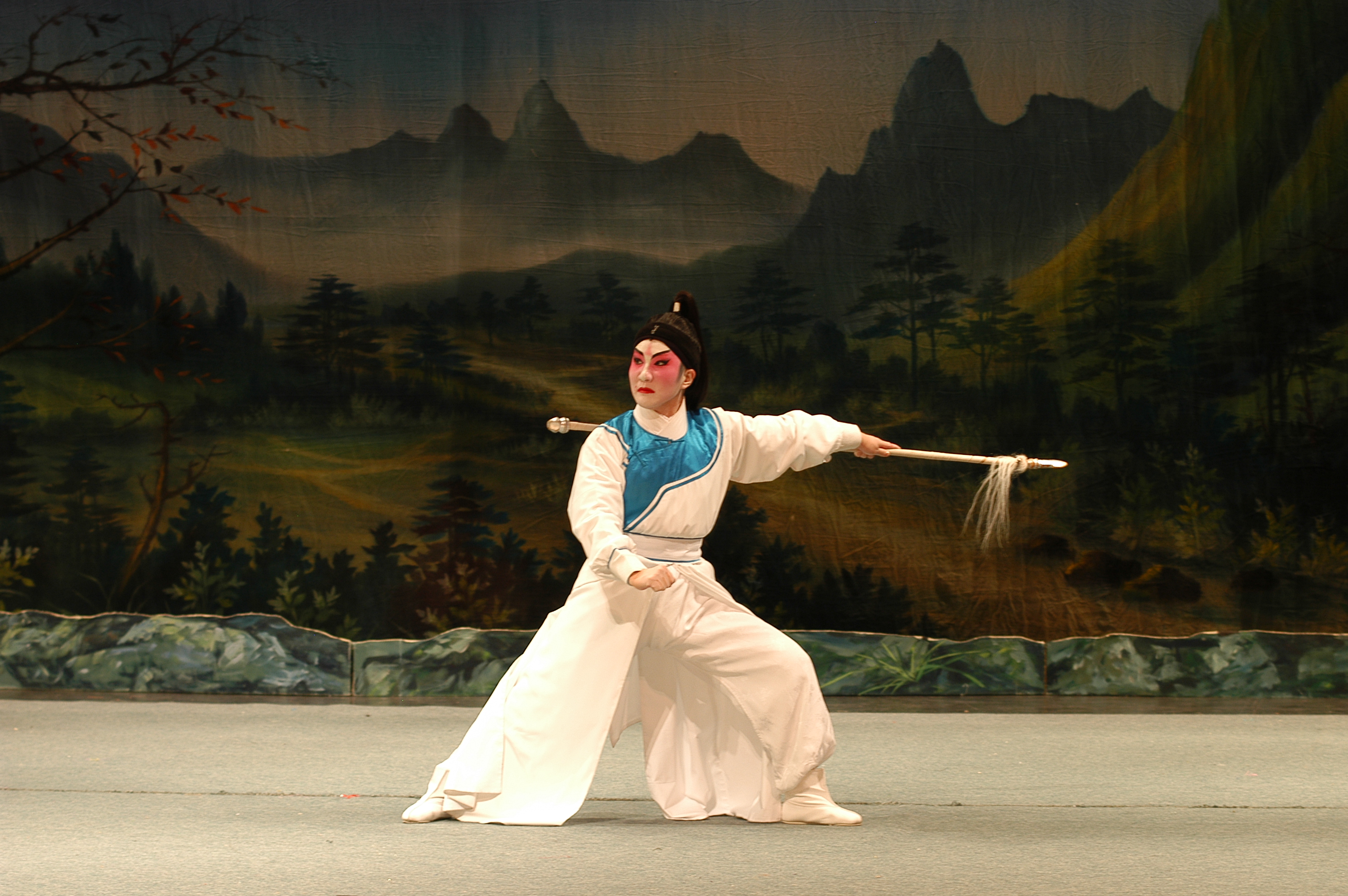
In Cantonese opera, much of the storytelling happens through the performers’ bodies, because the scenery and props are minimal. Meaning is conveyed through a highly codified language of movement, gesture, and posture. A character walking in a circle suggests a long journey, a raised whip signifies horseback riding, and flags evoke wind, fire, waves, or entire armies. Through this economy of gestures, performers transform an empty stage into palaces, battlefields, rivers, and landscapes for the audience.
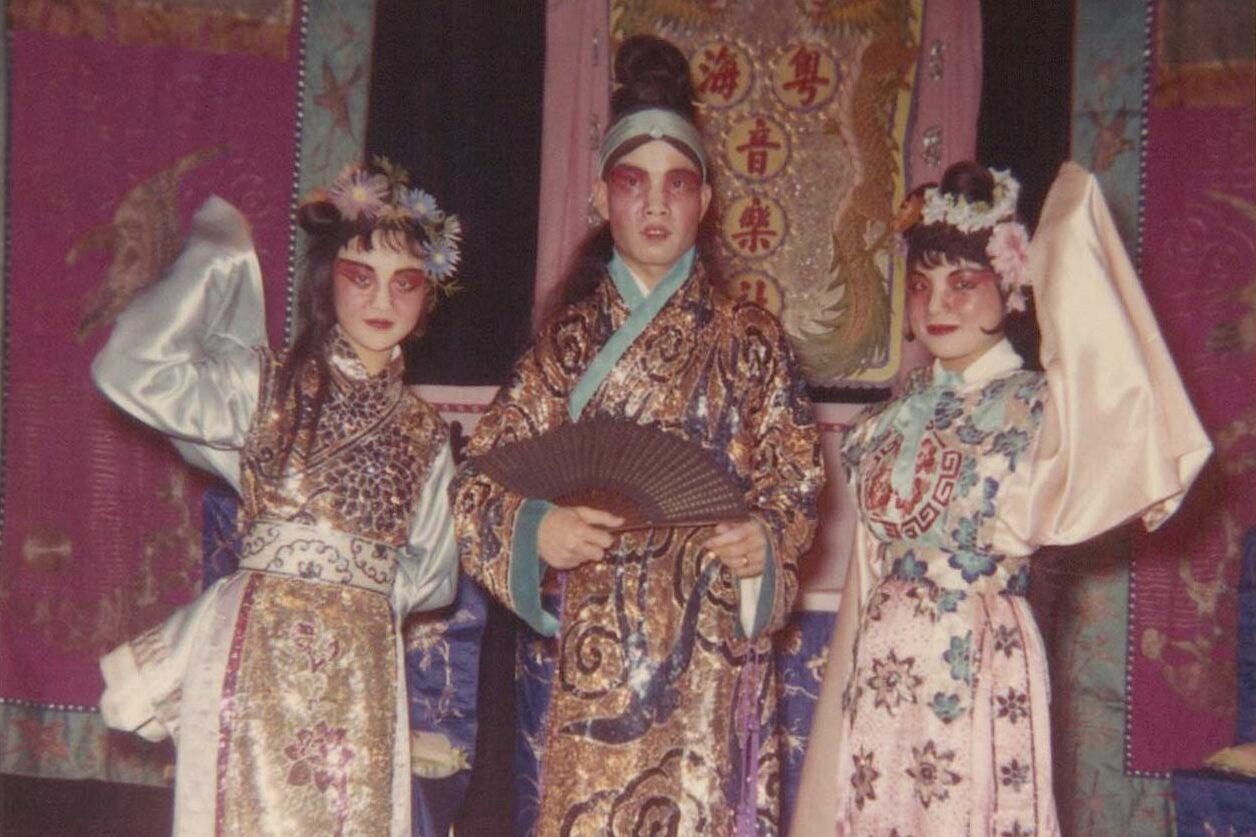
Different sleeve movements carry specific meanings:
A slow, circular sweep suggests sorrow, hesitation, or deep reflection
A sharp flick can signal anger, dismissal, or moral resolve
Dragging sleeves close to the body conveys grief or restraint
Extended, floating arcs express longing, elegance, or emotional release
Gesture and Character Type
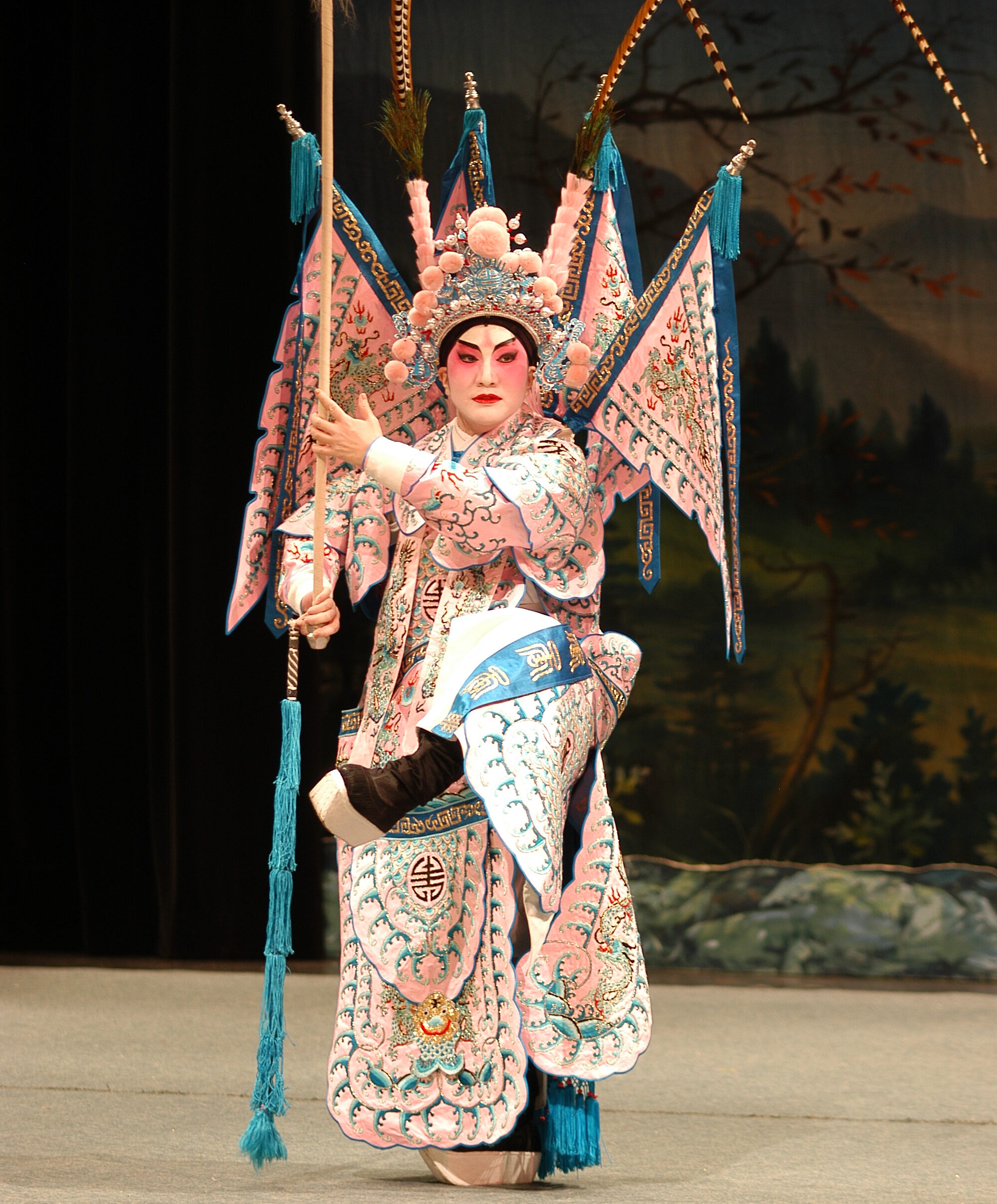
Gesture is closely tied to role type. Scholars move with restraint and elegance, generals with broad stances and commanding arm gestures, and clowns with exaggerated posture and facial expressions for comedic effect. Through these conventions, the audience understands who a character is before a single word is spoken.