

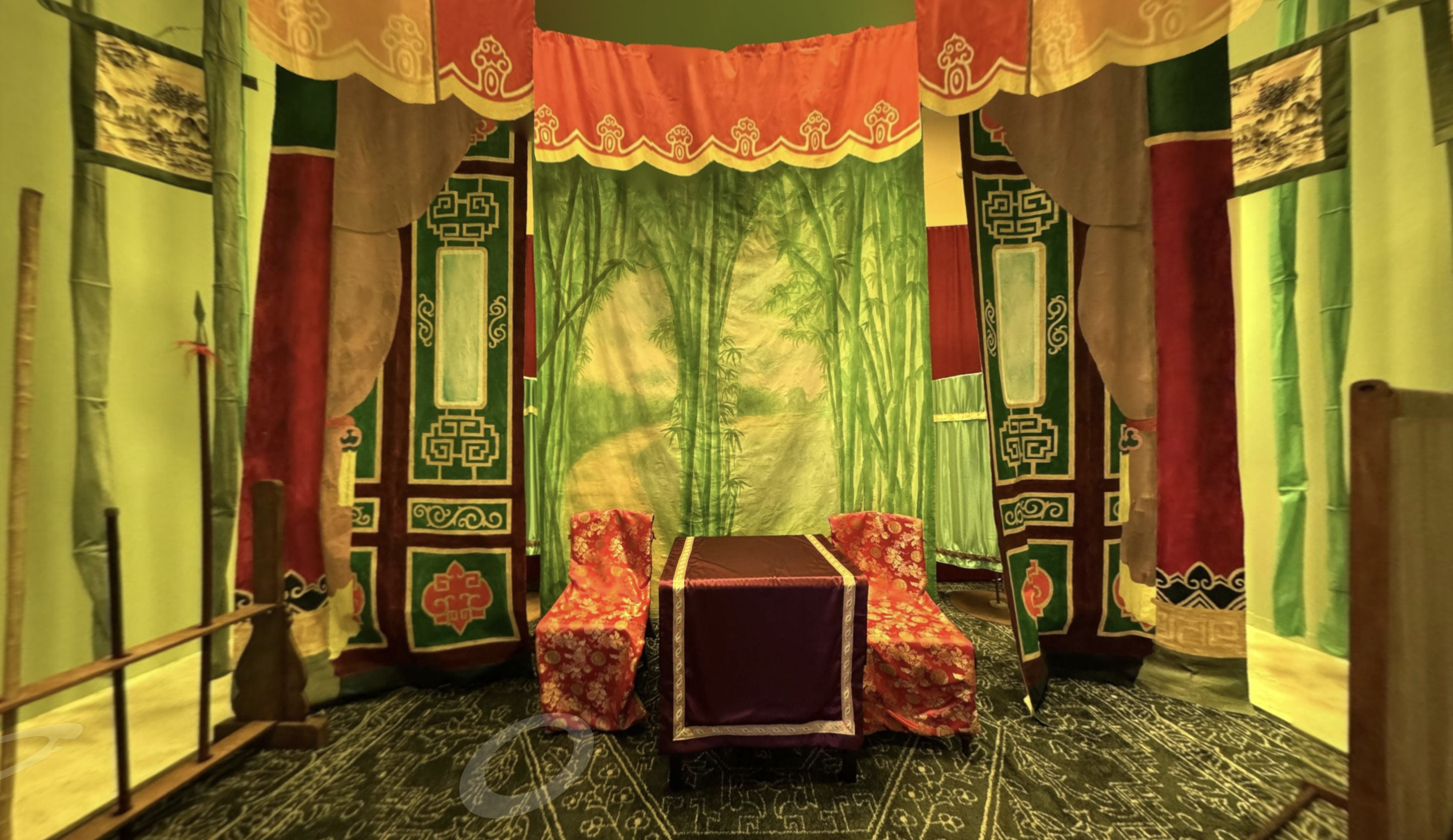
My interest in Cantonese opera began as a child, during weekends and school breaks at my paternal grandparents’ home. Cassette and VHS tapes played in the background while I played with my cousins, my grandfather read the Chinese newspaper, and my grandmother sewed garments for piecework. The falsetto voices, accompanied by strings and percussion, filled the house. Even today, hearing Cantonese opera connects me to them.
This exhibition began as a way to return to those memories and ask what Cantonese opera has meant, and continues to mean, within Chinese diasporic communities in Canada. Since the late 19th century, as Chinese migrants crossed the Pacific, they carried the stories, music, and performance practices of Cantonese opera with them. In North America, the form adapted more flexibly than in China. By 1915, female and male performers appeared together on some Canadian stages, before mixed-gender performance became common in parts of China.
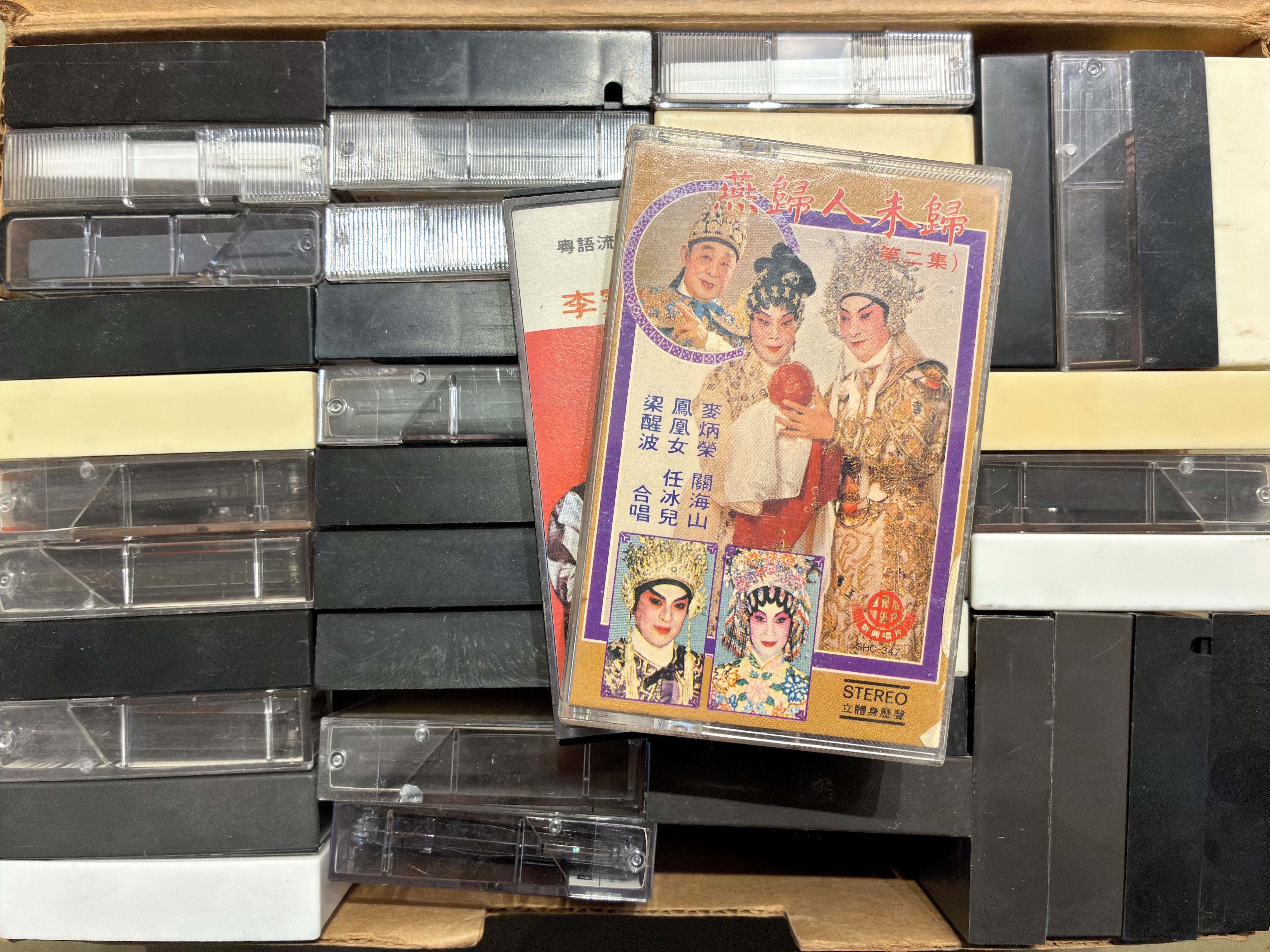
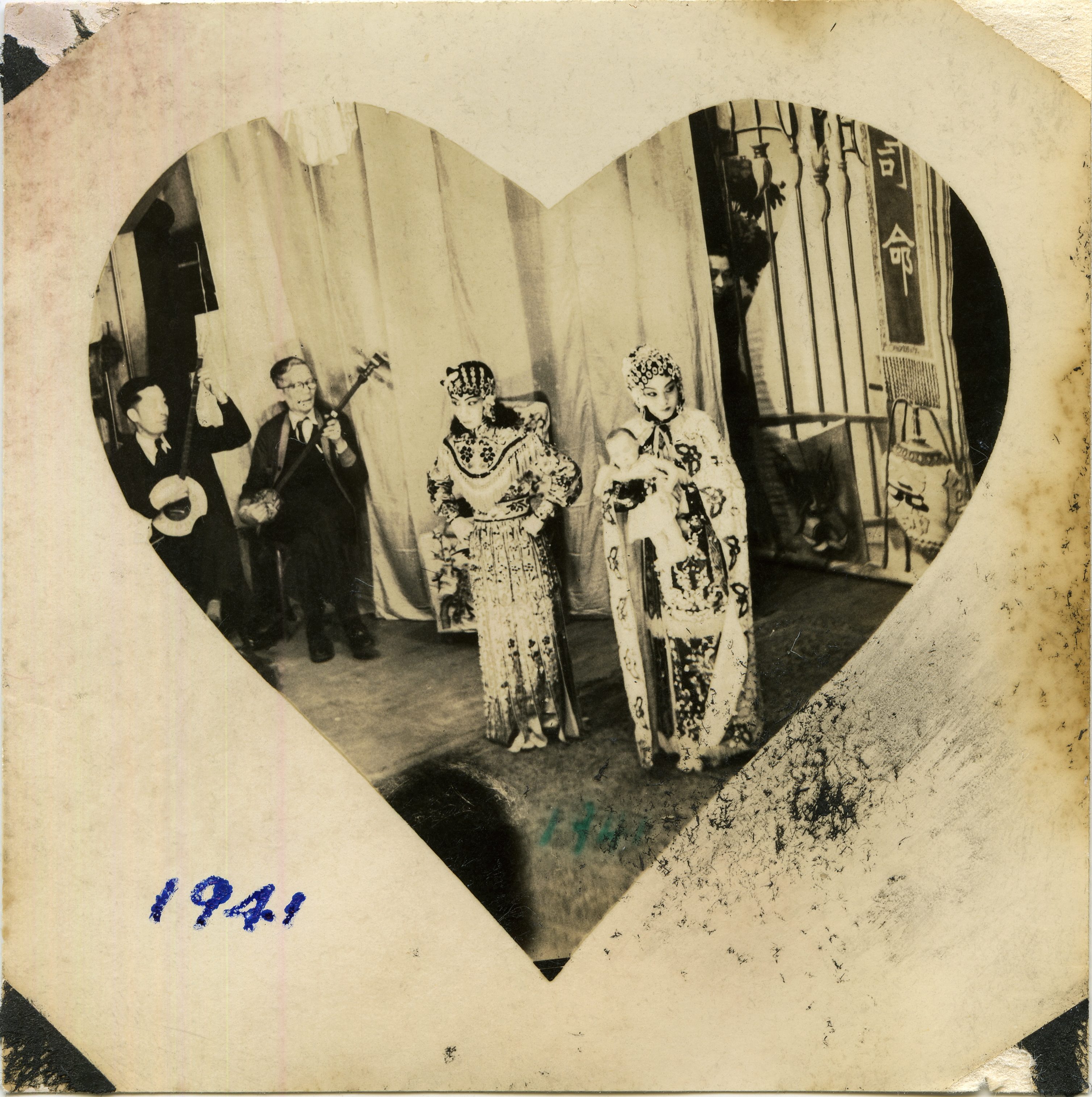
Cantonese opera is one of the major forms of Chinese opera, originating in Guangdong province. It is a highly stylized form of theatre, requiring mastery of singing (唱), speech (唸), acting (做), and martial arts (打). Using minimal props and movements, performers transform the stage into palaces, battlefields, or rivers. It is also deeply tied to spirituality and rituals, with performances often coinciding with festivals or religious celebrations.
In Canada today, Cantonese opera remains active and evolving. Performances continue to draw audiences, while classes introduce new generations to its traditions. Performers highlight movement, costumes, and dramatic action so that everyone, whether young or old, Cantonese-speaking or not, can follow the stories. This flexibility allows the art form to connect communities, pass on traditions to new generations, and maintain a sense of belonging within Cantonese-speaking communities across Canada.
This exhibition grew from my exploration of these traditions and from developing my installation for the 2024 Toronto Biennial of Art, Scent of Thunderbolts, a starting point to dive deeper into the rich history and ongoing life of Cantonese opera in Canada.
