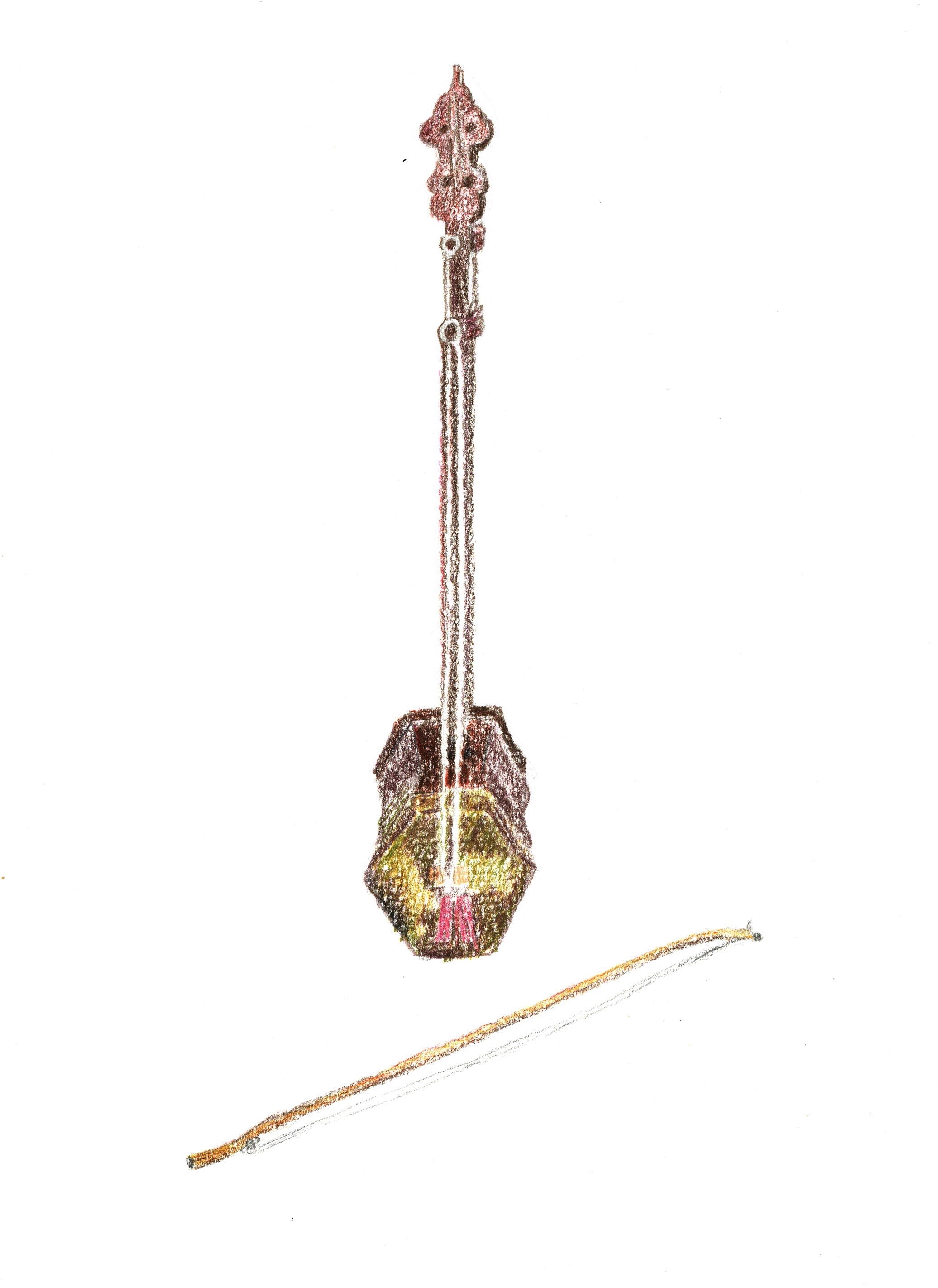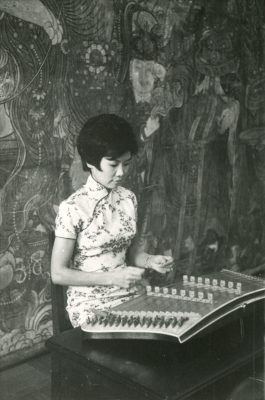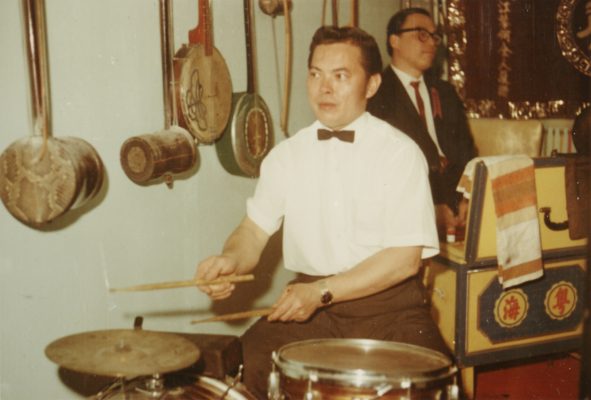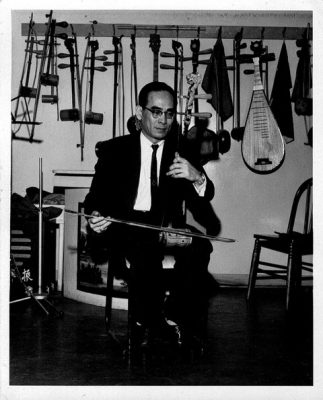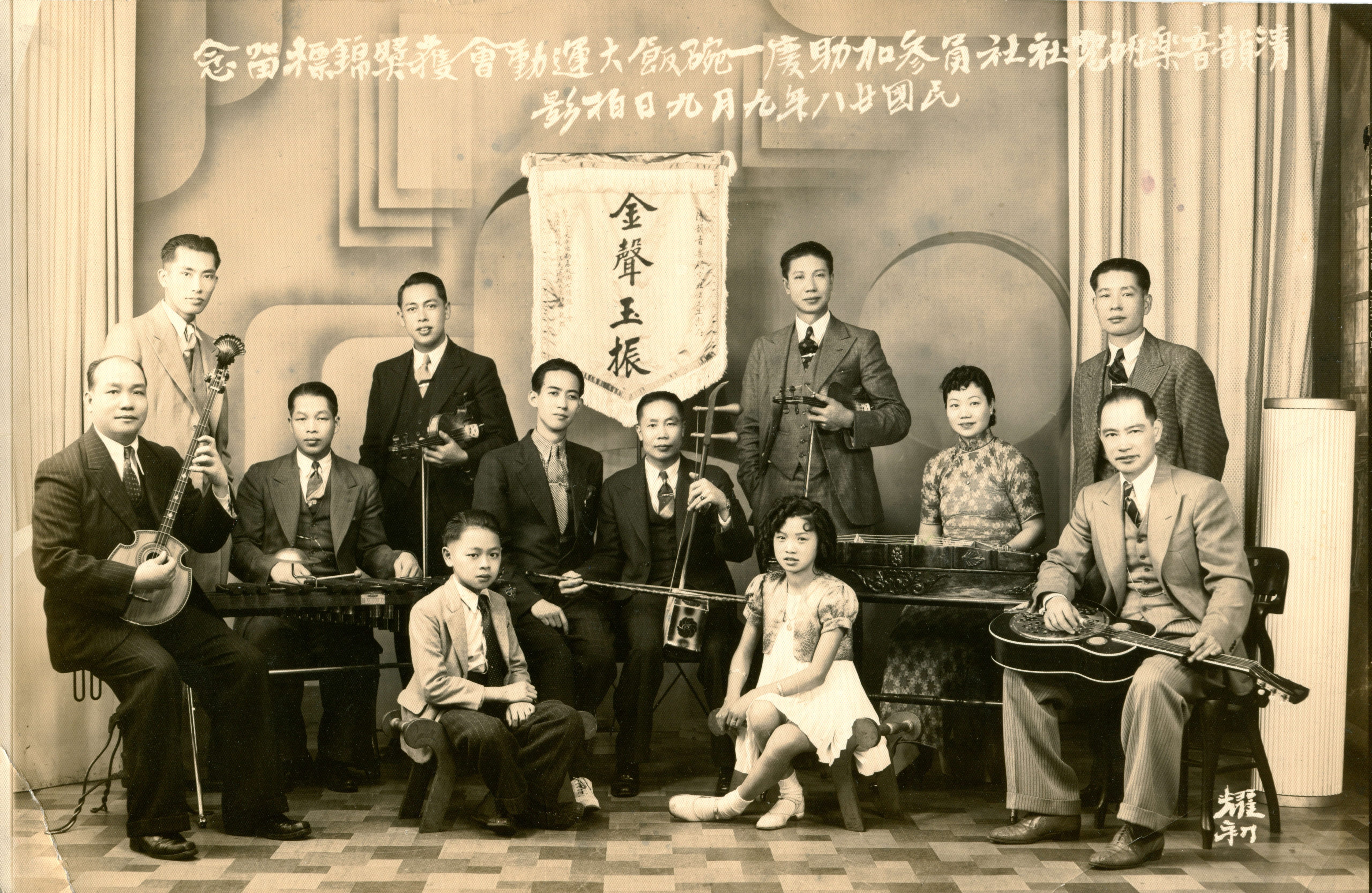
Traditionally, a full operatic performance features 10–20 musicians, though smaller ensembles performed independently of staged opera, allowing music clubs to flourish alongside the opera societies. In Canada, these played a vital role in sustaining Cantonese opera outside of the theatre, especially when full productions were infrequent or impractical. Groups like Vancouver’s Ching Won Musical Society performed not only operatic repertoire but also provided music for festivals, banquets, and community events.
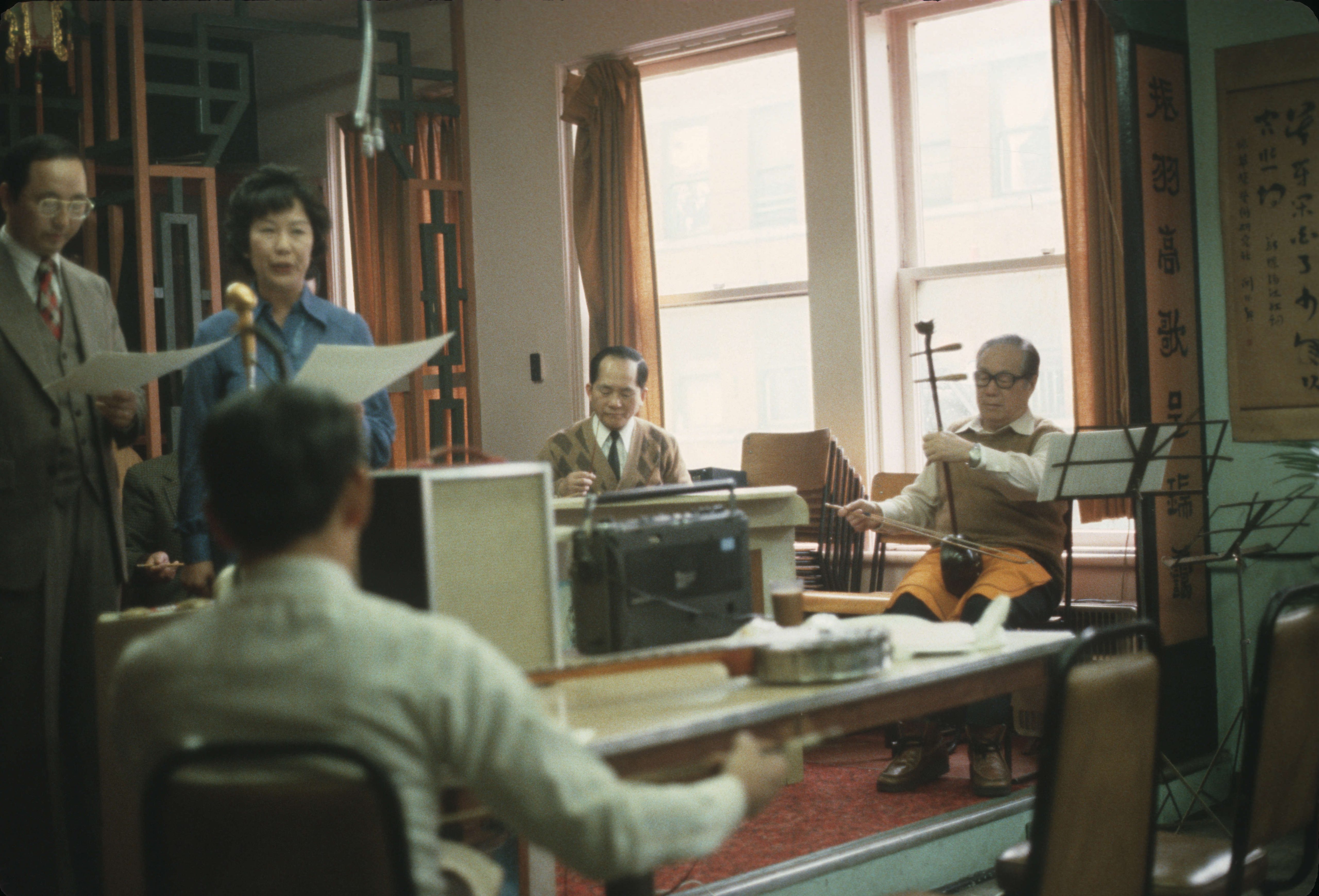
During performances, musicians are visible to the audience. They watch performers closely to adjust in real time and improvise within familiar musical patterns. This dialogue between actors and musicians gives Cantonese opera its energy and demonstrates the skill required from everyone onstage.
Since the 1920s and 1930s, Cantonese opera ensembles have incorporated from other musical traditions, such as violin, guitar, congas, and saxophone to expand the sonic palette and adapt to the availability of local musicians. Today, contemporary orchestras blend traditional instruments with electric guitars, keyboards, and other modern sounds. To engage new audiences, Cantonese opera has evolved to experiment with genres like jazz, pop, and even rap, while maintaining its signature melodic and percussive structures.
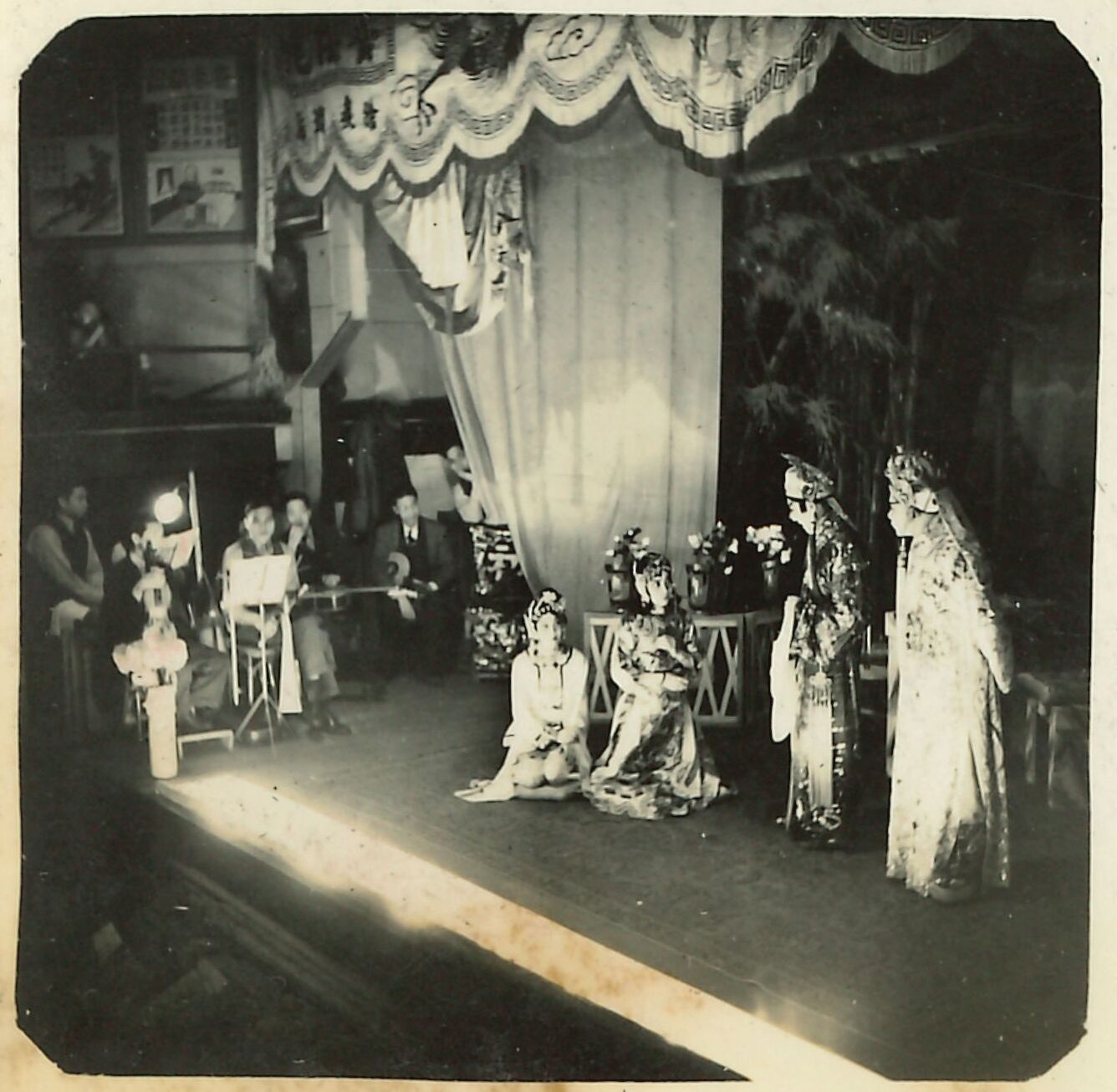
Instruments of a Cantonese Opera Orchestra
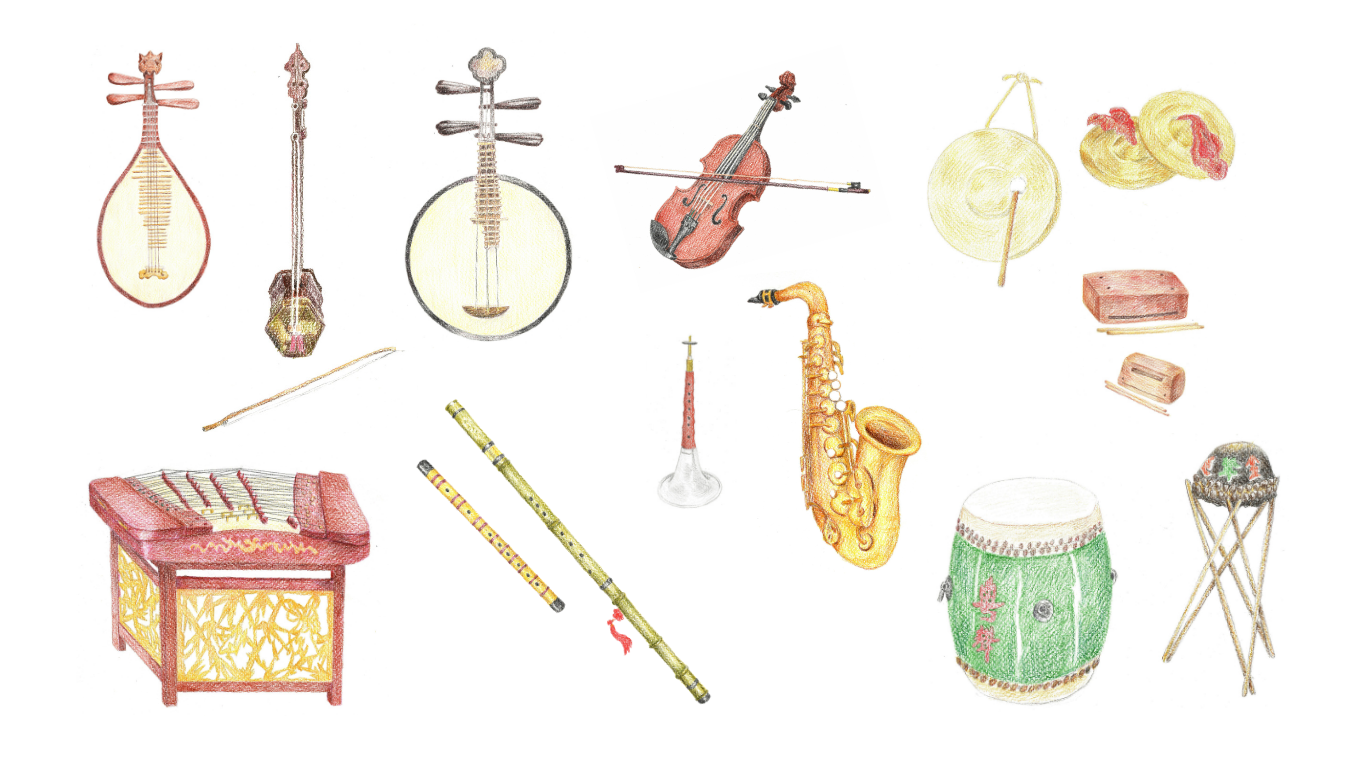
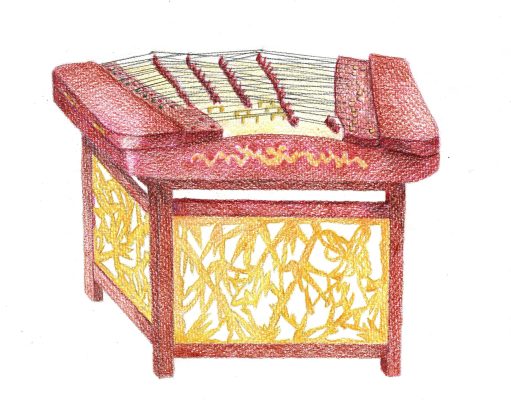
The Yangqin (揚琴) is a hammered zither. With a bright, resonant sound, it is a lead instrument.
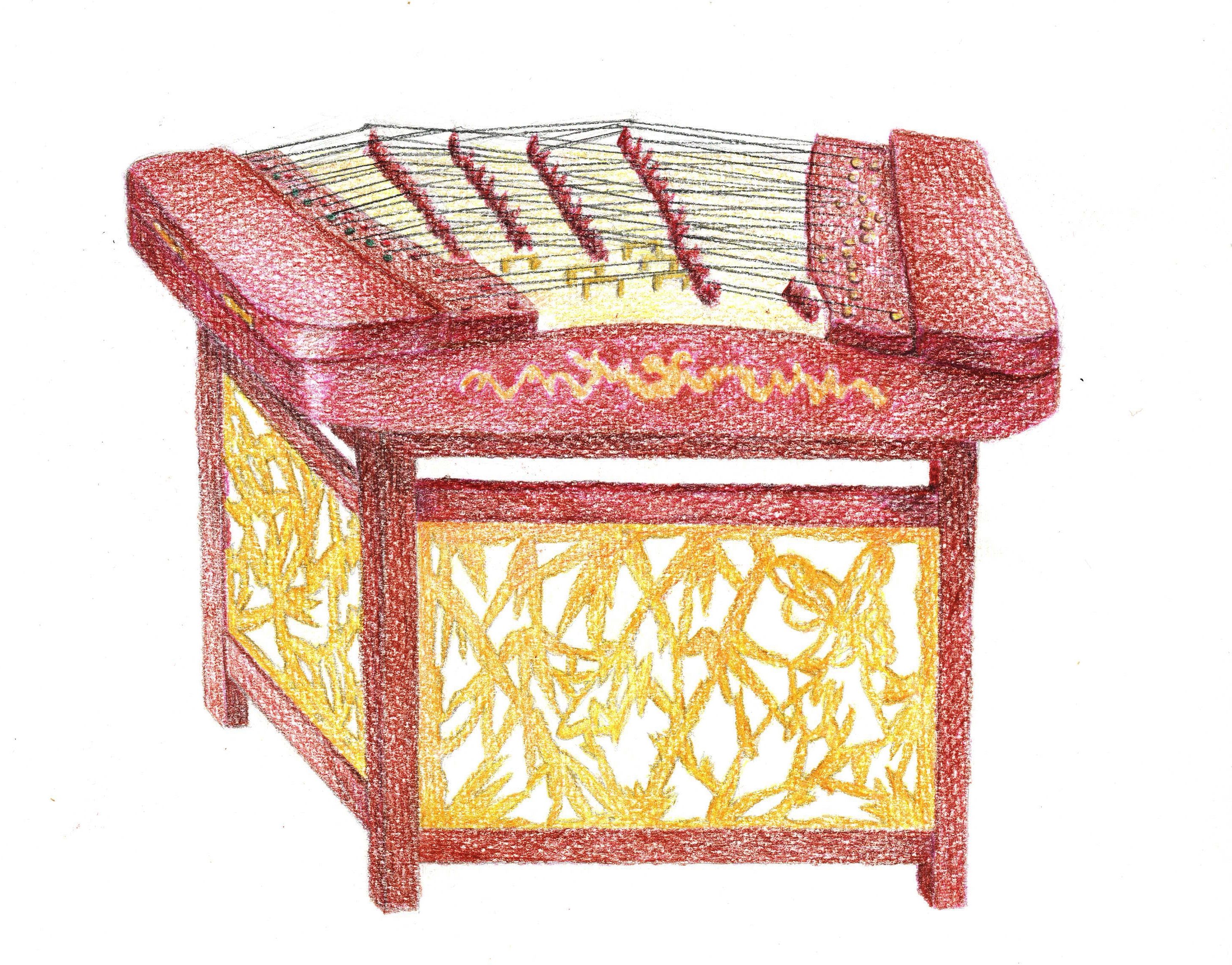
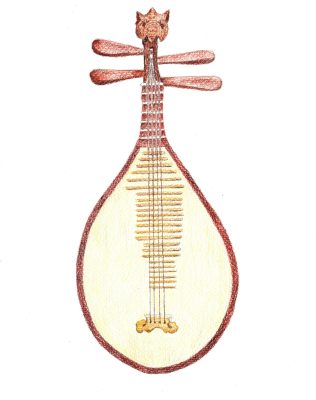
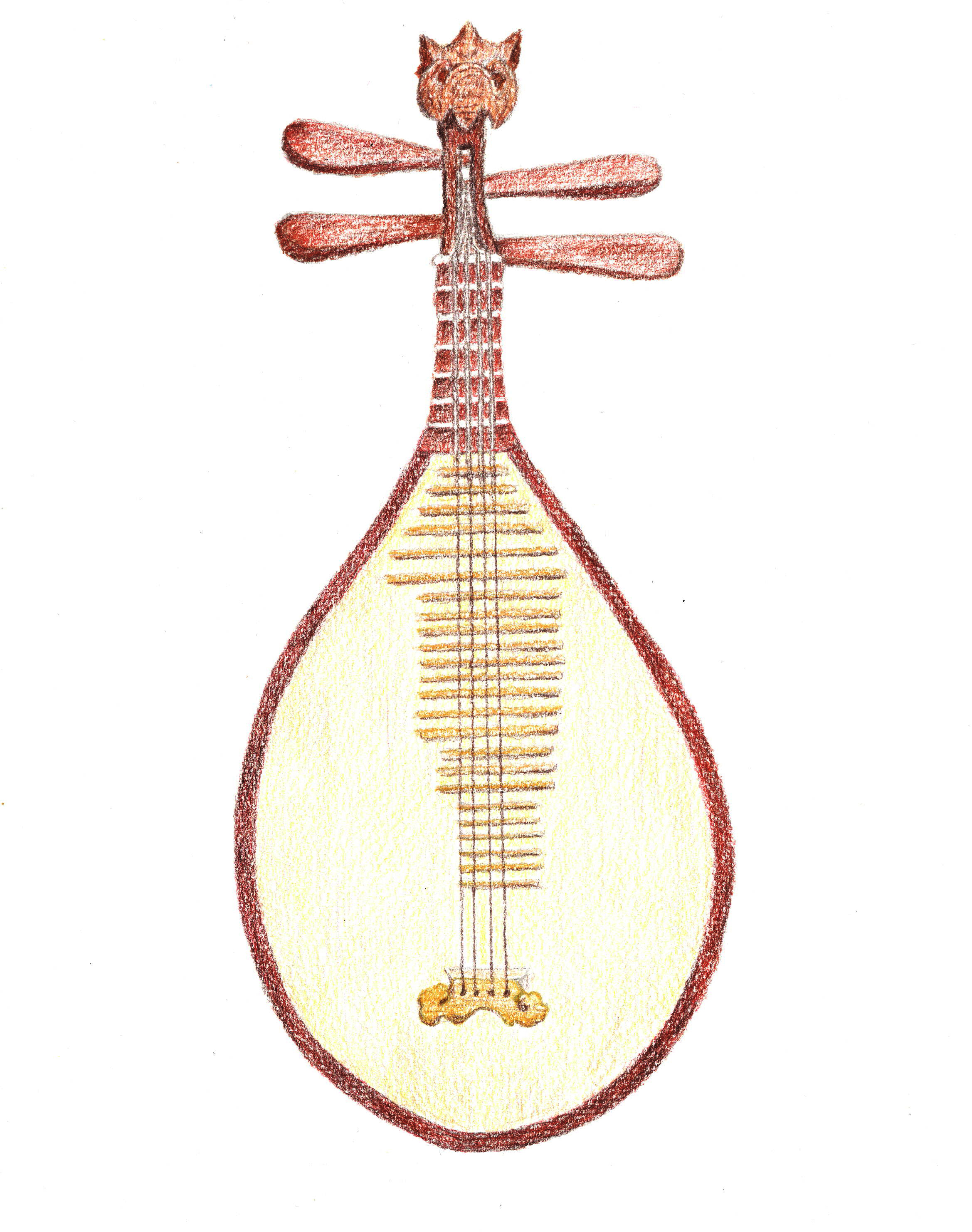
The Pipa (琵琶) is a pear-shaped plucked lute known for rapid, virtuosic passages.
The Erhu (二胡) is a two-stringed bowed fiddle with warm, expressive tones.