The history of Cantonese opera in North America is both local and connected across borders. This timeline highlights key moments shaping its presence in Canada: from early opera clubs and touring troupes to immigration policies that reshaped communities, and later revivals led by new generations.
(Scroll down to view the timeline)
c. 1858–1885
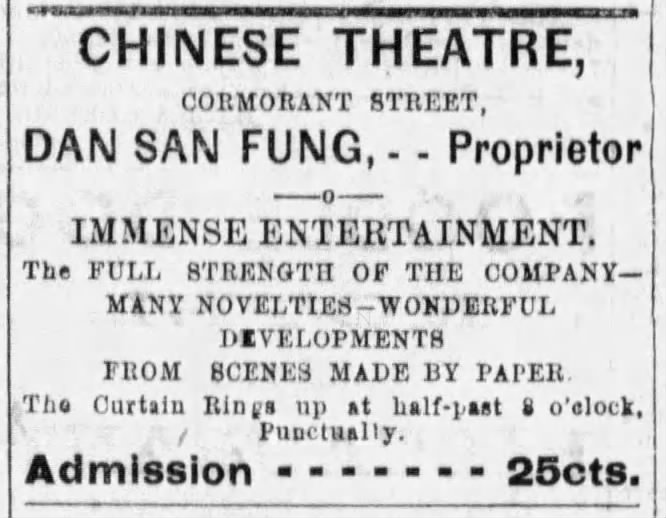
Chinese migrants arrive in British Columbia during the Fraser River Gold Rush. In Victoria’s Chinatown, opera clubs form by the 1870s, and five Cantonese opera theatres are built as audiences grow.
Late 1870s
Chinese communities begin to take shape in eastern Canada. Chinese-run laundries appear in Toronto, while migrants travelling from western Canada help establish Montréal’s early Chinatown.
1881–1885
Over 15,000 Chinese labourers worked on the construction of the Canadian Pacific Railway. After its completion in 1885, the discriminatory Chinese Immigration Act imposed a $50 ‘head tax’ on Chinese immigrants (later raised to $100 in 1900 and $500 in 1903).
1910-1920
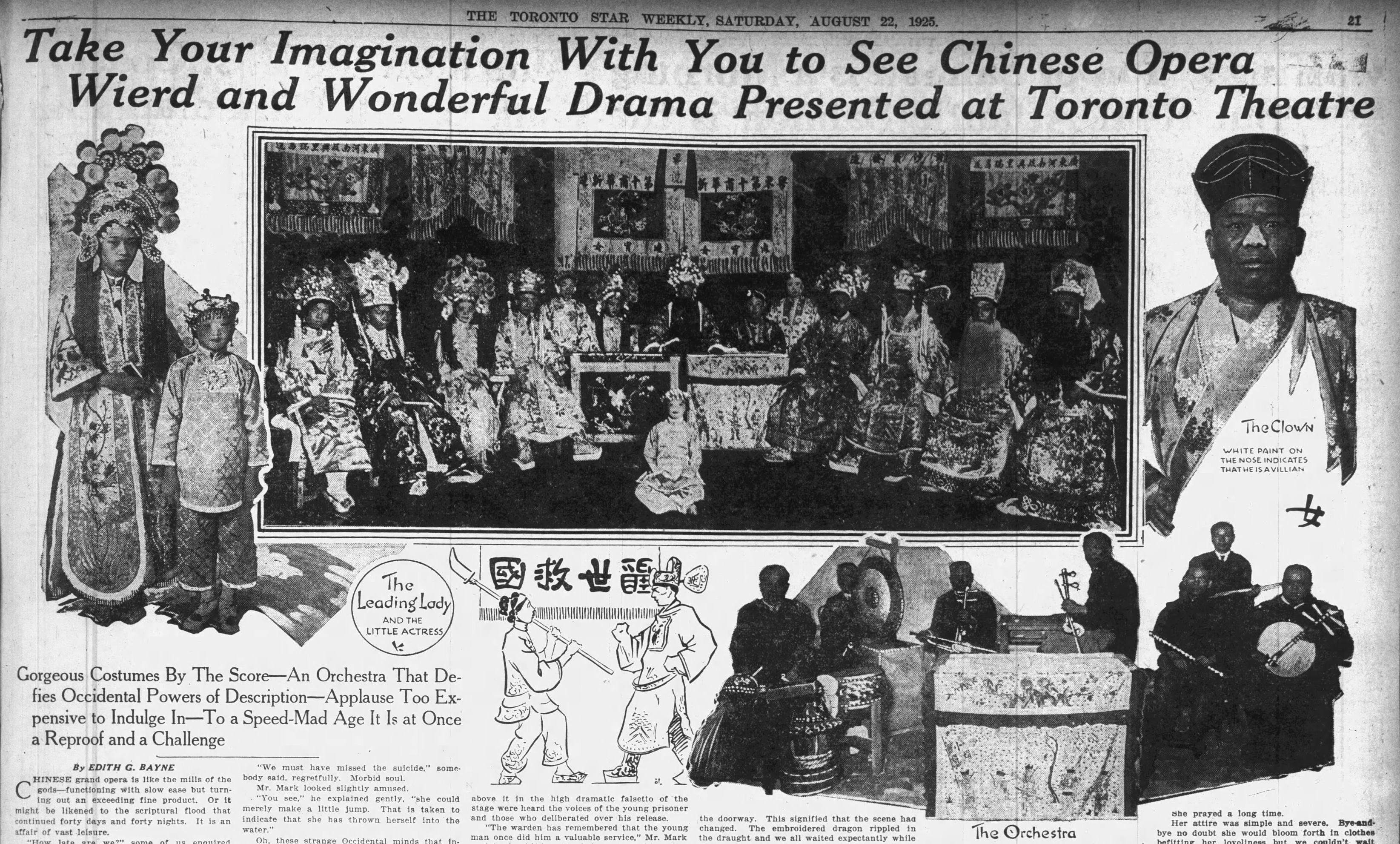
Touring Cantonese opera troupes from Hong Kong and Guangzhou perform across Canadian Chinatowns, bringing professional opera performances to the growing Chinese diaspora communities.
1918 (possibly 1917)
World Mirror, the first known Chinese music group in Toronto, is established.
1921
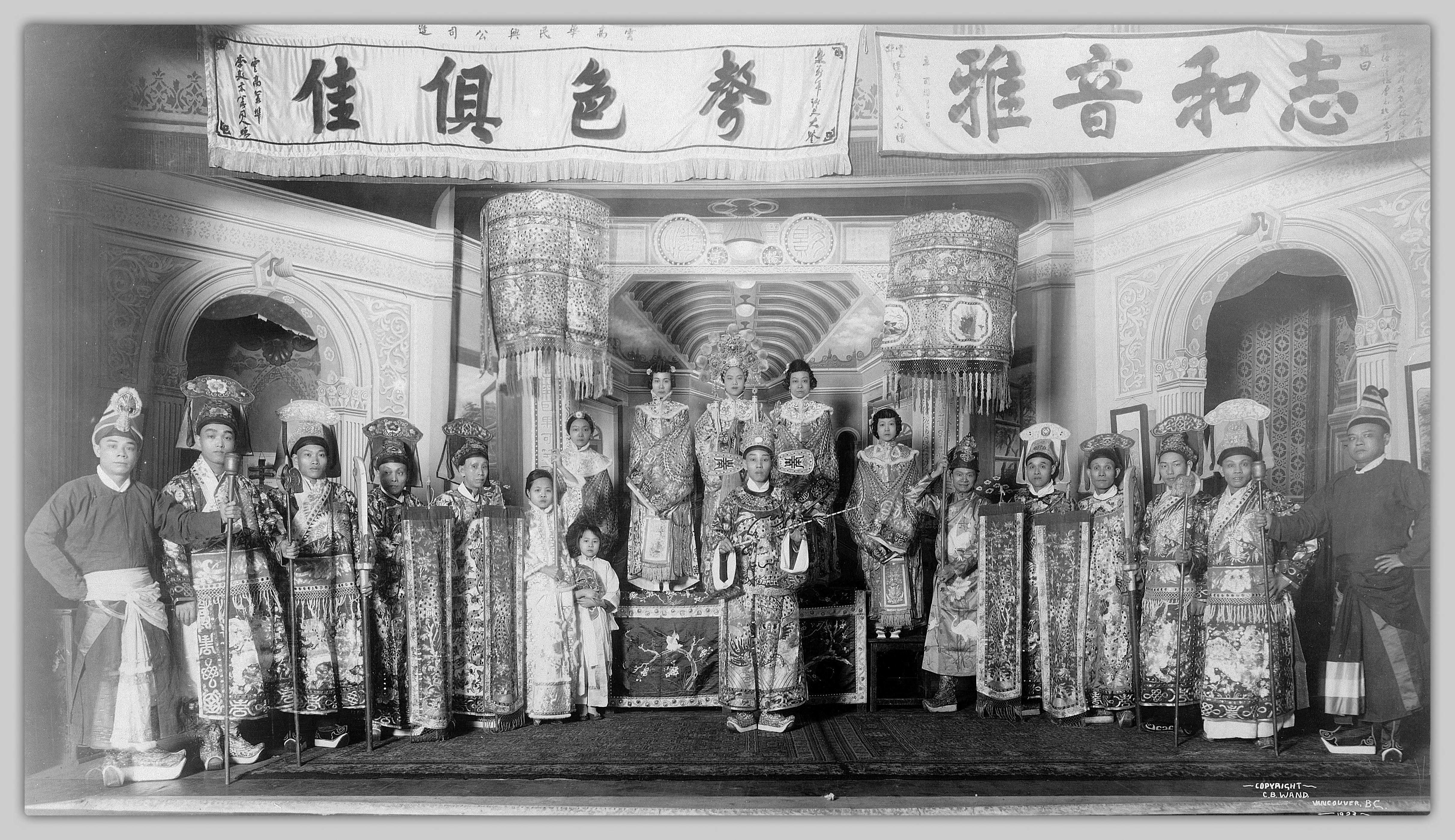
The Winnipeg Chinese Dramatic Society, also known as the King Won Drama Society (meaning ‘Awaken the National Spirit’), is established as an amateur club.
1923
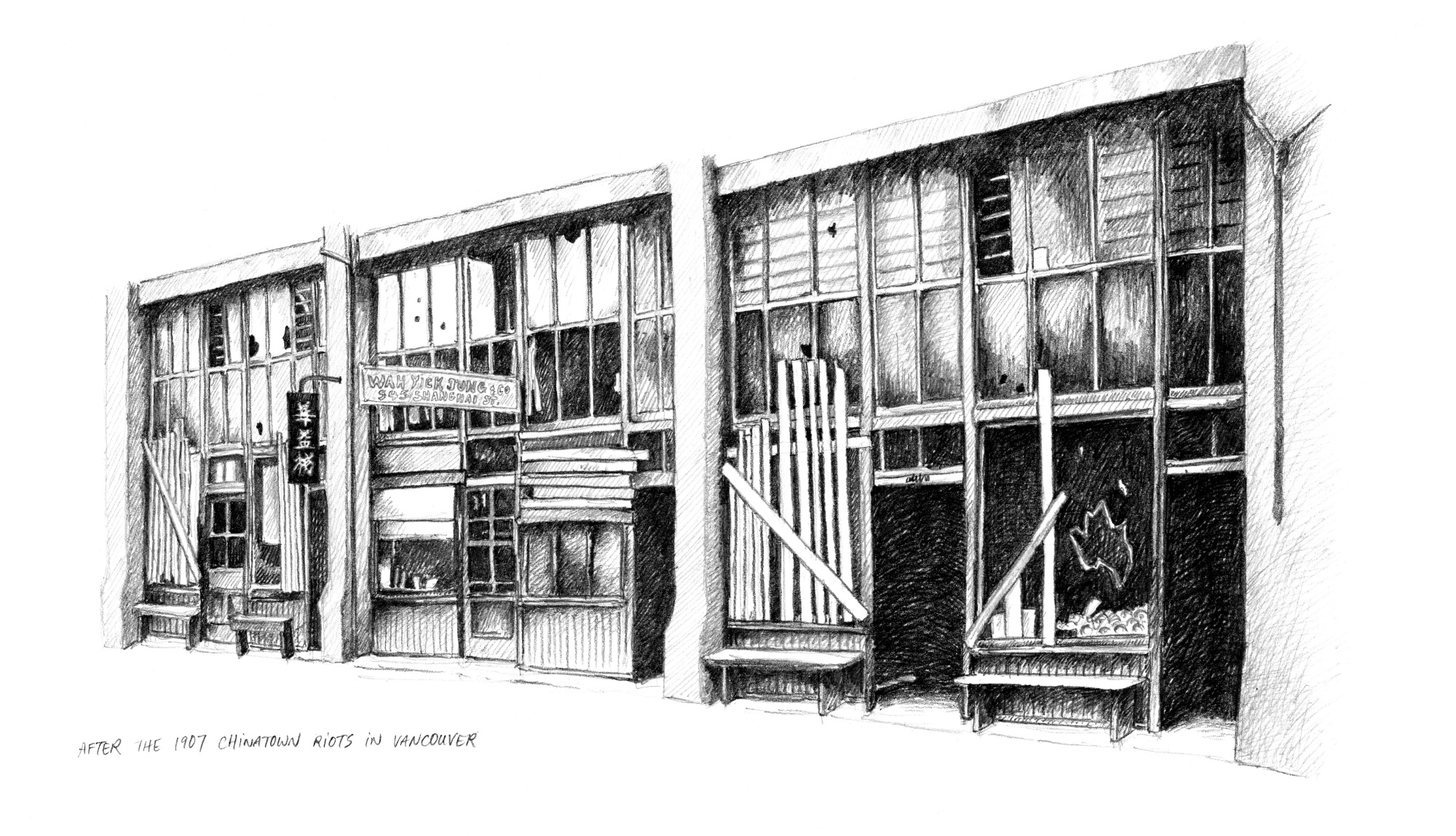
Canada’s Chinese Immigration Act (often referred to as the “Chinese Exclusion Act”) comes into effect, banning most Chinese immigration and limiting the movement of performers and communities. Despite this exclusion, Chinese Canadians form cultural associations and Cantonese opera clubs.
1933
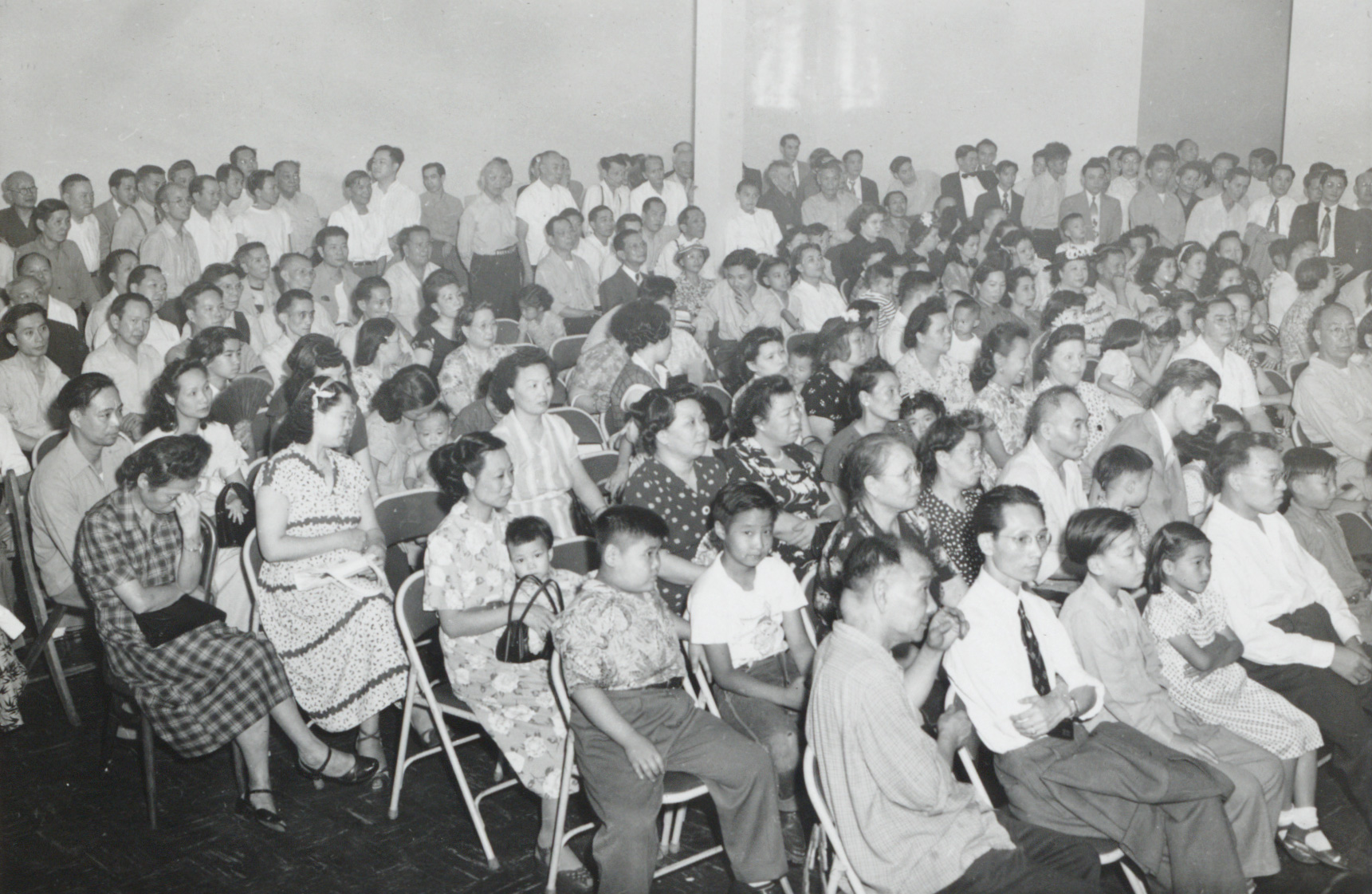
The Chinese United Dramatic Society is founded in Toronto, providing lodging for members and staging Cantonese opera performances. The group builds a 250-seat hall on Elizabeth Street and invites musicians from Hong Kong and Guangzhou to train local performers.
1934-1935
Jin Wah Sing Musical Society and Ching Won Musical Society are founded in Vancouver.
1935-1945
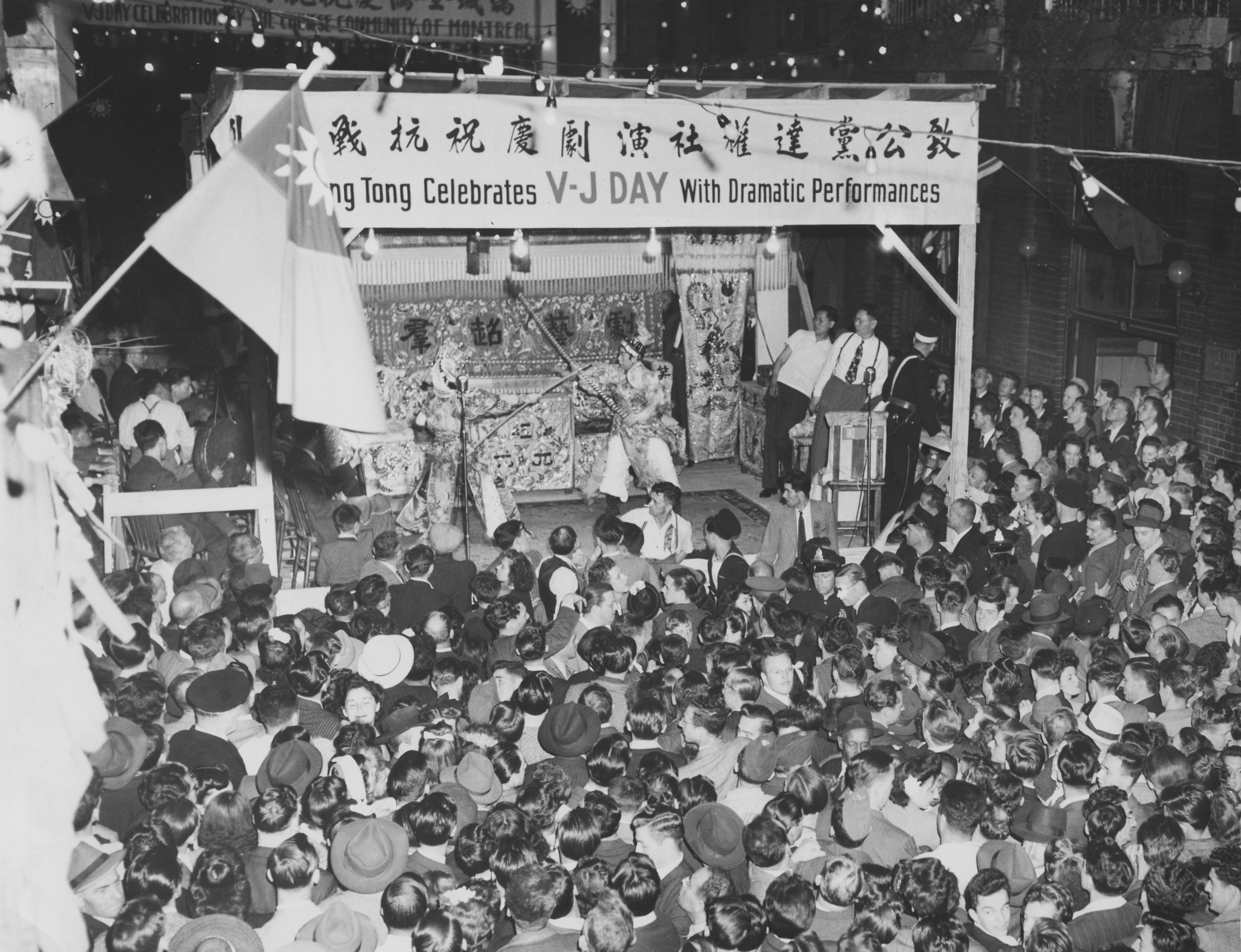
Cantonese opera performances and parade floats help Chinese Canadian communities raise funds for war relief during the Sino-Japanese and Second World Wars.
1947
The Chinese Exclusion Act is repealed. Chinese Canadians gain the right to vote and full citizenship.
1954
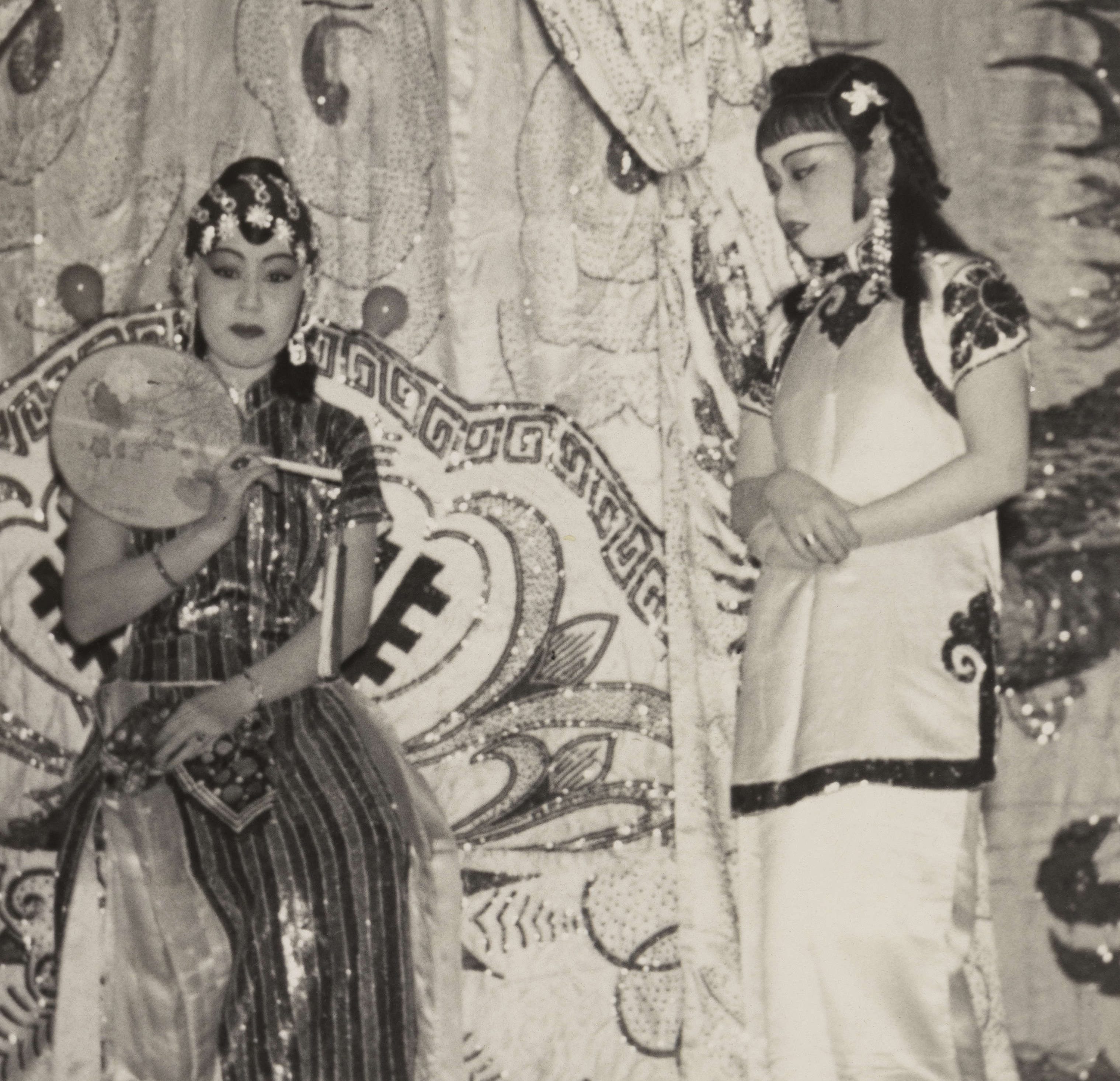
First performance by Han Yuen troupe of Montréal.
1940-60s
Cantonese opera films from Hong Kong are screened in movie theatres and churches, introducing a new generation to this art form.
1961
Invited by Jin Wah Sing Musical Society to serve as their lead erhu player, Master Toa Wong moves to Vancouver from Hong Kong with his family. Over the next few decades, he trains many musicians, singers, and performers.
Ngai Lum Music Society welcomes younger members and non-Chinese audiences.
1963
Yet Hoy Cantonese Music Club is founded in Toronto.
1967
Canada introduces a new points-based immigration system, ending race-based restrictions and allowing more families to reunite.
In Toronto, after the city takes much of the original Chinatown on Elizabeth Street, the community gradually relocates west to Spadina Avenue and Dundas Street West, forming today’s West Chinatown.
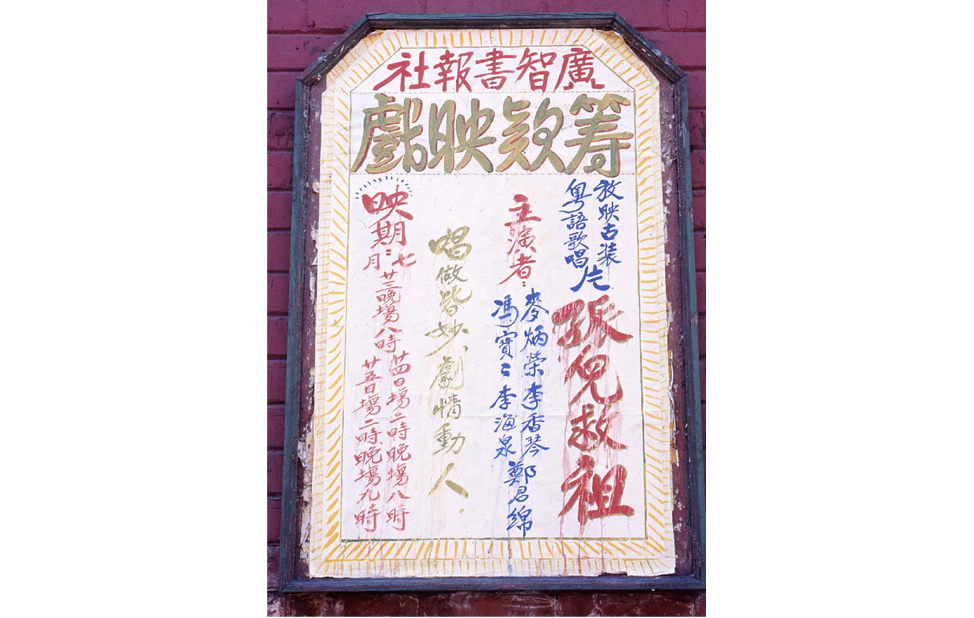
A 1966 poster for screenings of the Cantonese opera film Saving the Grandfather《孫兒救祖》, organized by Montréal’s Kwong Chi Book & Newspaper Store.
1970s-80s
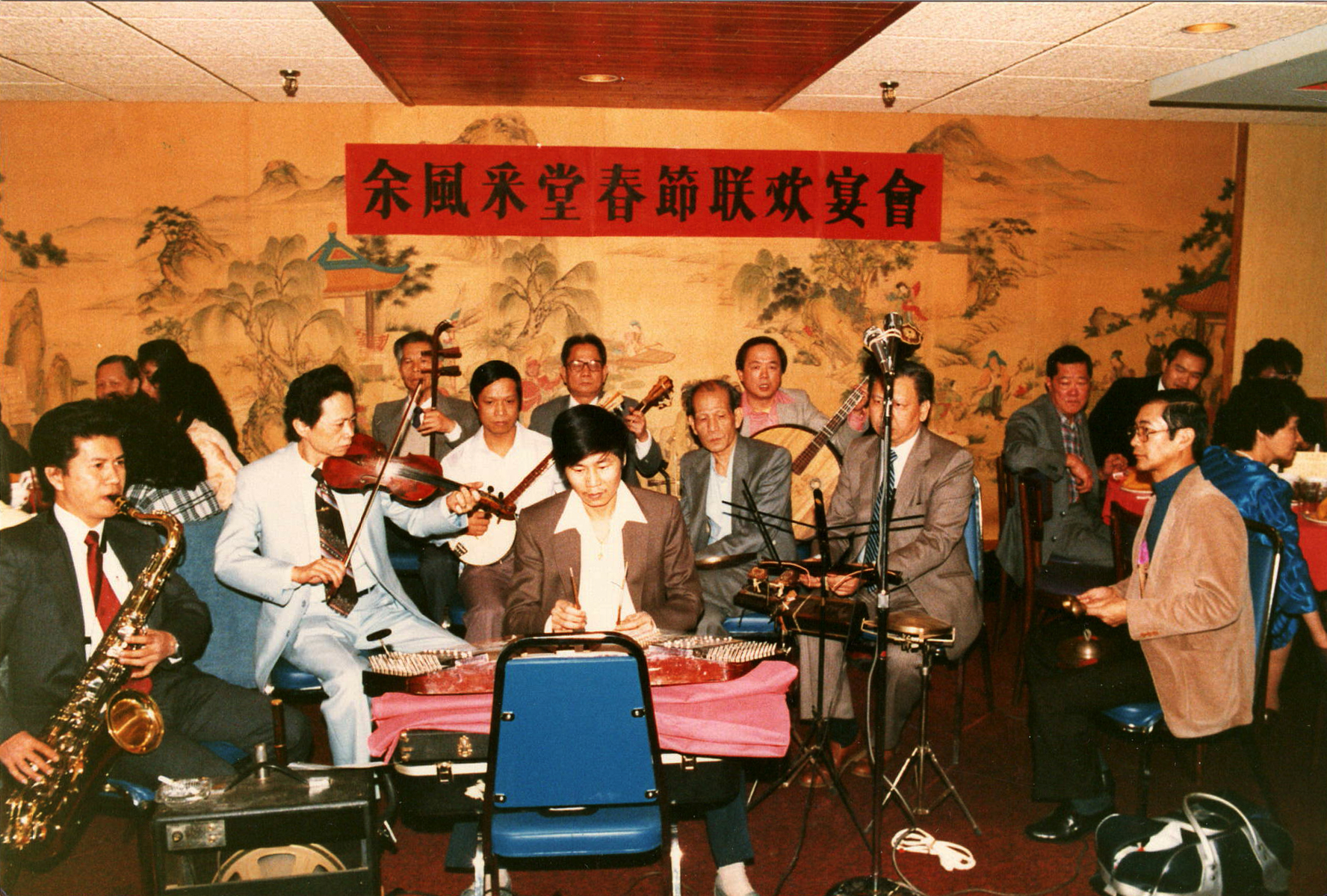
Immigration from Hong Kong and southern China expands Chinese communities across Canada. Toronto sees new Chinese commercial districts such as East Chinatown, while Montréal and Calgary’s Chinatowns continue to develop. Cantonese opera thrives in community theatres and festivals.
1970
Yuet Sing Cantonese Music Club of Montreal is founded by a group of friends from Guangdong and Hong Kong.
1980s
New performers immigrate from Hong Kong. In Toronto alone, several opera associations, including the Chinese United Dramatic Society and Scarborough Senior Chinese Dramatic Association, organize performances and community events.
1980
Gum Sing Musical Society of Victoria is founded by Leung Kwong Yip as an amateur group of opera singers and musicians.
1981
Jin Wah Sing Musical Society (Edmonton Chapter) is founded to promote traditional Cantonese music in Edmonton.
1991
Association des Sino-Vietnamiens au Québec sets up a Chinese opera troupe.
The Calgary Harmony of Arts Association is founded by David Yee.
1993-1996
A Rare Flower: A Century of Cantonese Opera in Canada, organized by UBC’s Museum of Anthropology, tours across Canada, showcasing historic costumes, photos, and materials from Cantonese opera’s history.
2000
The Vancouver Cantonese Opera Society is founded by Rosa Cheng.
2001
Starlight Cantonese Opera is founded by Marianne Wong in Toronto.
2006
The Government of Canada issues a formal apology for the Chinese Head Tax and exclusion policies, and provides symbolic compensation to surviving Head Tax payers and their spouses.
2009
Cantonese opera is added to the UNESCO Representative List of Intangible Cultural Heritage of Humanity.
2010s
Across Canada, Cantonese opera buzzes with activity as local associations stage performances, workshops, and festivals while welcoming visiting artists from Hong Kong and China.
2022
Cecile Kung and Frances Won established Fai@Studio in Halifax, bringing Cantonese opera to local audiences through performances and workshops.
Vancouver Cantonese Opera premieres the fusion opera, The Prop Master’s Dream.
2025
Yuet Sing Cantonese Music Club gives a concert at PHI in Montréal, in parallel with the exhibition, Lap-See Lam: Shadow Play, which draws on Cantonese opera and shadow puppetry.