Cantonese opera demands significant personal investment of time, skill, and money. Traditionally, performers purchase and maintain their own costumes, gradually building personal wardrobes. This practice is both a sign of professional success and a financial challenge, particularly today, when resources can be limited.
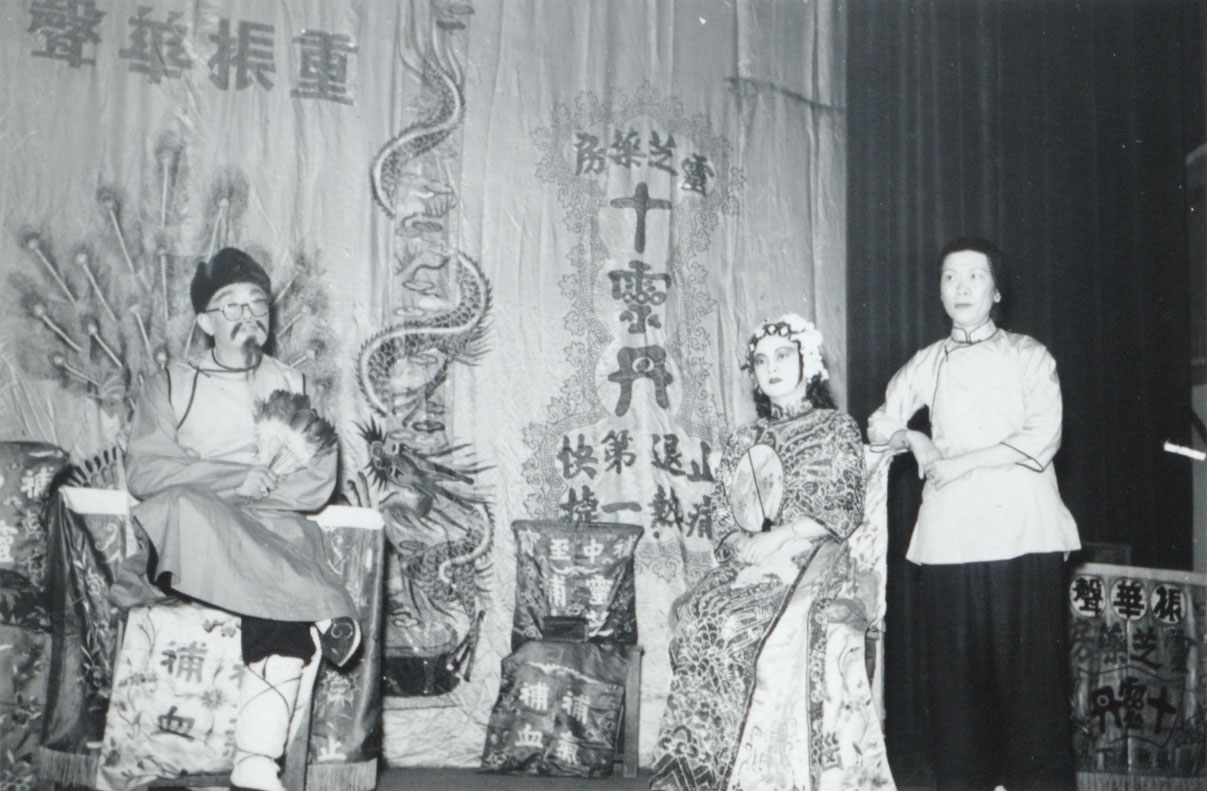
Cross-gender performance has long been foundational to the genre. During periods when women were excluded from the stage, men performed female roles. Later, as women became central figures in opera troupes, they also took on male scholarly and martial roles. The renowned performer Mudan Su 牡丹蘇, known for her male roles, demonstrated how voice, gesture, costume, and movement, and not the performer’s sex, define gender onstage. This fluidity remains one of the form’s most progressive and enduring strengths.
Cantonese opera continues to reinvent itself. In the early twentieth century, Kwan Tak-hing 關德興 famously incorporated a cowboy into stage performances after encountering Western films. Modern performances are starting to address present-day themes to engage younger and diasporic audiences.
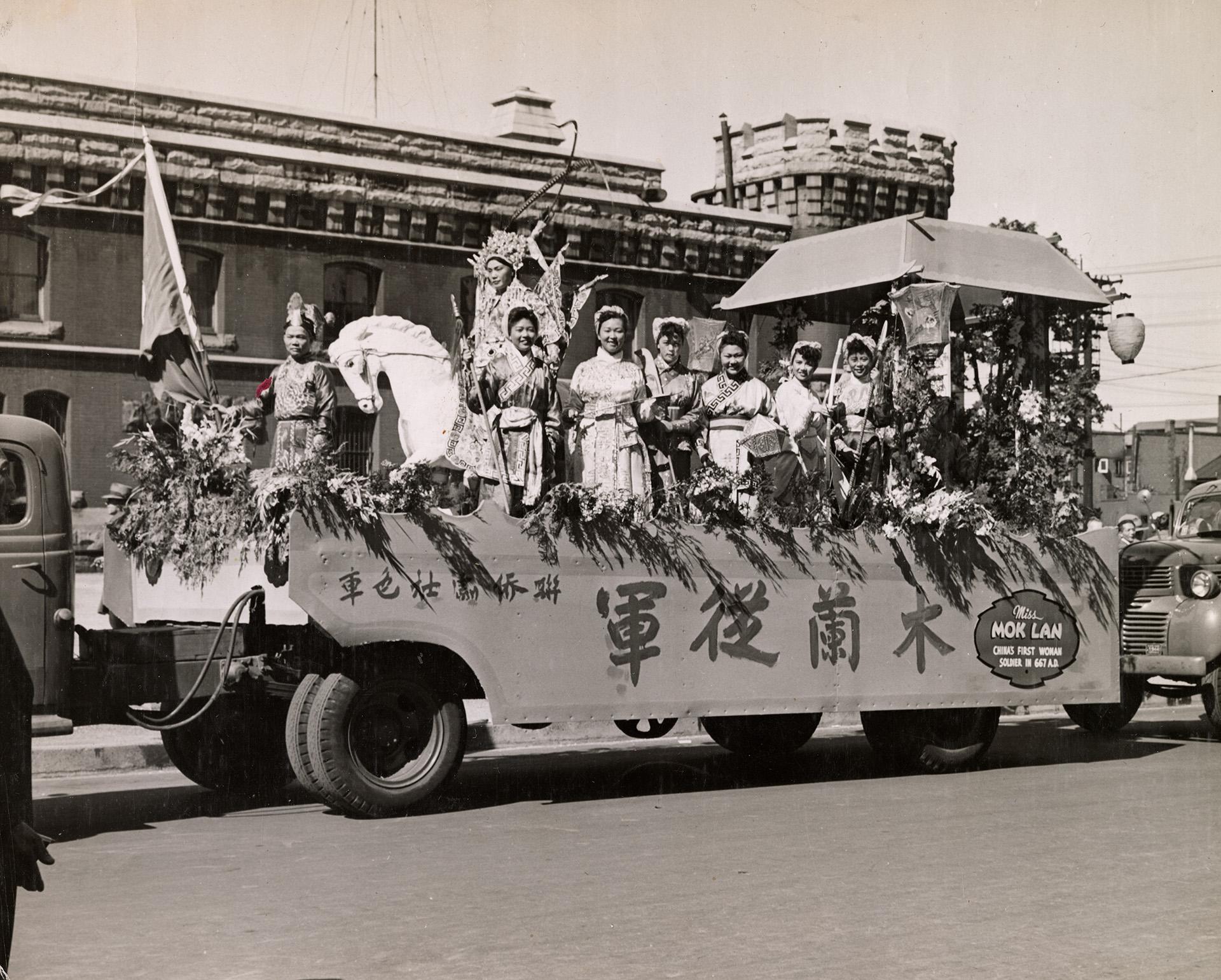
Female Roles (旦)
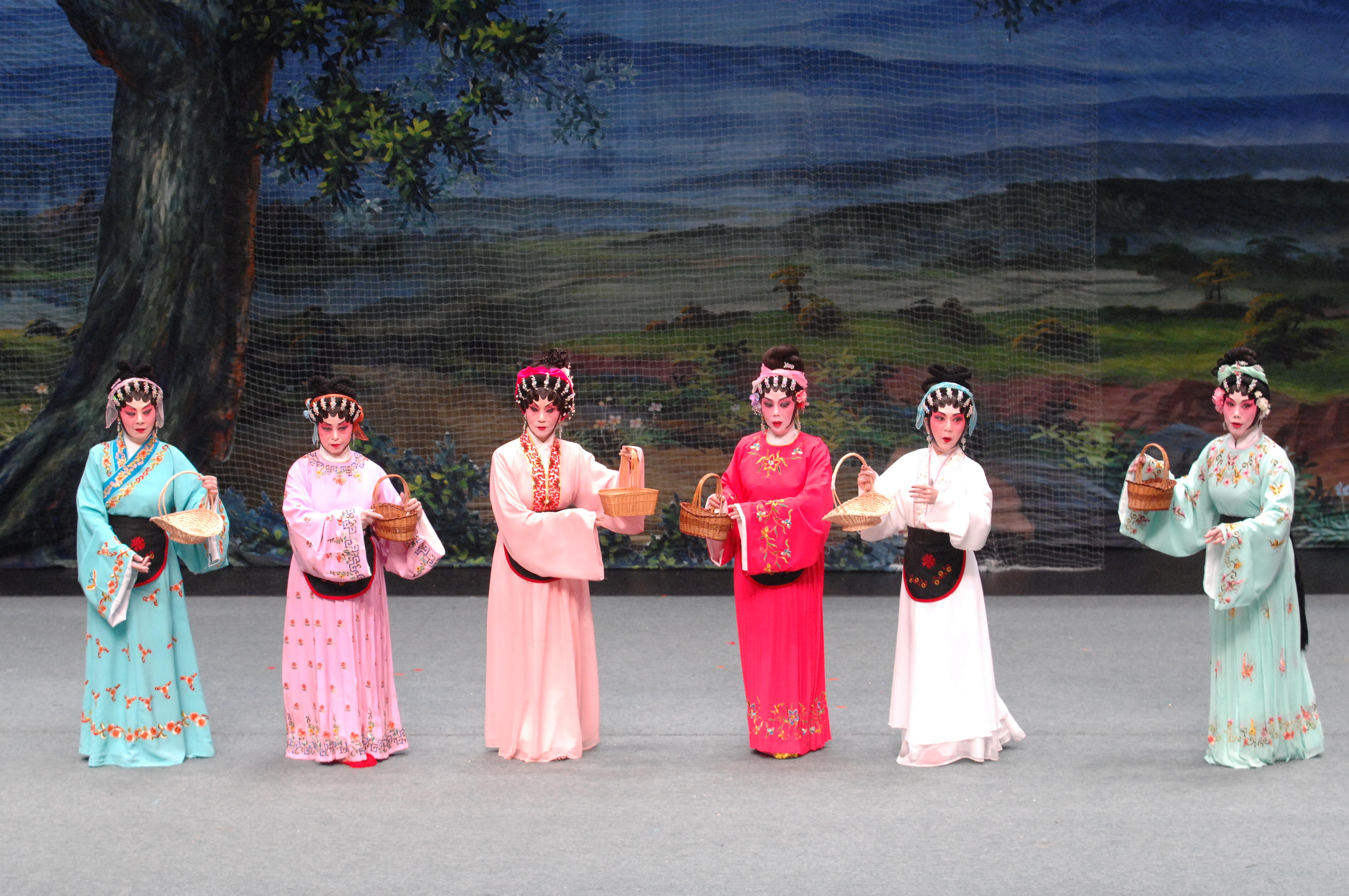
Female roles in Cantonese opera, known collectively as daan, include young maidens, noblewomen, warriors, and elderly women, distinguished through costume, colour, hairstyle, and movement.
Qingyi (青衣) roles portray virtuous young women or wives, wearing long, elegant robes in soft colours such as blue, pale green, or pink. Their costumes emphasize restraint and moral integrity, and their movements—especially water-sleeve work—are slow and expressive.
Male Roles (生)
Male roles, known as sang, are also differentiated through costume and movement.
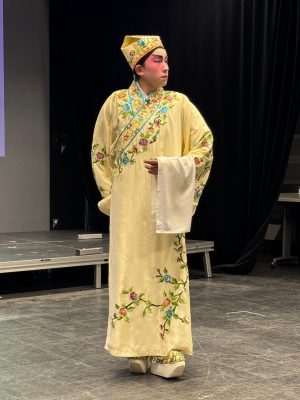
Xiaosheng (小生) portray young scholars.
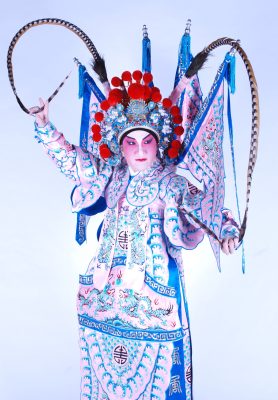
Wusheng (武生) are martial male roles, such as generals or warriors.
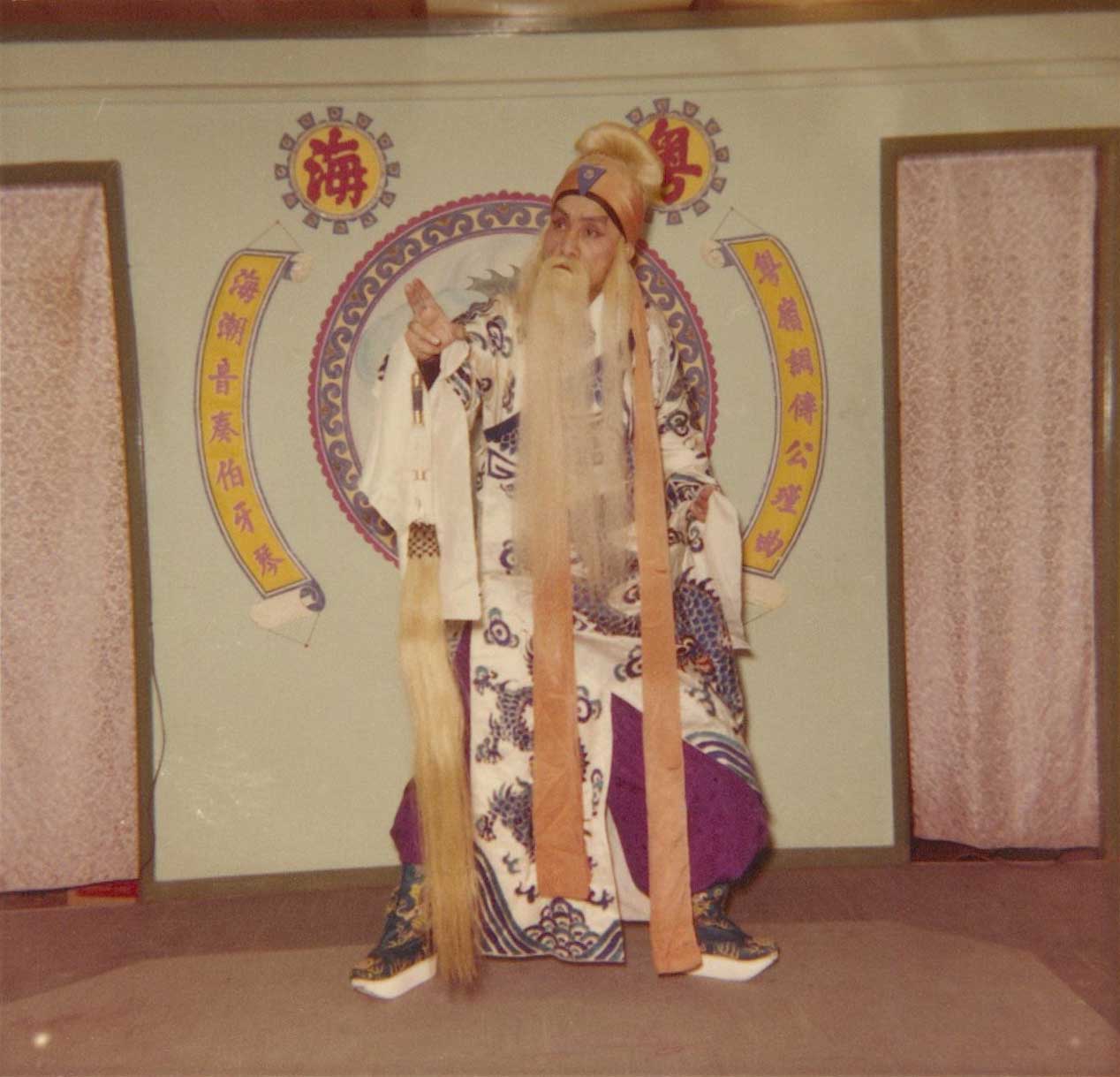
Laosheng (老生) represent older men.