Costumes and Makeup

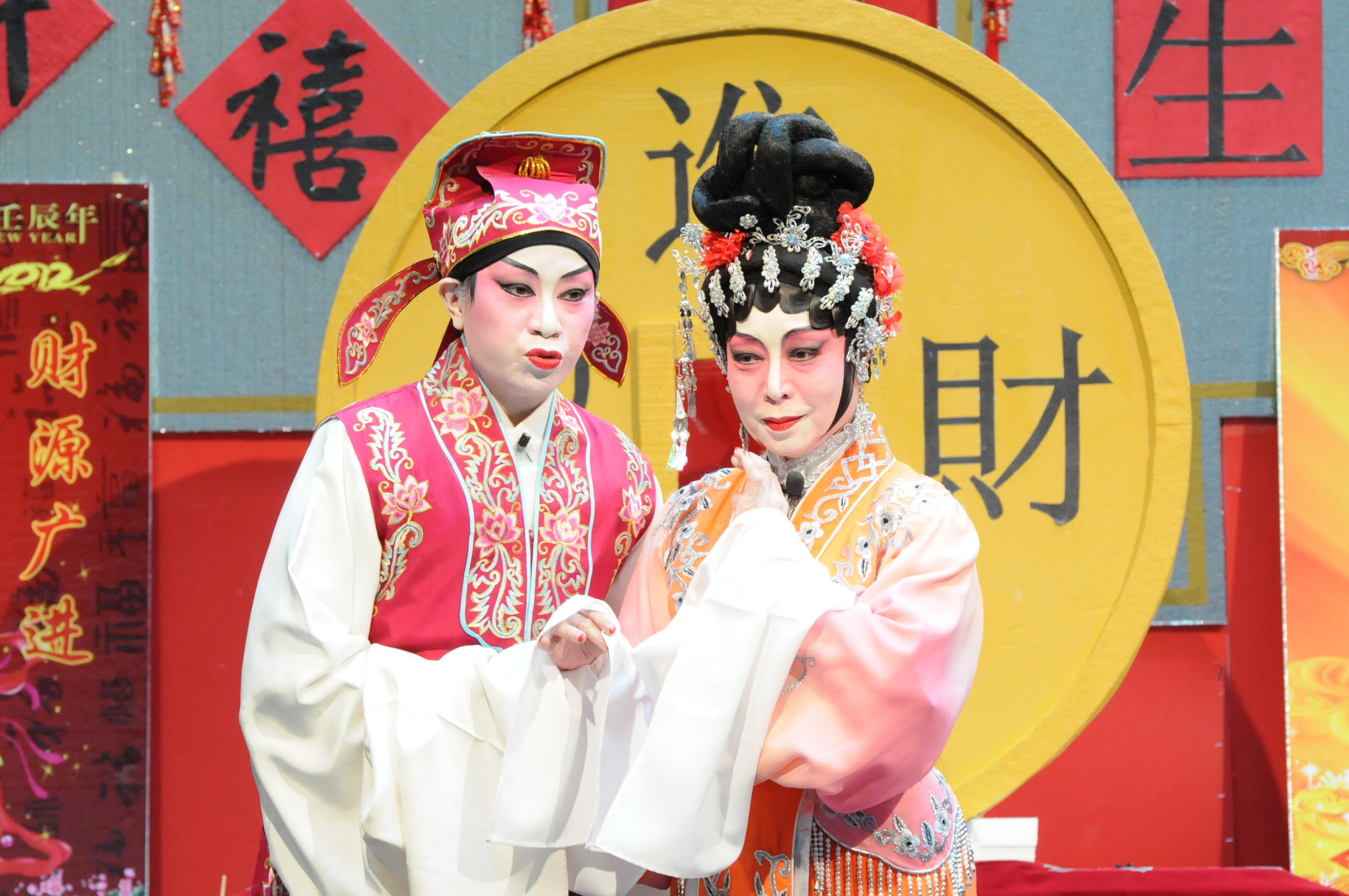
Image details — <span style="font-weight: 400;">Close-up of two opera performers in elaborate costumes during a performance, with festive Lunar New Year symbols decorating the backdrop.</span>
Starlight: Chinese New Year Celebration Performance, Toronto Chinatown Centre 《文華中心新春賀歲》, 2012.

In Cantonese opera, costumes and make-up function as a visual language. Audiences learn to “read” a character through colour, fabric, cut, hairstyle, and painted features. Each detail signals social status, personality, morality, and dramatic role, making symbolism central to understanding the performance.

Makeup

Performers are largely self-sufficient, spending hours before each show dressing, styling their hair and applying makeup. A Chinese balm is applied to hair to secure the headpieces. Makeup follows a precise sequence, although it varies based on role. Male roles typically feature bold, assertive brows; female roles use softer, tapered shapes. Through these shared conventions, gender is constructed theatrically rather than biologically.
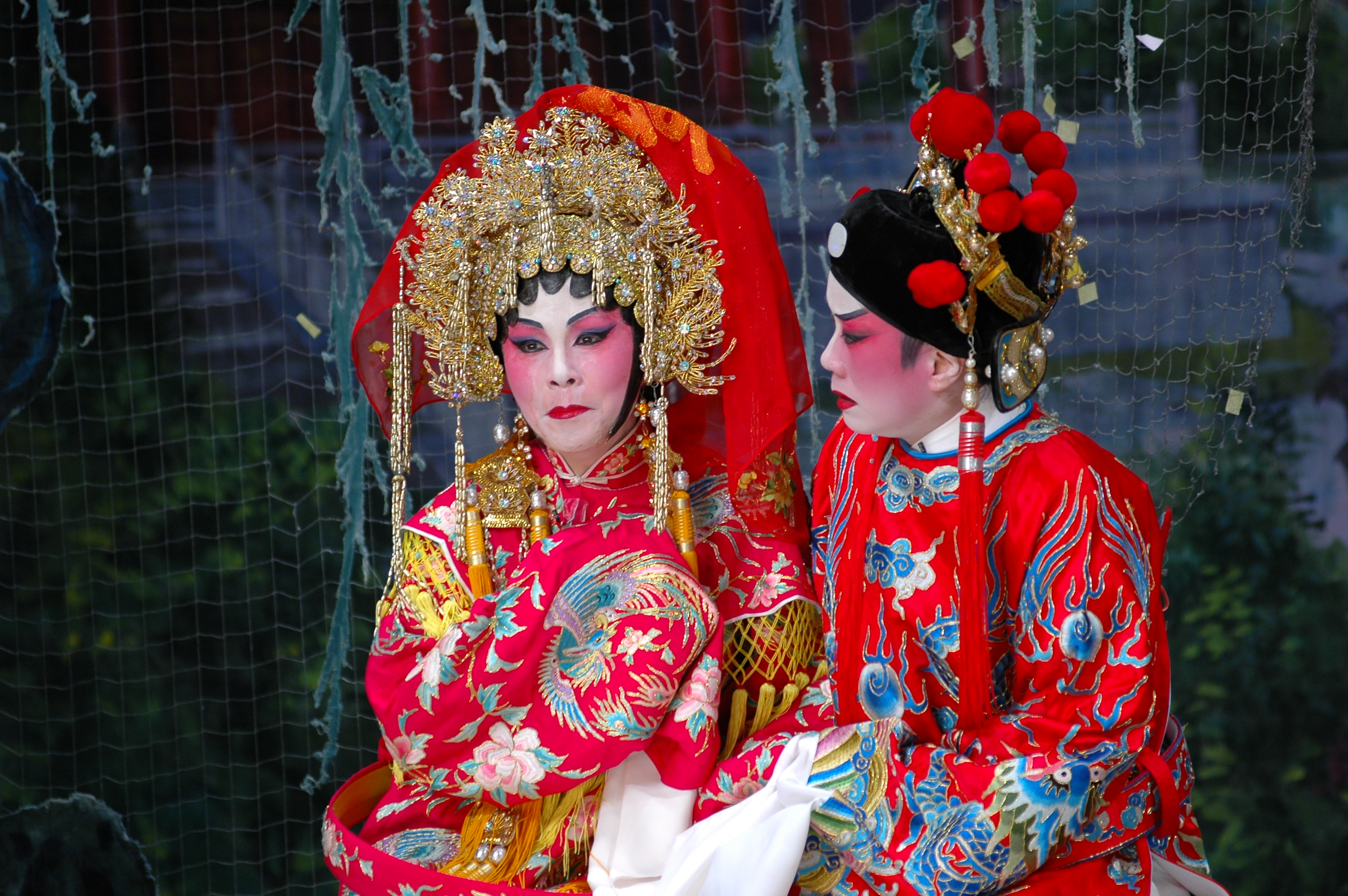
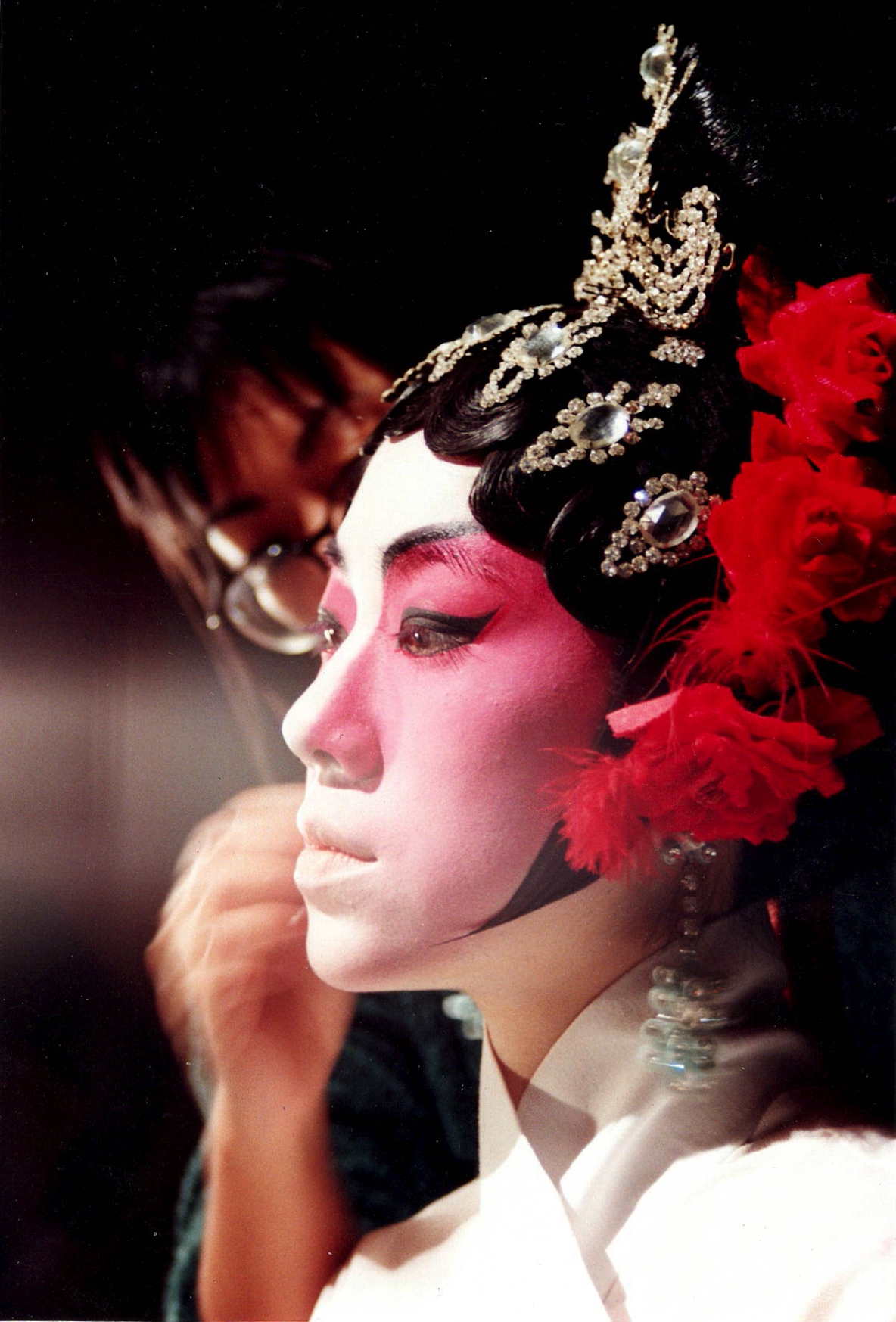
Image details — <span style="font-weight: 400;">Princess Cheung Ping and Prince Consort Zhou in traditional Cantonese opera costumes sit closely together on a bench outdoors, holding each other with somber expressions.</span>
Hair is styled carefully and secured with a traditional balm made from Chinese alcohol, which helps keep elaborate hairstyles and headpieces in place under stage lights.
Image details — <span style="font-weight: 400;">A close-up portrait of a performer in profile, with a woman applying makeup to her face, highlighting the intricate details and focused expressions.</span>
Mary Sui Yee Wong, applying makeup on Antonia Yeung for a film shoot in Montréal.

Colour Symbolism in Costume

Colour in costume symbolism further shapes meaning: red suggests loyalty and courage; yellow and gold signal royalty or divinity; blue and green often mark warriors or outlaws; white may indicate mourning or treachery; black conveys integrity. Flowing water-sleeves emphasize restraint and emotion, while heavily embroidered armour and back flags convey military and rank. Headdresses—from scholars’ caps to generals’ feathered helmets—extend characters into motion.
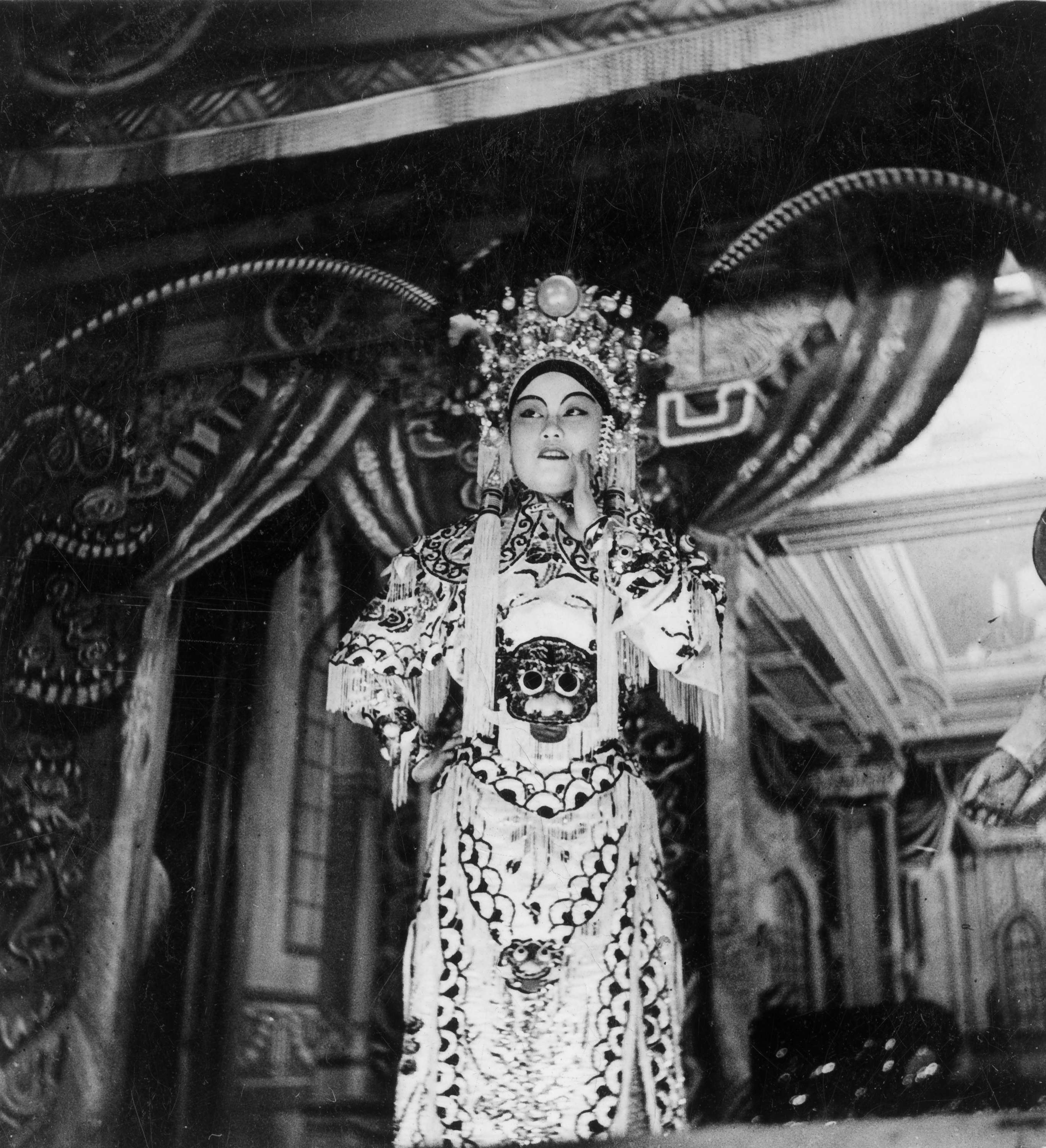
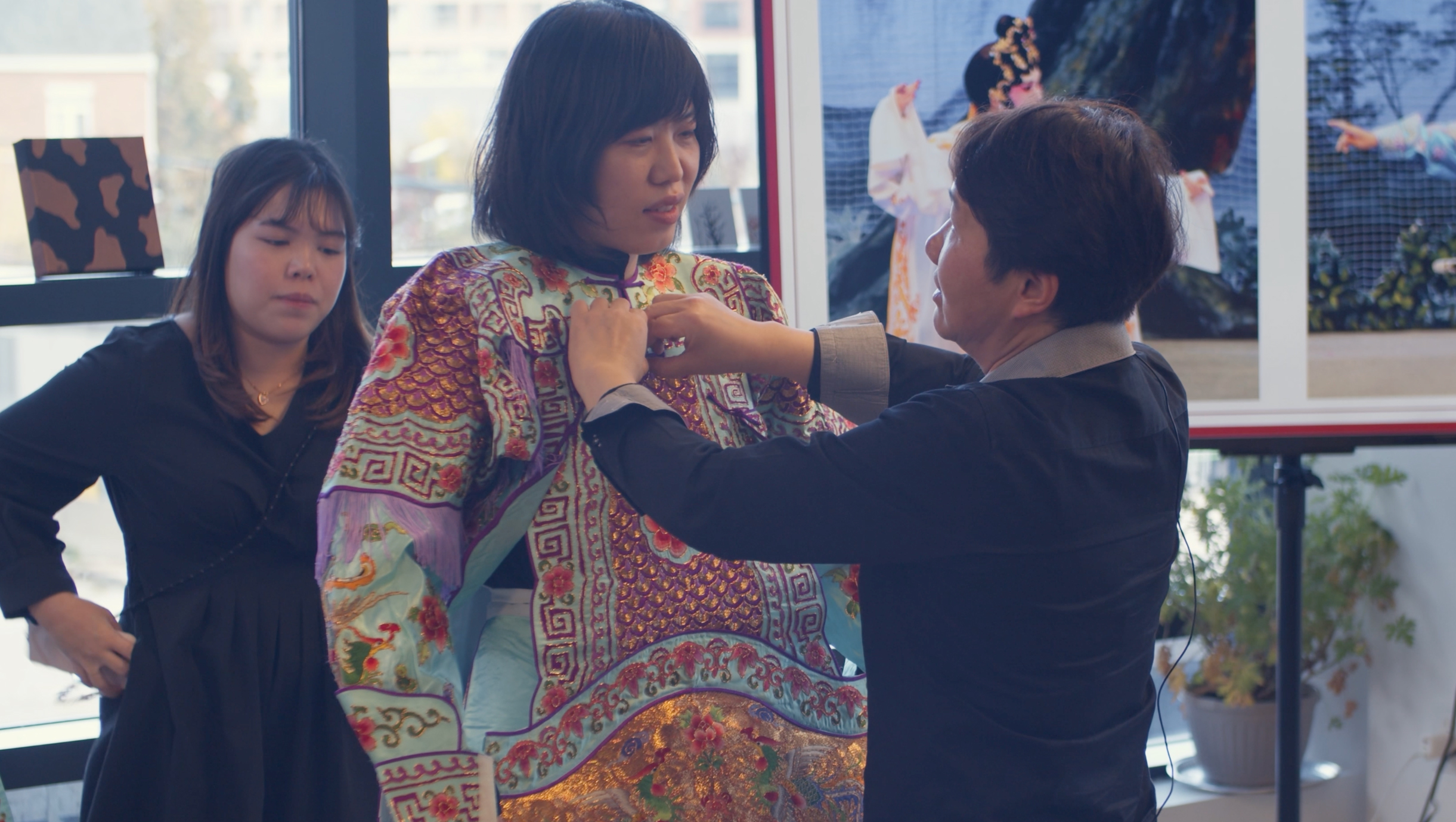
Image details — <span style="font-weight: 400;">A female Cantonese opera performer stands on stage, gazing toward the audience with a slight smile. She wears an ornate headdress with long tassels and pheasant plumes and a light-coloured costume decorated with a lion’s head on the torso.</span>
A Cantonese opera actress portraying a female general, 1930s. Her armour and long pheasant plumes signal the daomadan role —a female warrior role.
Watch video — Costume Demonstration <span style="font-weight: 400;">Alice Chan dressing a workshop participant in a Chinese Opera costume.</span>
Costume demonstration led by Alice Chan of Starlight Chinese Opera.