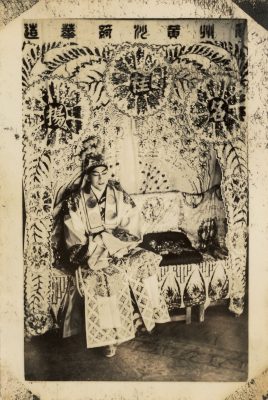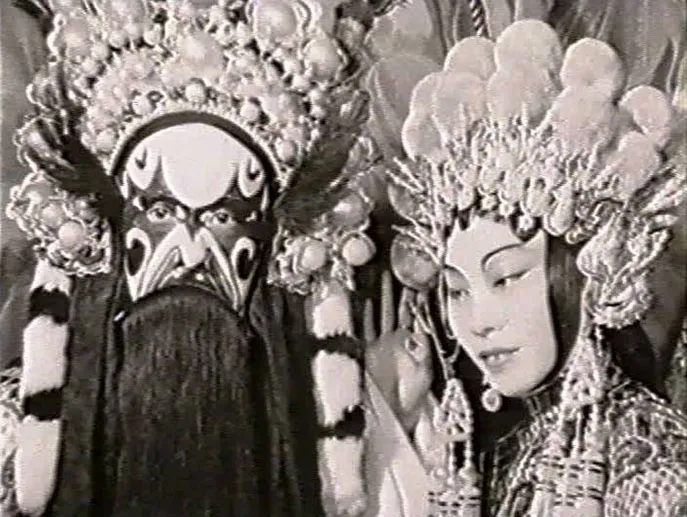
The Cantonese opera stage is a space of imagination, using only a few elements to represent environments or actions. Two chairs and a table are the most iconic set elements. Through gestures and placement, a table becomes a mountain, bridge, throne, or bed; a chair represents a throne, part of a mountain, or a jail door. Props like fans, lanterns, or whips signal wind, travel, or action. Audiences actively fill in these minimal elements with memory and imagination, becoming co-creators of the performance’s world.
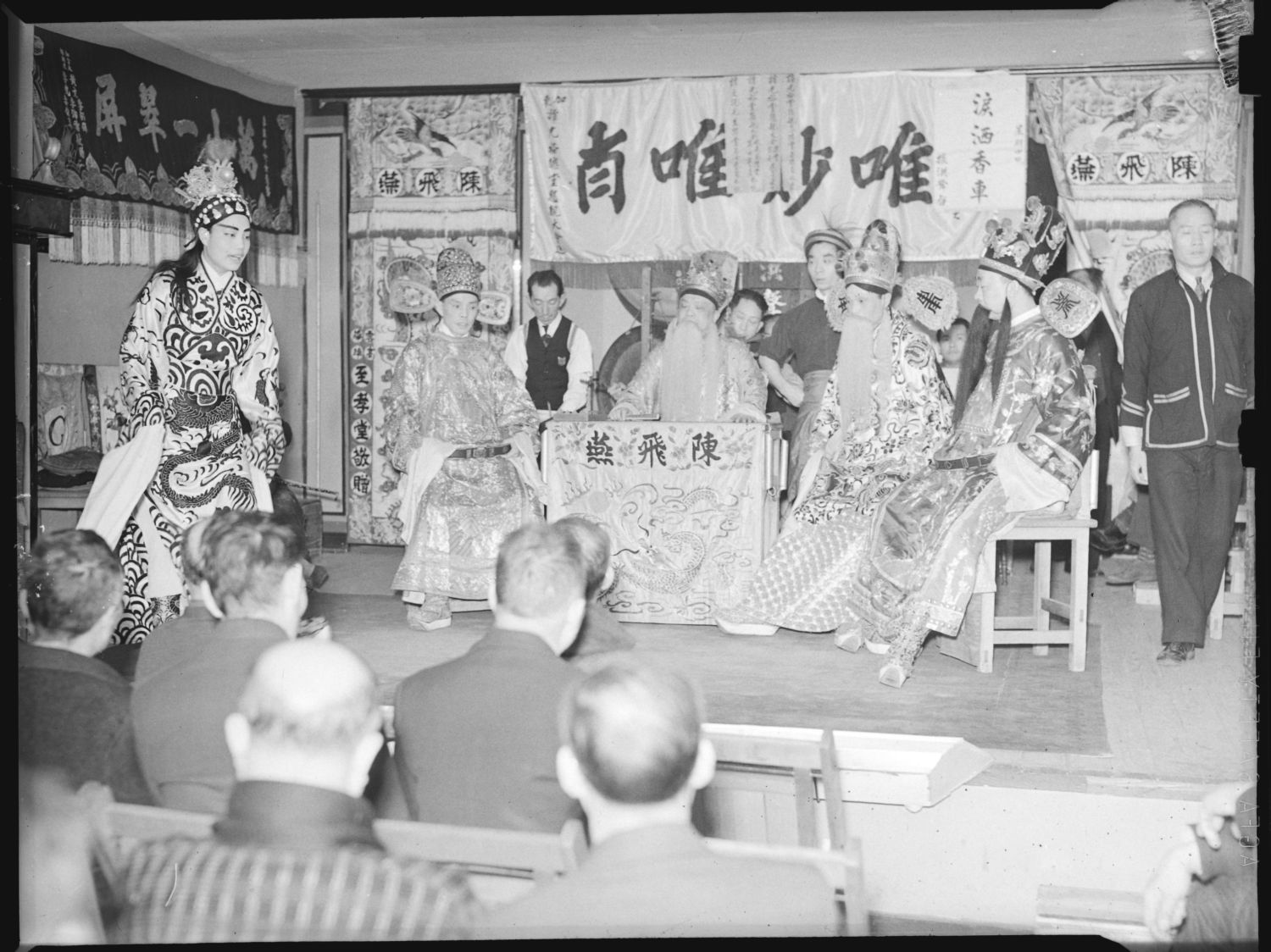
Often theatres were simple and flexible. For festivals and temple celebrations in southern China and Hong Kong, temporary theatres were built from bamboo scaffolding and canvas. A cloth backdrop separated the stage from backstage and two openings called “tiger gates” (虎度門) framed performers’ entrances and exits. Some backstages include small altars to honour spiritual traditions. Musicians were typically visible on stage, highlighting the close relationship between music and movement.
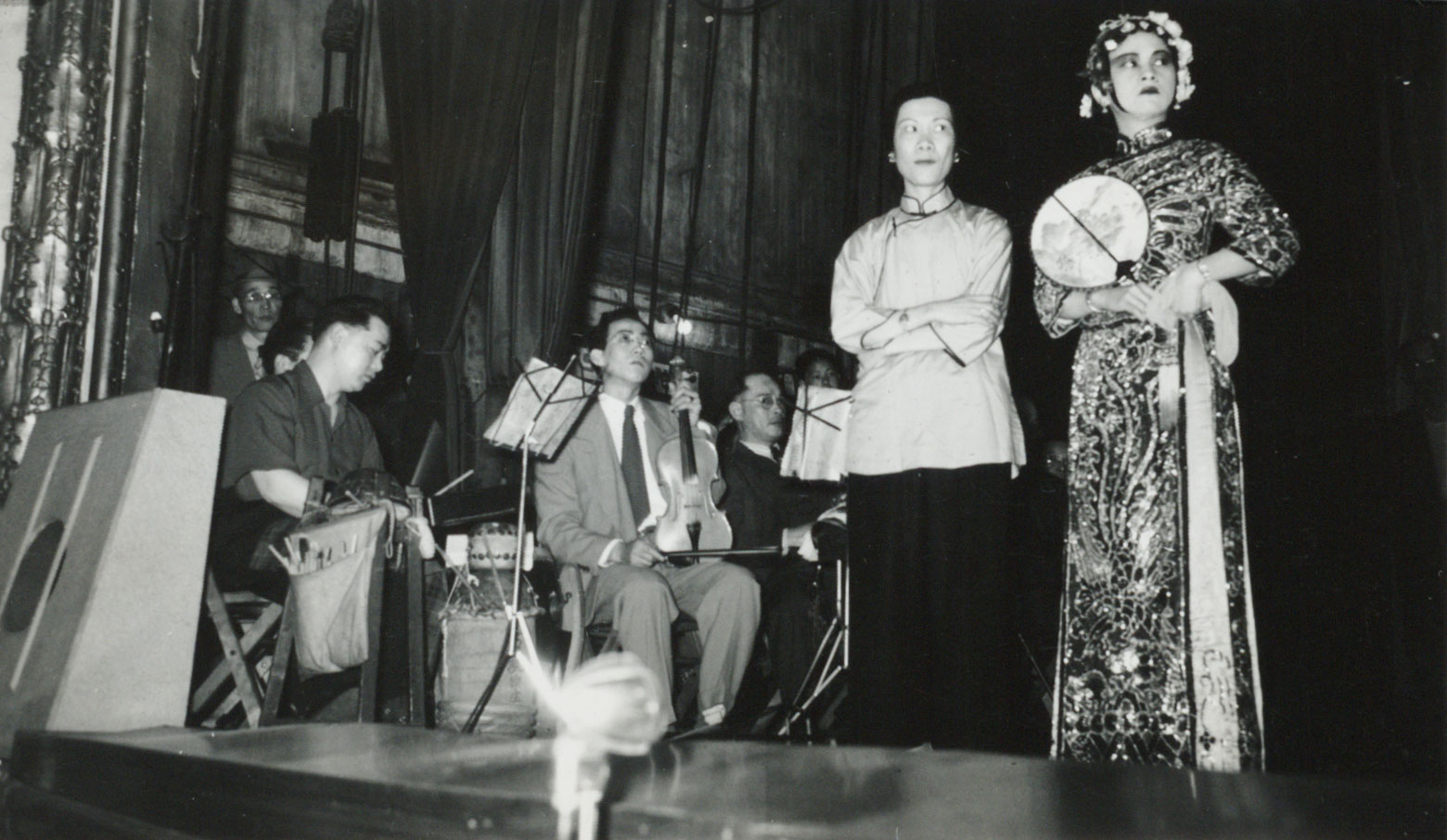
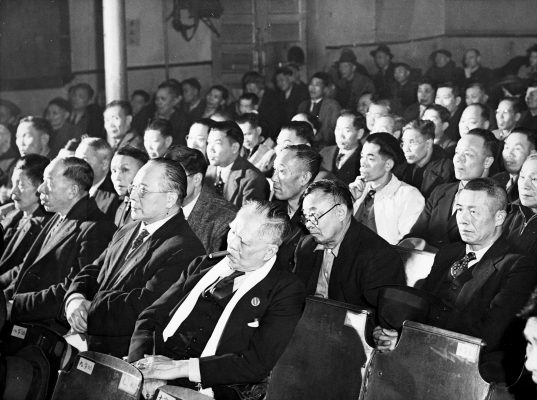
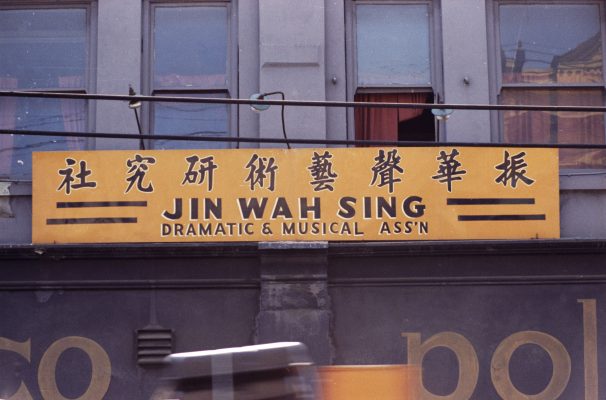
As Cantonese opera travelled abroad, Canadian communities adapted it to local contexts. In larger Chinatowns, merchants built permanent venues such as Vancouver’s Sing Kew, Sing Ping, and Ko Sing Theatres, to host touring and local performers.
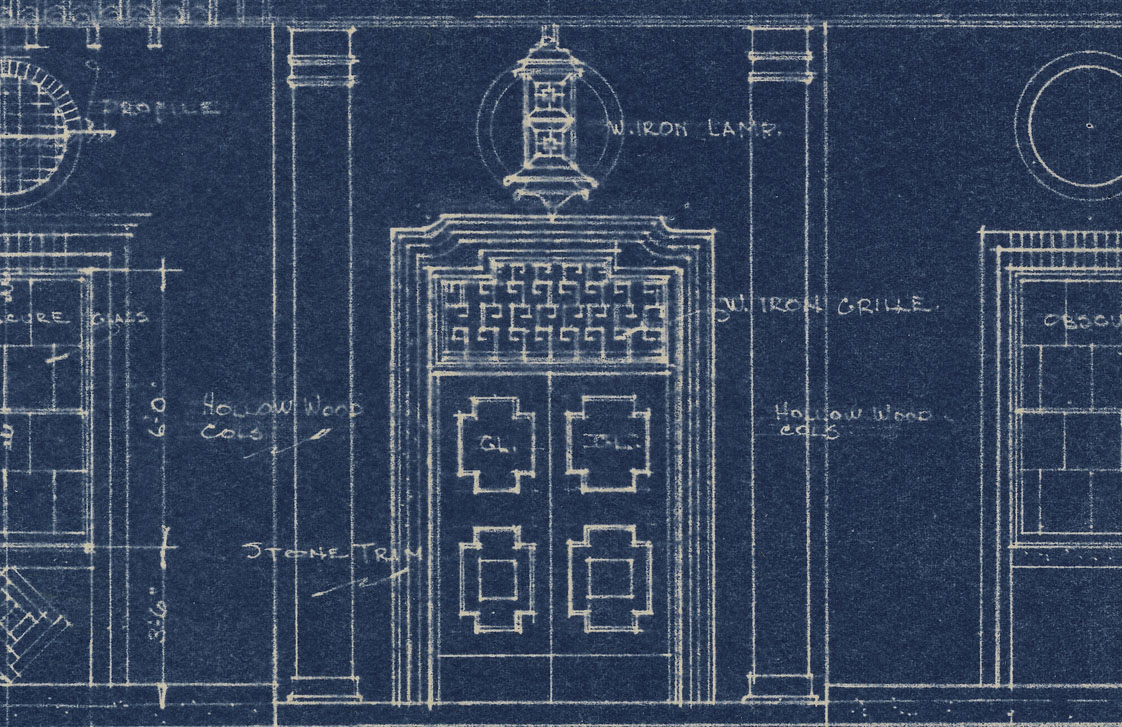
In the early to mid-20th century, many Chinese-owned theatres began to decline because of strict immigration laws. Over time, theatres were demolished or repurposed as cities grew and redeveloped. However, the flexible staging of Cantonese opera helped it thrive and adapt to new spaces: a table could still be a throne, a lantern could still suggest night. Today, performances take place in rented theatres, community spaces, and festival stages.
The imaginative world of the stage remains. Audiences, particularly within the Chinese diaspora, continue to experience these stories, music, and symbolic props as bridges to memory, imagination, and cultural identity, connecting past and present across generations.