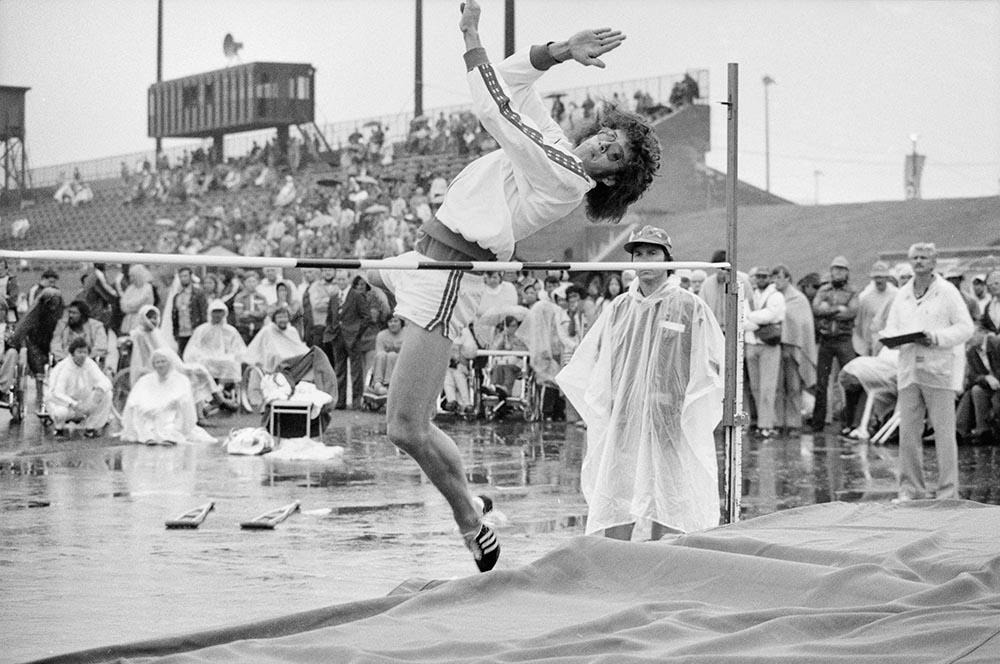
Back in 1976, Montreal did not host the Paralympic Games. Instead, they took place August 3-11 in Toronto. Canadian athlete Arnold Boldt, a leg amputee, excelled, winning two gold medals: one in the high jump and the other in the long jump.
In 1980, at the Paralympic Games in Arnhem, Netherlands, he set the world record for a leg amputee by clearing 1.96 metres in the high jump. Even more impressive, this record still stands today!
After the Toronto Paralympic Games, the Canadian government started funding programs to offer athletes with disabilities more opportunities to engage in sports. The International Paralympic Committee (IPC), the organization that would take charge of the global paralympic movement, was started in 1989. Its founding president was a Canadian, Robert Steadward, who led the organization until 2001.
The first time the Paralympic Games took place in the same city as the Olympic Games, using the same facilities, was in 1992 at the Albertville Winter Olympics in France.