Broadcasting the Games

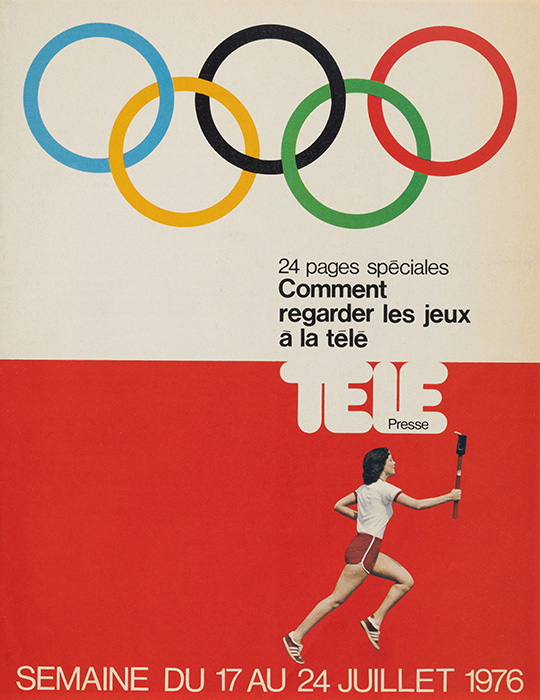
Image details — The front cover of Télé Presse magazine is illustrated with the Olympic rings and a photograph of a female torchbearer running with the torch. In French, the front reads, "24 special pages, How to watch the Games on television." It is dated the week of July 17-24, 1976.
Weekly TV listings supplement, Télé Presse. Comment regarder les jeux à la télé

To broadcast the Games around the globe, CBC/Radio-Canada created the Olympic Radio and Television Organization (ORTO). Its mission was straightforward, but ambitious: provide audio and visual coverage of the Games to both Canadian and foreign broadcasters.

At the event sites, approximately 3,000 radio and television professionals, from 125 different countries, speaking more than 30 languages, worked side by side.

Thanks to ORTO, over 1.5 billion people tuned in to watch and listen to the Games—a record for the time!
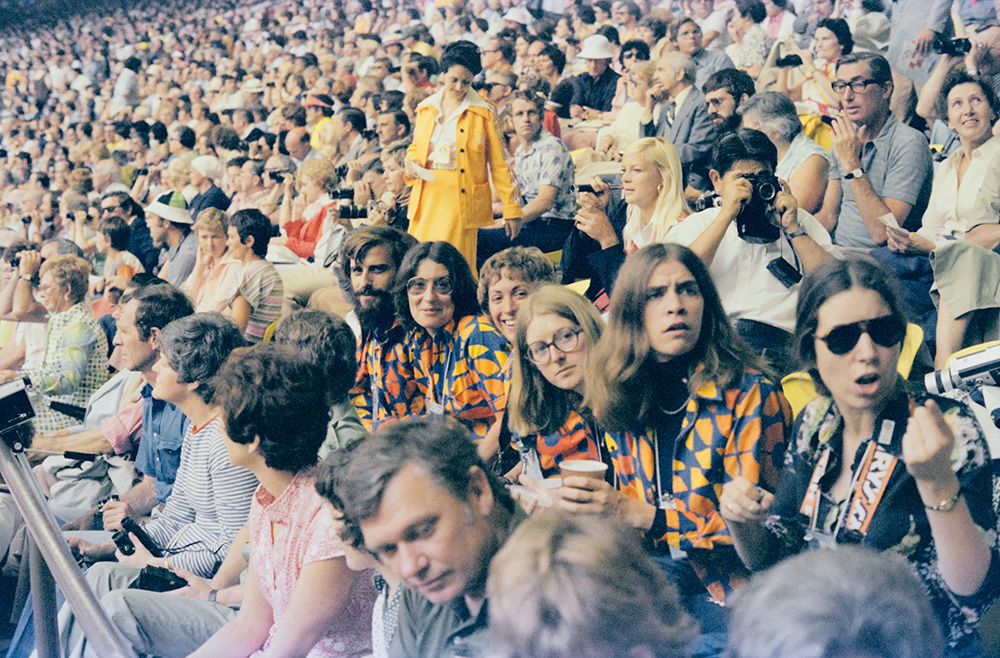
Image details — Five Olympics Radio and Television Organization (ORTO) employees stand out from the crowd in a packed grandstand because of their shirt. It has a blue background, with a red letter "C" radiating in all directions, becoming orange and yellow.
Members of ORTO in the crowd at the Olympic Stadium, July 1976

To offer the audience a cutting-edge experience, ORTO introduced several new ways of operating. For example, installing mini-consoles at the event sites meant commentators could be close to the action. Also, lightweight cameras and new techniques made it easier to capture images of the athletes in action. In short, ORTO showed no lack of creativity!

The 1,600 ORTO staff members were easily recognized by their brightly coloured shirts and jackets emblazoned with the new CBC/Radio-Canada logo. This logo features a stylized letter “C,” radiating in all directions to represent radio and television broadcasting. The shirt was created by designer Jean-Claude Poitras.
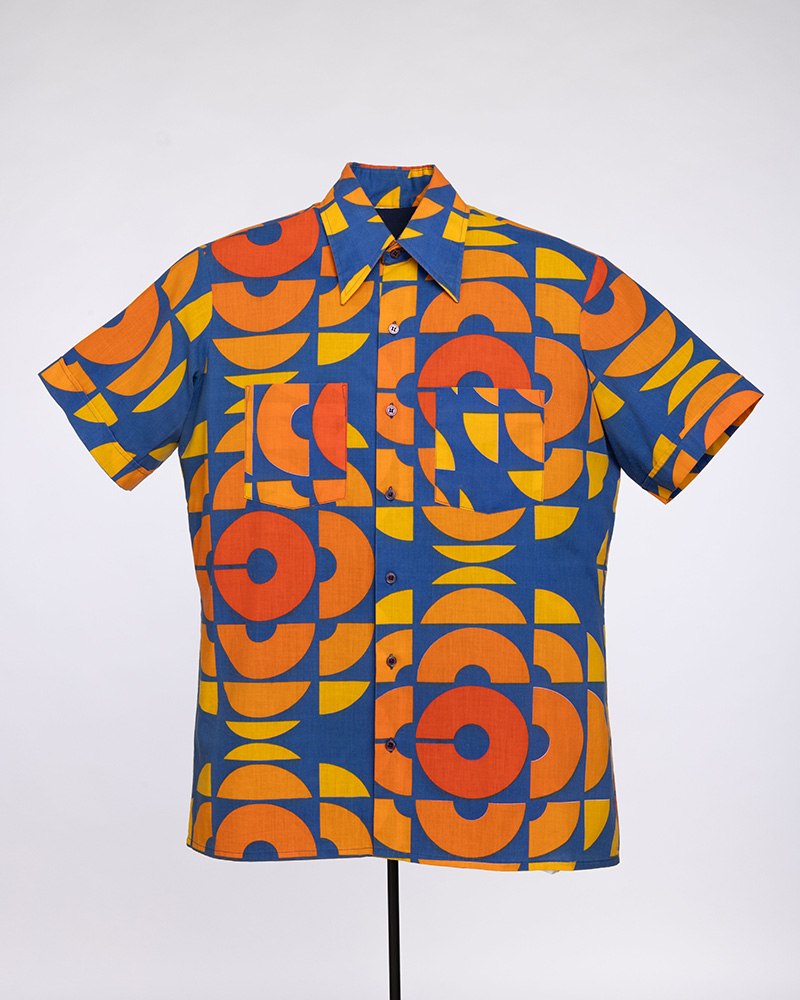
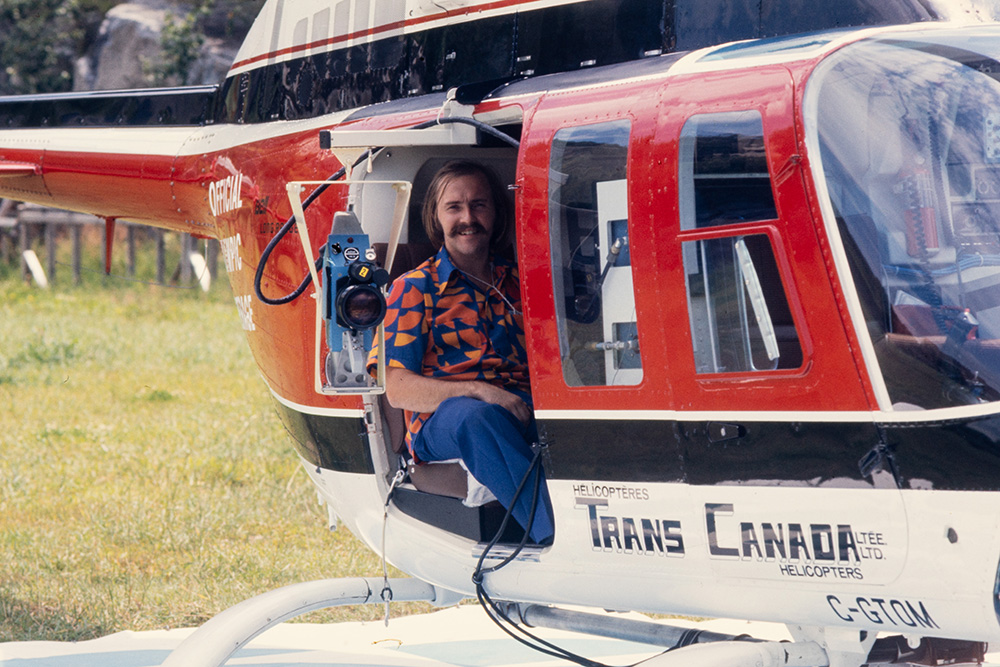
Image details — The shirt worn by Olympics Radio and Television Organization (ORTO) technicians features the CBC/Radio-Canada logo: against a blue background, the red letter "C" radiates in all directions, becoming orange and yellow.
ORTO uniform shirt
Image details — A smiling man sits in a red helicopter parked on the ground, next to a film camera mounted on the outside. He is wearing the shirt designed for the Olympics Radio and Television Organization (ORTO), which features the red, orange and yellow CBC/Radio-Canada logo on a navy blue background.
An ORTO technician aboard a helicopter linked to an autocamera, July 19, 1976

More lightweight equipment

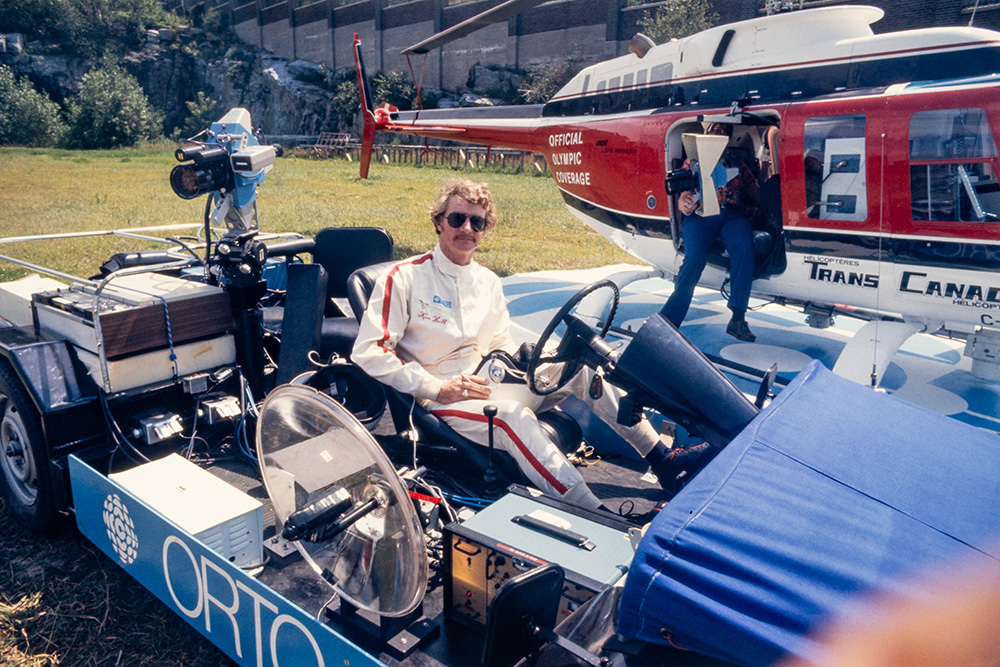
Back in 1976, there were no drones. To capture live footage of the competitions, ORTO used an autocamera, a car stripped of its shell, piloted by a professional driver. These vehicles replaced the motorcycles that had been used up to then and enabled the cameraman sitting in the back to film striking close-ups of the athletes’ faces as they competed. The footage captured was then transmitted to a helicopter flying 1,000 feet above the vehicle, and then relayed to master control for broadcast.

All of these innovations impressed the team in charge of the upcoming Moscow Games, and the Soviet Union decided to adopt a similar set-up.

Image details — A man in a white jumpsuit with a red stripe running down the sleeves and pant legs is sitting in an autocamera used by the Olympics Radio and Television Organization (ORTO). The blue vehicle, stripped of its shell, holds various pieces of equipment, including a film camera and parabolic dish antenna. There is a red helicopter behind it.
Driver Ken Hill at the wheel of an ORTO autocamera, July 19, 1976