Repression of homosexual communities

In 1969, Canada passed a law that partially decriminalized homosexuality. However, the measure actually resulted in increased police surveillance of this community, because the law continued to forbid public displays of homosexuality.

Starting in 1975, members of Montreal’s gay community were the victims of the major “Olympic clean-up campaign” undertaken by Mayor Drapeau, a Catholic with traditional, conservative values. In the spring of 1976, approximately 200 people were arrested. The Gay Coalition Against Repression (GCAR) was formed on May 20, 1976, to counter this police harassment. On June 19, 1976, one month before the opening of the Olympic Games, the GCAR organized the first gay march in Montreal, drawing some 300 protesters.
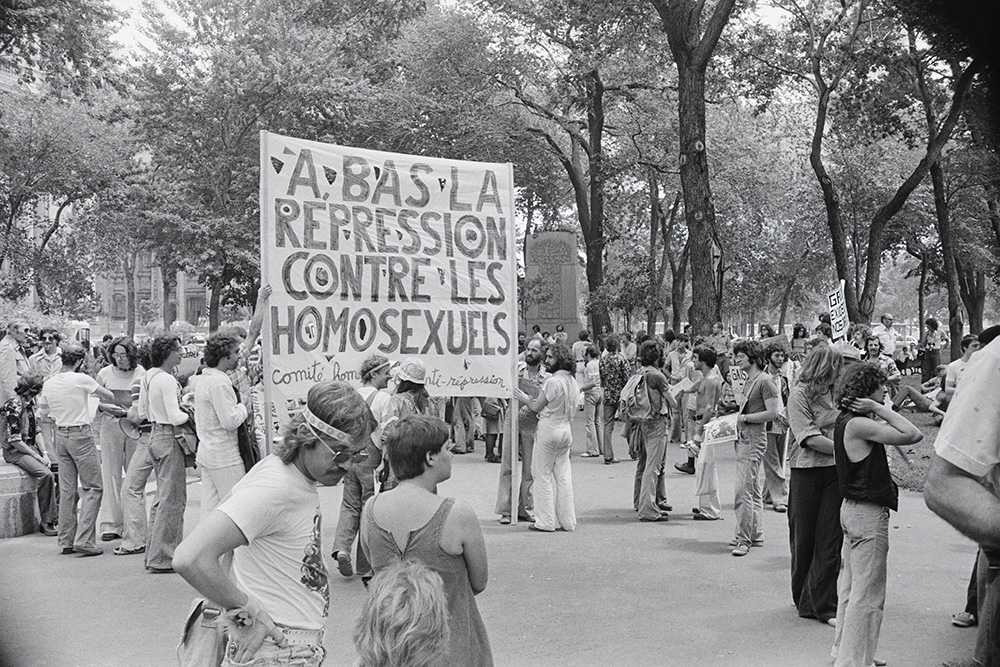
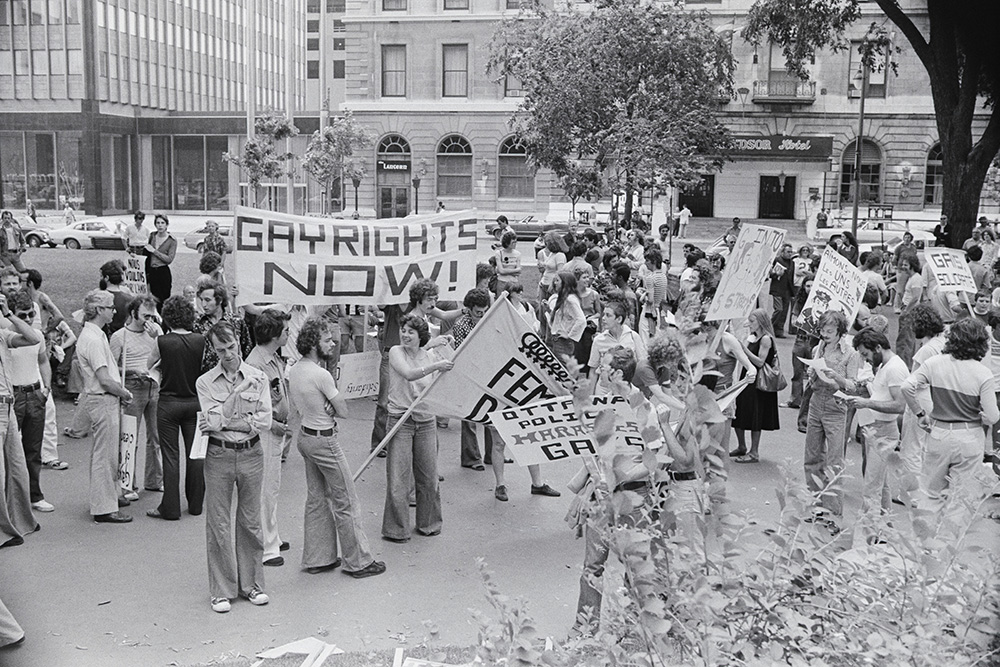
Image details — In black and white, over fifty protesters, most of them young, gather in Dorchester Square. Two people hold up a large sign that reads, "Stop harassing gay people" in French.
Demonstration against the repression of the homosexual community, Dorchester Square, June 19, 1976
Image details — In black and white, about seventy people protesting for gay rights are gathered in Dorchester Square, across from the Windsor Hotel. Many are holding signs.
Demonstration against the repression of the homosexual community, Dorchester Square, June 19, 1976

In 1977, large numbers of homosexuals were again arrested, but this time, public opinion was on their side. In December 1977, Quebec’s National Assembly adopted a law banning discrimination based on sexual orientation, the first such legislation in North America. Montreal held its first Pride parade in 1979.
From west to east

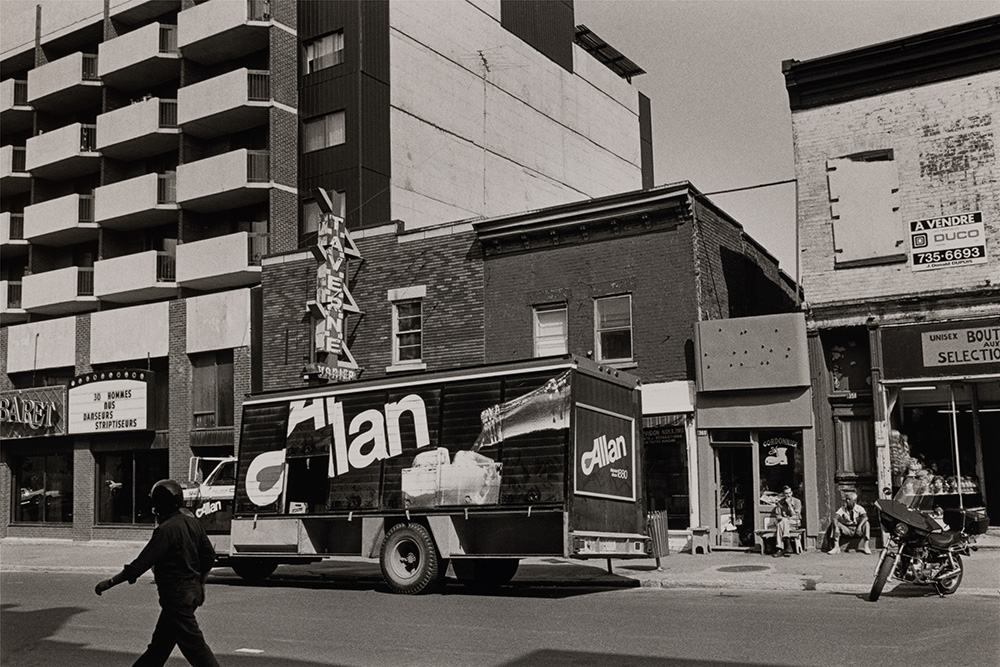
Did you know that, before becoming established in the east end neighbourhood now known as the Village, the cisgender gay male community was based around Peel and Stanley in the west end of downtown? Rents were affordable and many bars welcomed homosexuals.

It was not until the early 1980s that the Village, as we know it today, began to take shape, with the opening of multiple gay bars that helped foster the community’s development.

Image details — In black and white, a delivery truck for the Allan soft drink company drives down St. Catherine Street, passing a tavern and a strip club. A pedestrian walks by in the foreground and two men sit across the street near a shoe repair shop and a parked motorcycle.
Strip bar on St. Catherine Street, 1981