Unlike Western classical music, which is typically read from staff notation on a page, Cantonese opera music has traditionally been learned through listening, repetition, and apprenticeship. Musicians and singers relied on oral instruction and group rehearsal rather than fixed scores, reflecting the fluid and collaborative nature of the art form.
For Chinese diasporic communities in Canada, this soundscape has also been a way to stay connected to their culture and homeland. Familiar melodies, vocal styles, and rhythms carry memories and shared histories, even as communities adapted to new environments.
Handwritten Scores
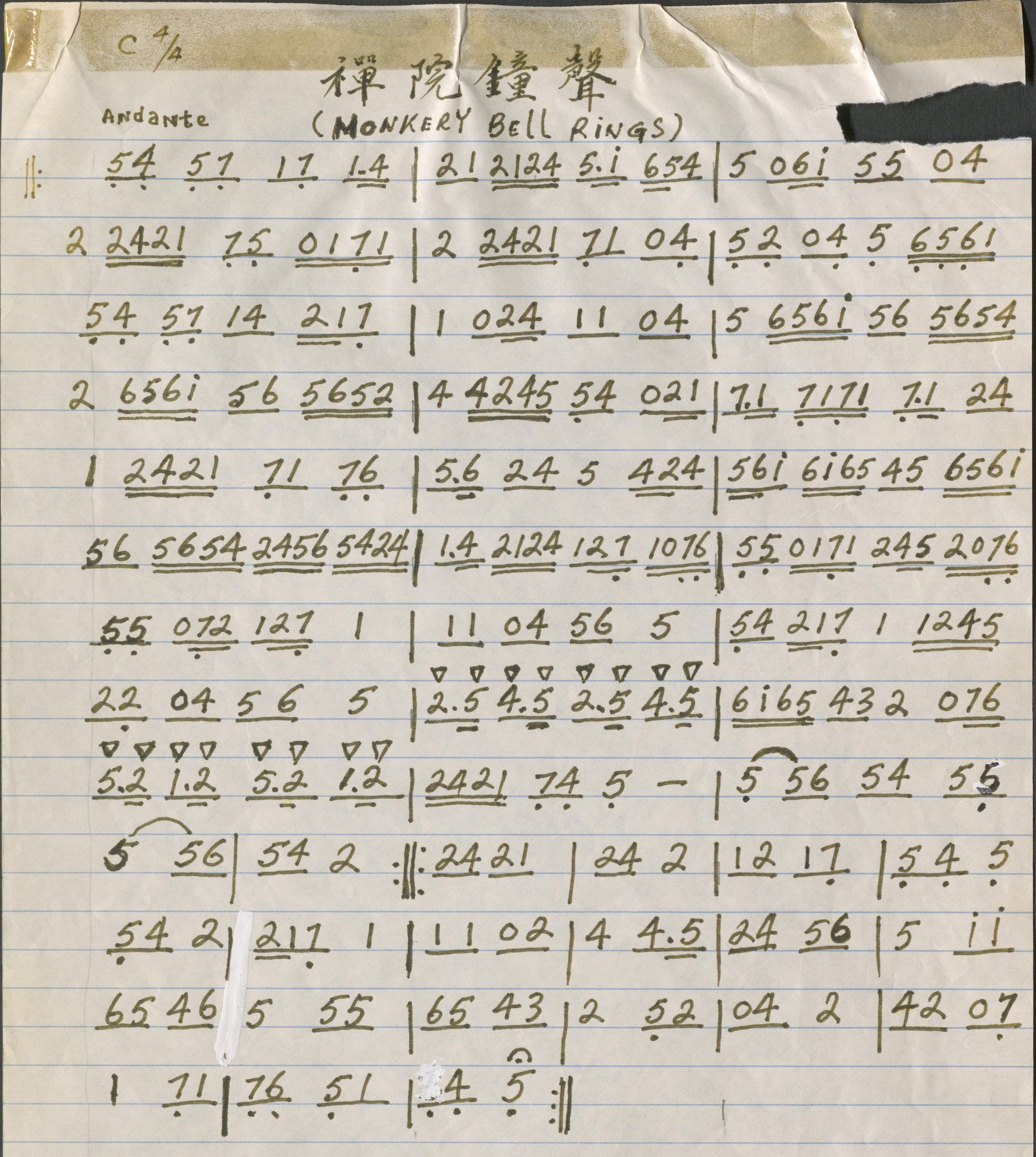
A common notation system used for sharing modern Chinese music is jianpu (简谱), or numbered notation. Below is a beautiful example of a score, handwritten by Raymond Jai, showing how music could be written down and shared. Written notation became another form of transmission, allowing people to practice, learn, and perform songs at home and within their communities.
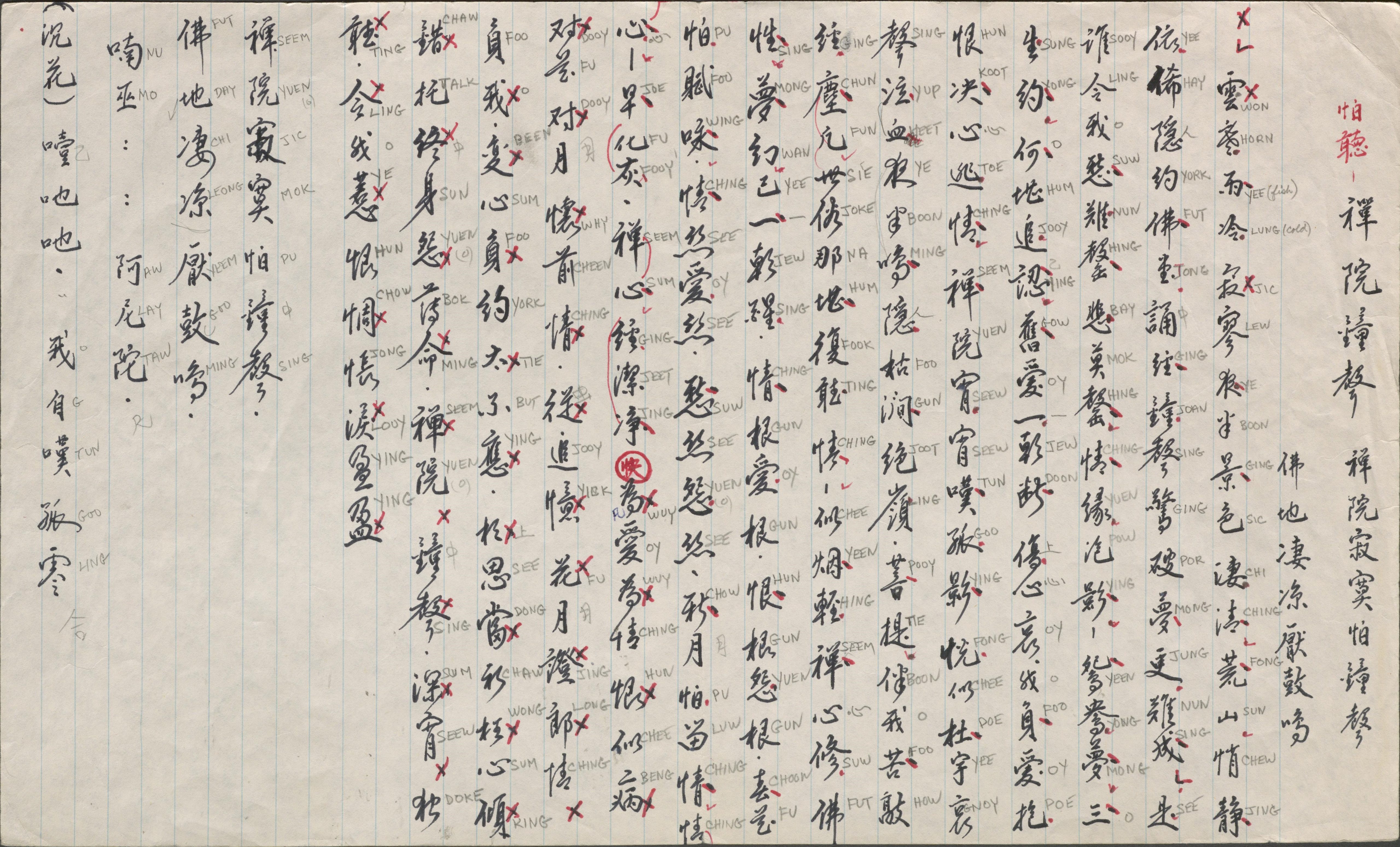
For many Chinese Canadians who didn’t grow up learning to read Chinese, like Beatrice and Julie Jai, phonetic spellings were added next to the lyrics so they could still learn and perform the songs. These adaptations show how tradition has evolved to remain accessible across languages and generations.
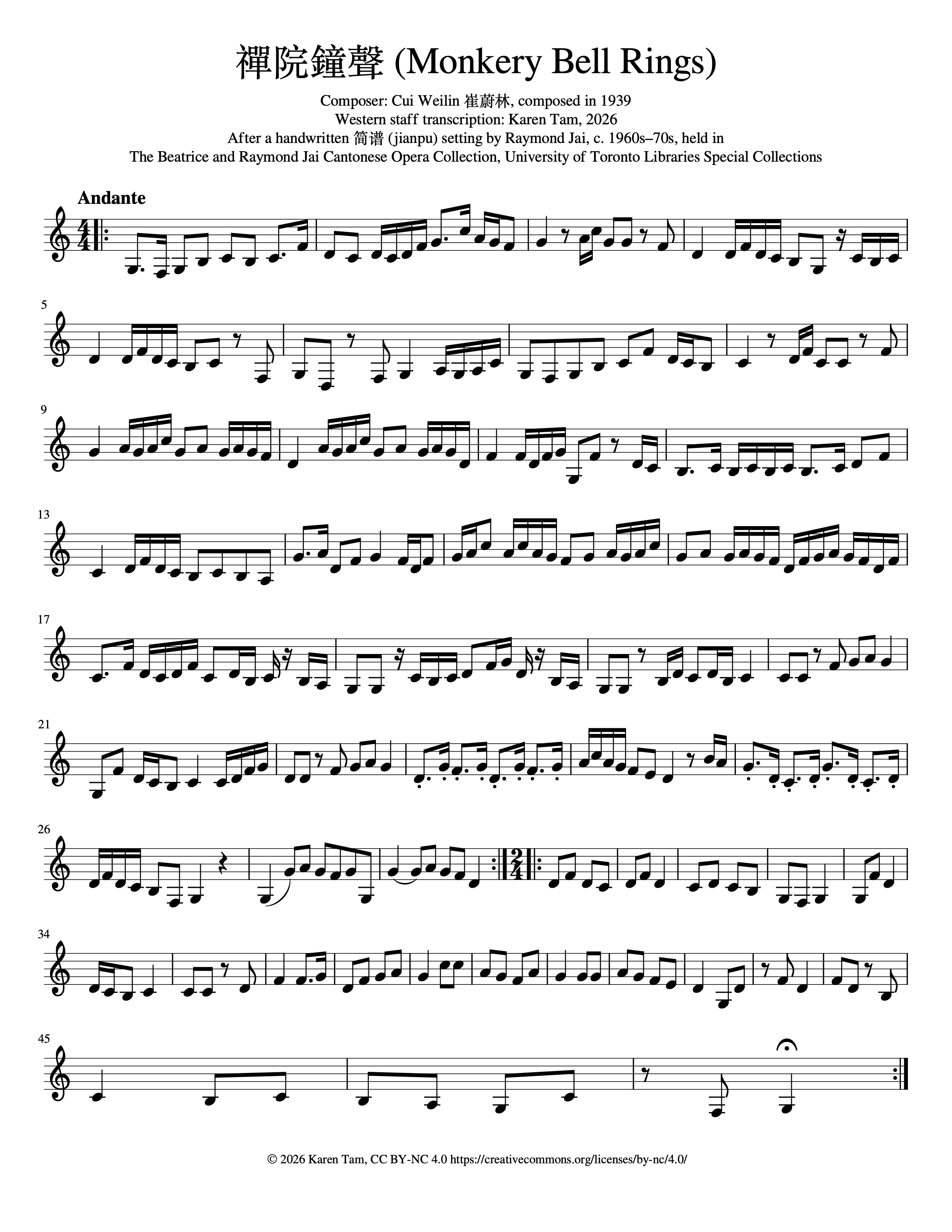
To learn the music myself, I transcribed the numbered notation into Western staff notation, so I could play it on the piano and understand the melody. I also recorded the piece, so you can listen and follow along, comparing how the jianpu translates into Western notation.
Together, these different methods, from oral teaching, handwritten scores, phonetic guides, and transcription, show how Cantonese opera music continues to be shared, adapted, and kept alive.