

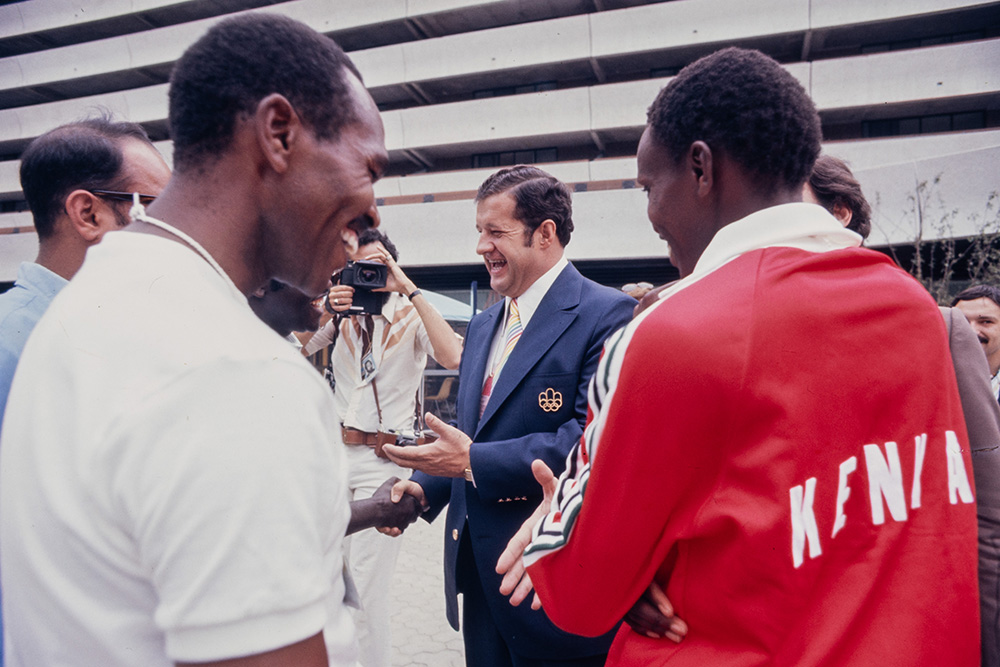
The year 1976 was a time of strained international relations. During the summer leading up to the Olympic Games, 32 countries, including 29 African states, decided to boycott the Montreal Games. The African nations were protesting the presence of New Zealand, whose rugby team had toured South Africa. The latter country had been banned from the Games since 1964 because of apartheid, a racist political system that discriminated against the predominantly black population.
To show solidarity, African countries withdrew from the Montreal Games. This meant several events were missing top competitors, while the athletes themselves also lost the chance to show off their talents on the global stage. It was even more heartbreaking for the African athletes who had already travelled to Montreal and taken part in the opening ceremony, and were then informed they had to leave the following morning.
This was followed by another crisis. Since Canada had officially recognized the People’s Republic of China (PRC), it refused to allow Taiwan to compete under its usual name of the Republic of China (ROC).
In the end, 88 countries took part in the Montreal Games, despite these major political issues.