The arts and culture as an integral part of the Games

It might seem surprising, but the arts and sports have been intertwined since Antiquity. “Why?” you may ask. Well, as the saying goes, a sound mind in a sound body! The goal of the Games is to promote harmony, diversity and openness, so what better vehicle than culture?
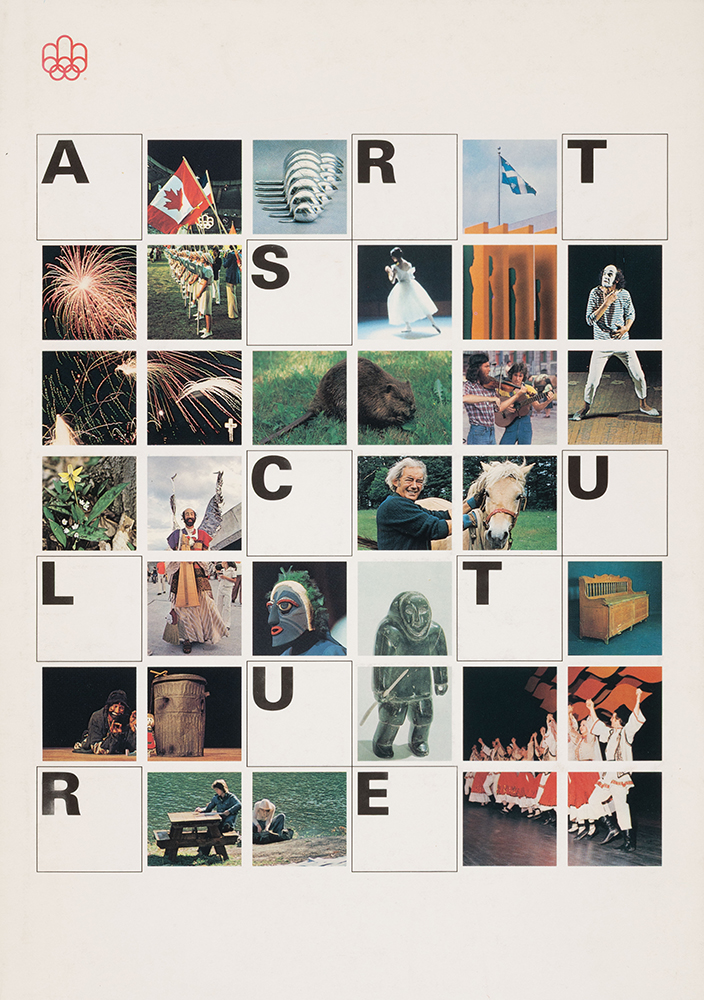
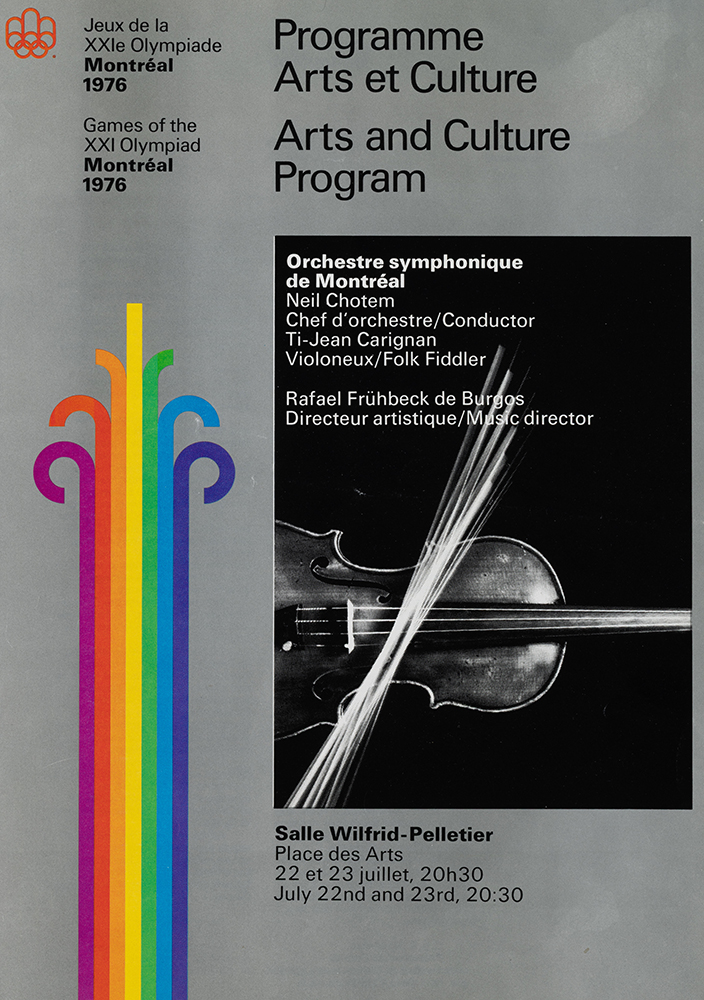
Image details — The front cover of a white book features a grid design in which the individual letters of the words "arts" and "culture," are interspersed with a variety of colourful images. The pictures illustrate these themes. The red Montreal Olympic Games logo is in the upper left corner.
Book, Arts and Culture Program
Image details — This flyer from the Montreal Olympic Games Arts and Culture Program features a photograph of a violin and stripes in rainbow colours rising up, like water in a fountain. It promotes an Orchestre symphonique de Montréal concert, with conductor Neil Chotem and folk fiddler Jean "Ti-Jean" Carignan.
Leaflet, Arts and Culture Program

Started about 800 BC, the Olympics of Ancient Greece featured the work of painters, sculptors and poets who created works inspired by athletic exploits. People attending the Games could also enjoy concerts, plays and circus acts.
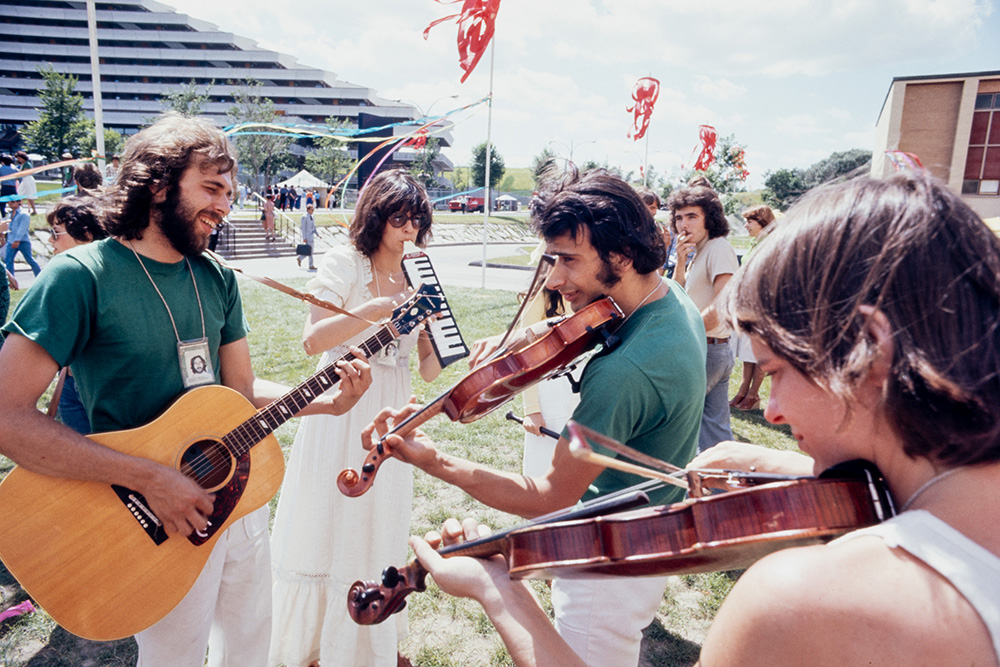
Image details — Four musicians standing in a semi-circle play on a lawn with the Montreal Olympic Village in the background. A bearded man plays guitar, a man and woman both play violins, and another woman plays a melodica (keyboard harmonica).
Musicians performing at the Olympic Village, July 9, 1976

In Montreal, COJO’s Arts and Culture Program sponsored over 3,000 artists presenting 6,000 hours of entertainment. Streets, parks and theatres in every area of the city hosted these free shows. Among the performers were songwrite-composer, musician and singer-songwriter Robert Charlebois, the Petit Chanteurs du Mont-Royal, Sol the clown and performance duo Les Mimes électriques. Montreal set a veritable Olympic record for the Games with the most cultural content!
The Corridart affair

Have you ever heard of Montreal artist and architect Melvin Charney? Among his major projects are permanent public artworks in Place Émilie-Gamelin and the Canadian Centre for Architecture garden.

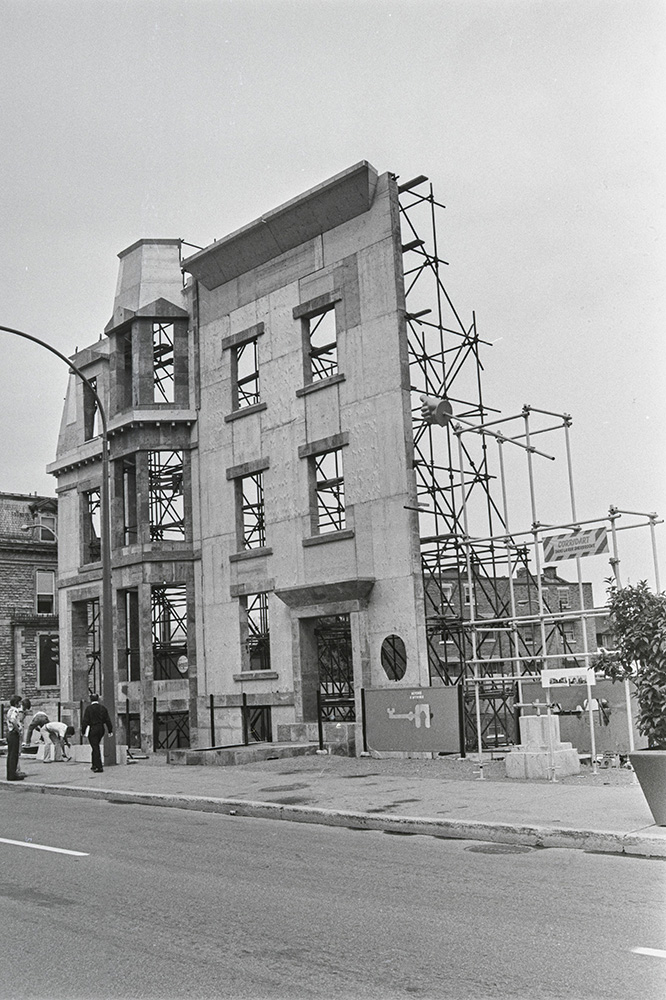
For COJO’s Arts and Culture Program, some sixty artists, including Charney, took part in Corridart, a sprawling exhibition of monumental works installed along Sherbrooke Street from Atwater Avenue downtown to the Olympic Park at Pie-IX Boulevard. Charney contributed a piece that referenced a former heritage building that had been destroyed by Mayor Drapeau’s administration to modernize Montreal.

Image details — In black and white, a work of public art entitled The Houses of Sherbrooke Street by artist Melvin Charney stands on a Montreal street. Two full-size fake façades hung on pipe scaffolding replicate heritage homes from the neighbourhood.
Corridart exhibition, July 7, 1976

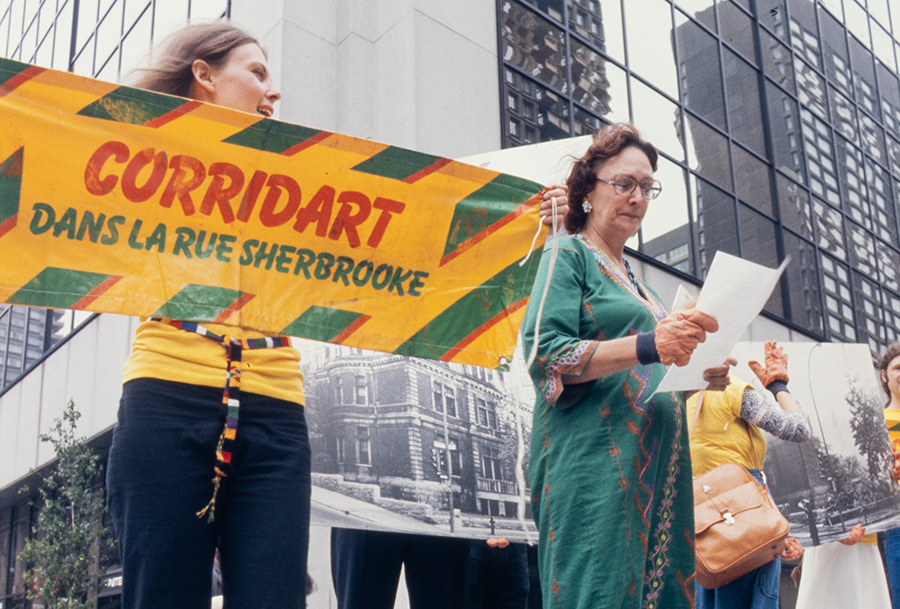
Several days before the Games opened, in the night of July 13 to 14, Corridart was dismantled without warning. Many of the works were damaged, some were taken to the dump and others were simply destroyed. According to Mayor Drapeau, the exhibition was indecent and a threat to public safety. In fact, Drapeau was disturbed by the works that were critical of his decisions over the decades. To this day, it is one of the most infamous examples of artistic censorship in the history of Canada.

Image details — In Montreal, a woman holds up a banner that reads, "CORRIDART on Sherbrooke Street" in French. A woman standing next to her looks down at a sheet of paper in her hands. Other people hold up large-format black and white photographs of heritage buildings.
Protest against the destruction of the Corridart exhibition, organized by the group Sauvons Montréal, July 16, 1976