

On August 1, after 14 days and 198 events, the Montreal Games came to an end. It was time to pass the torch to Moscow. The closing ceremony featured a prominent Indigenous presence, marking the beginning of better representation of First Nations in the Olympic movement.
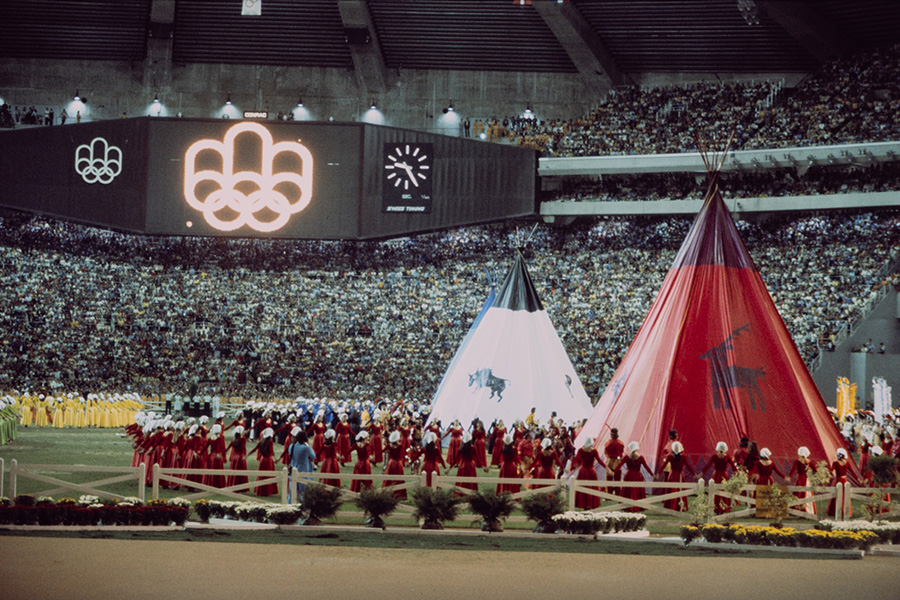
After Lord Killanin, the President of the International Olympic Committee (IOC), welcomed the athletes, 500 high school girls streamed onto the field to form the five coloured Olympic rings as the orchestra played a march using a blend of traditional and Indigenous instruments. This was followed by a parade of 600 dancers and Indigenous people who erected a teepee in the centre of each ring, adding a spectacular and highly symbolic aspect to the scene.
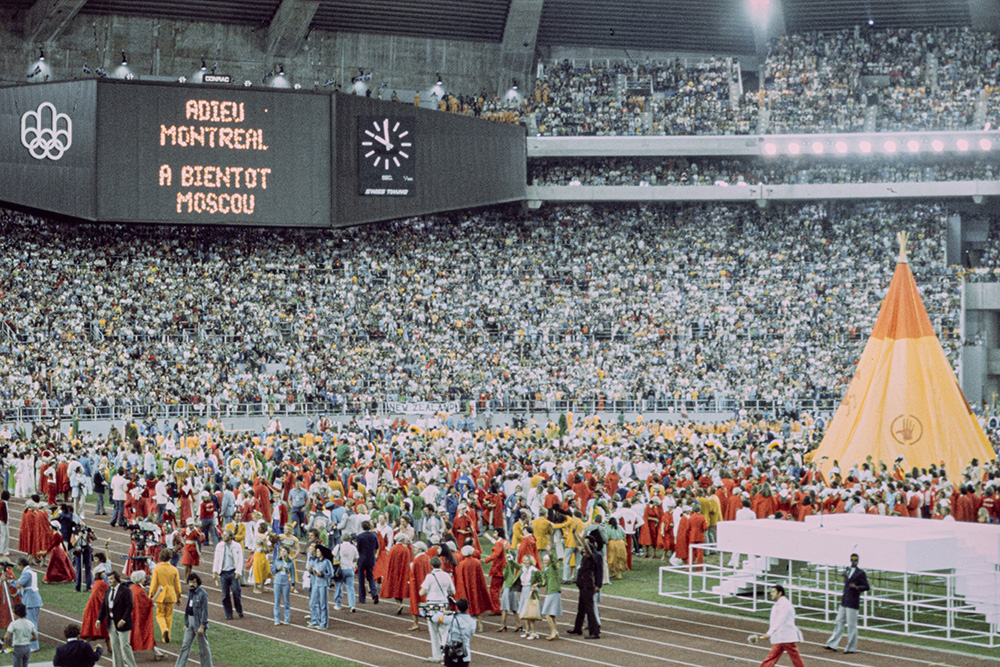
The Olympic flag was lowered to the sounds of the Olympic hymn and borne away to a farewell song composed by André Mathieu. Finally, the flame was slowly extinguished as Montreal-born musician Maynard Ferguson played a trumpet solo.
Farewell, Montreal, ‘til we meet in Moscow!