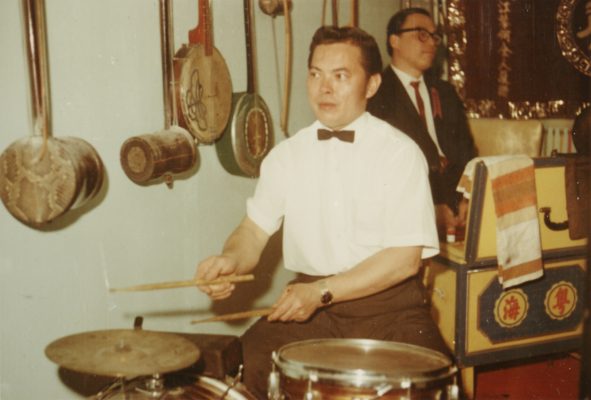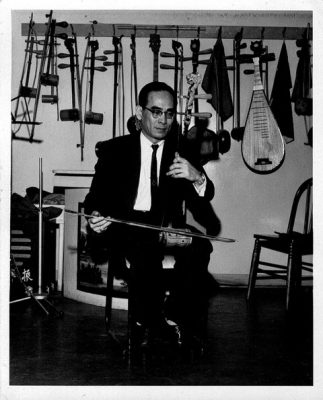
The Cantonese Opera Orchestra

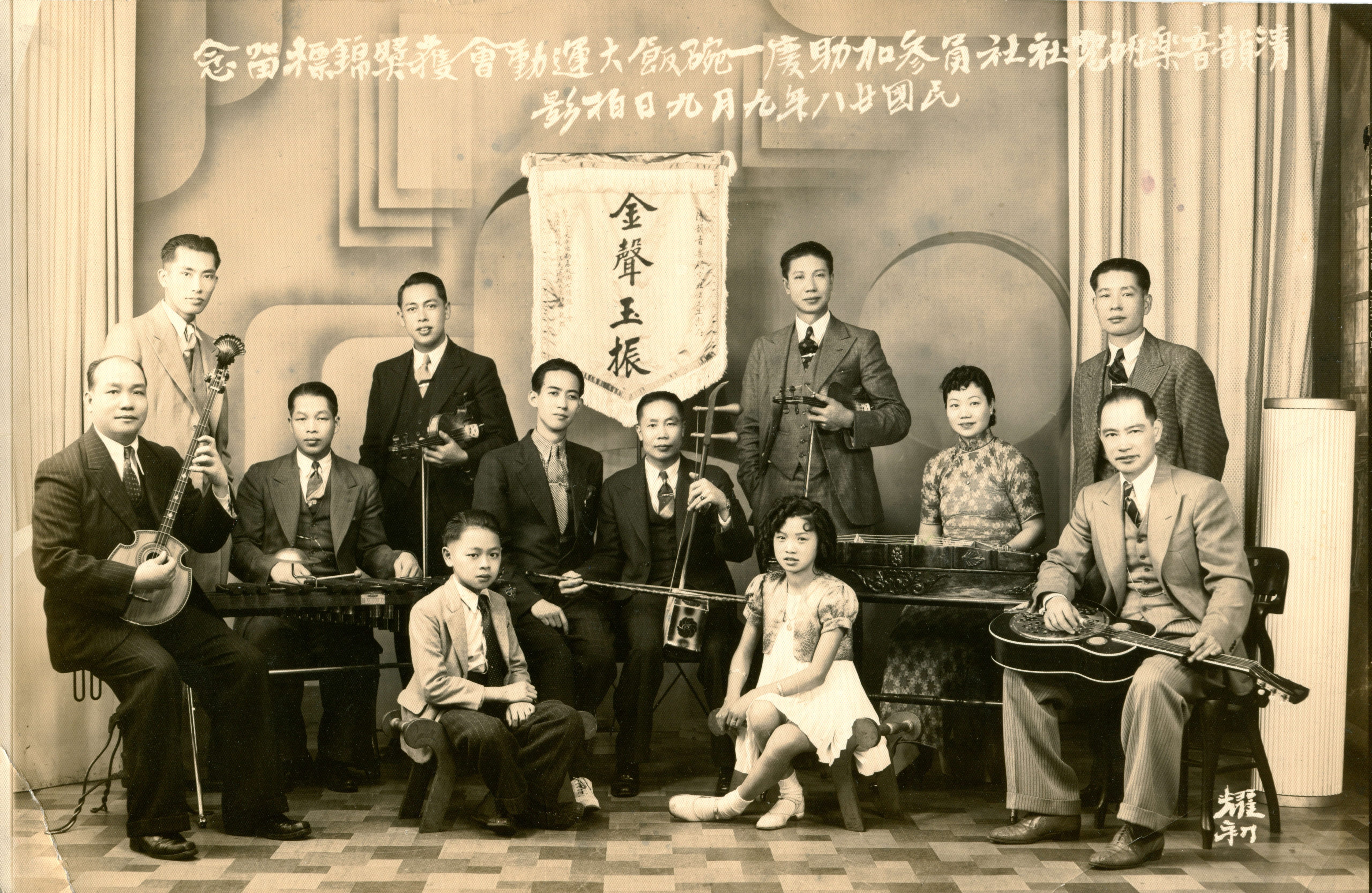
Image details — <span style="font-weight: 400;">Group photograph of the Ching Won Music Society seated with their instruments in front of a banner.</span>
Group photo of the Ching Won Music Society, Vancouver, September 9, 1939.

Traditionally, a full operatic performance features 10–20 musicians, though smaller ensembles performed independently of staged opera, allowing music clubs to flourish alongside the opera societies. In Canada, these played a vital role in sustaining Cantonese opera outside of the theatre, especially when full productions were infrequent or impractical. Groups like Vancouver’s Ching Won Musical Society performed not only operatic repertoire but also provided music for festivals, banquets, and community events.
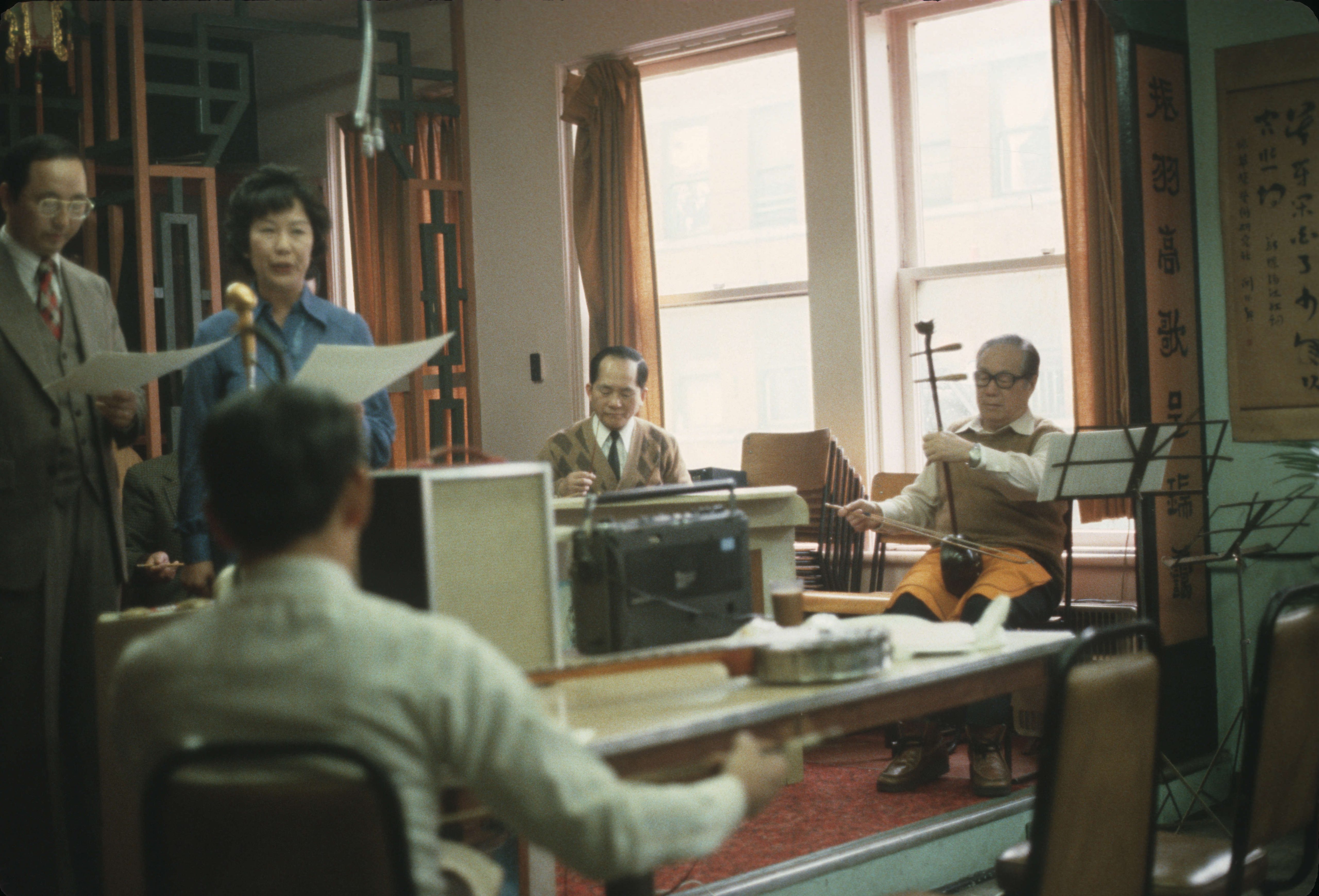
Image details — <span style="font-weight: 400;">A candid rehearsal scene shows three musicians and two singers gathered closely, mid-practice with their instruments in their laps and hands.</span>
Ching Won Musical Society, Cantonese opera rehearsal, 1980. Members practiced singing and playing instruments after work, continuing a long tradition of community music-making in Vancouver.

During performances, musicians are visible to the audience. They watch performers closely to adjust in real time and improvise within familiar musical patterns. This dialogue between actors and musicians gives Cantonese opera its energy and demonstrates the skill required from everyone onstage.

Since the 1920s and 1930s, Cantonese opera ensembles have incorporated from other musical traditions, such as violin, guitar, congas, and saxophone to expand the sonic palette and adapt to the availability of local musicians. Today, contemporary orchestras blend traditional instruments with electric guitars, keyboards, and other modern sounds. To engage new audiences, Cantonese opera has evolved to experiment with genres like jazz, pop, and even rap, while maintaining its signature melodic and percussive structures.
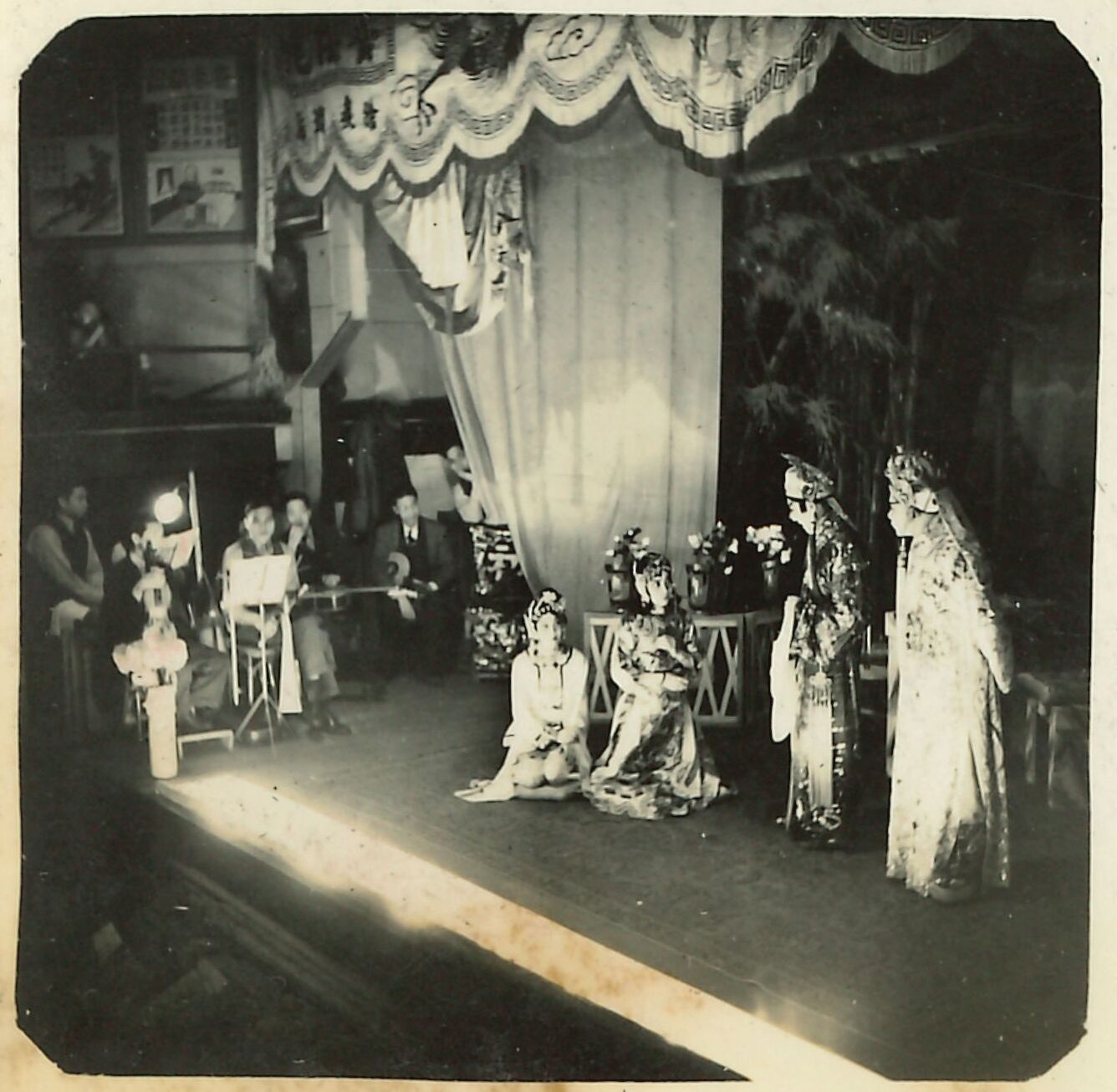
Image details — <span style="font-weight: 400;">Black-and-white photograph taken from side stage of the Jan Wah Sing Cantonese opera troupe in performance. Musicians stand behind music stands to the left, while four performers occupy centre stage.</span>
Musicians playing from the side stage during a performance by the Jan Wah Sing troupe (ca. between 1933 and 1941).

Instruments of a Cantonese Opera Orchestra
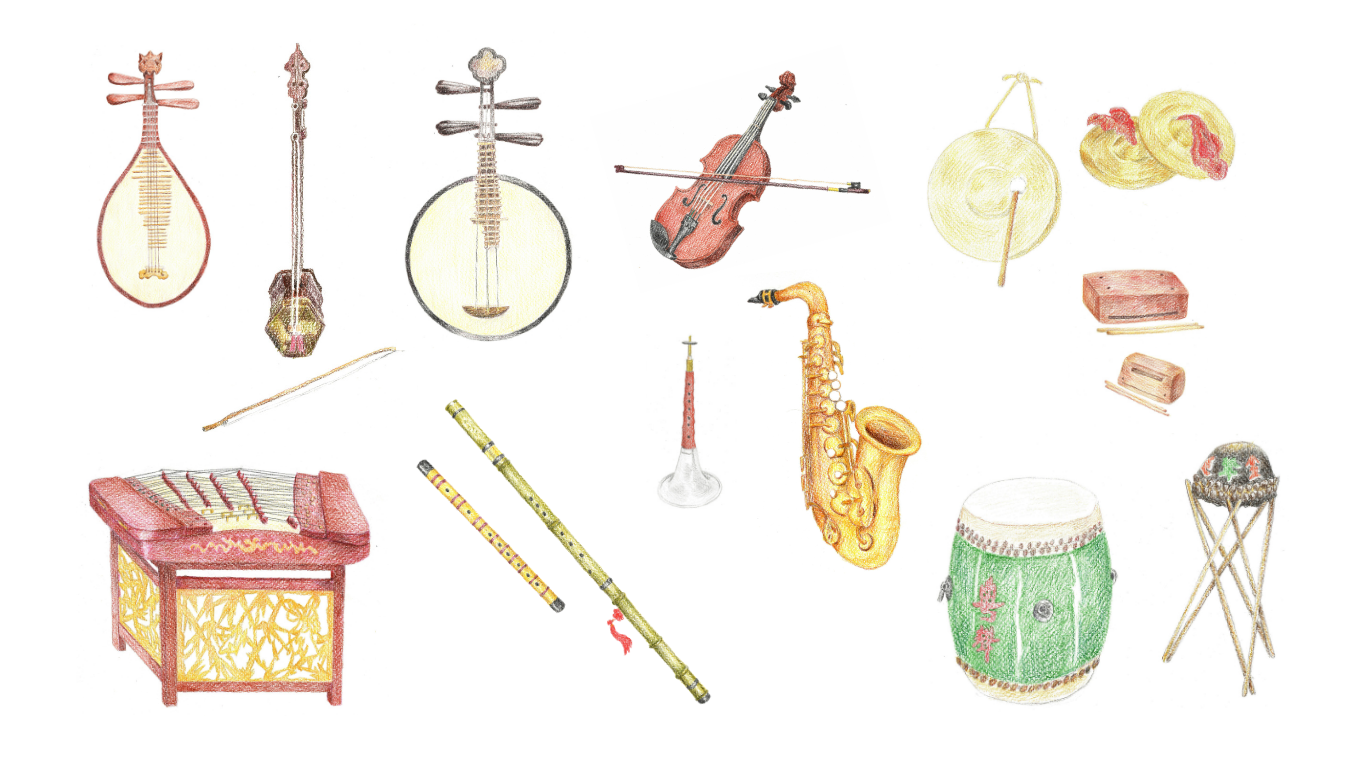
<span style="font-weight: 400;">Detailed pencil drawings of instruments: a hammered zither, a round-bodied lute, a two-stringed bowed fiddle, a pear-shaped plucked lute, a violin, a saxophone, flutes and a double reed wind instrument, gong, cymbals, drums and wood blocks.</span>
Enlarged image — Instruments of a Cantonese Opera Orchestra

The Luo (鑼) is a gong.

Bo (鈸) are cymbals.

Bangzi (梆子) are large rectangular blocks and duk/dik (督/滴) are smaller trapezoidal blocks.

The Gu (鼓) is a drum that cues entrances and exits, highlights dialogue, accompanies combats, and intensifies emotional scenes.

Shagu or shade (沙鼓) is a drum.

The Suona (嗩吶) is a double-reed instrument reserved for heightened scenes, ceremonial moments, or martial displays.

The saxophone is used for rich tone and dramatic effect, sometimes adding jazz or pop-inspired colour to performances.

The Dizi (笛子) is a transverse bamboo flute that introduces moments of lightness or melancholy.

The Xiao (簫) is a vertical end-blown flute that adds dramatic colour.

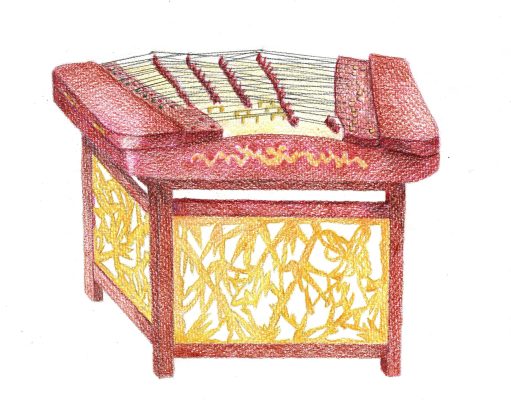
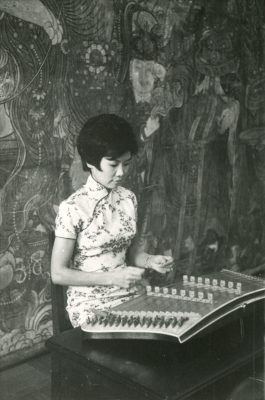
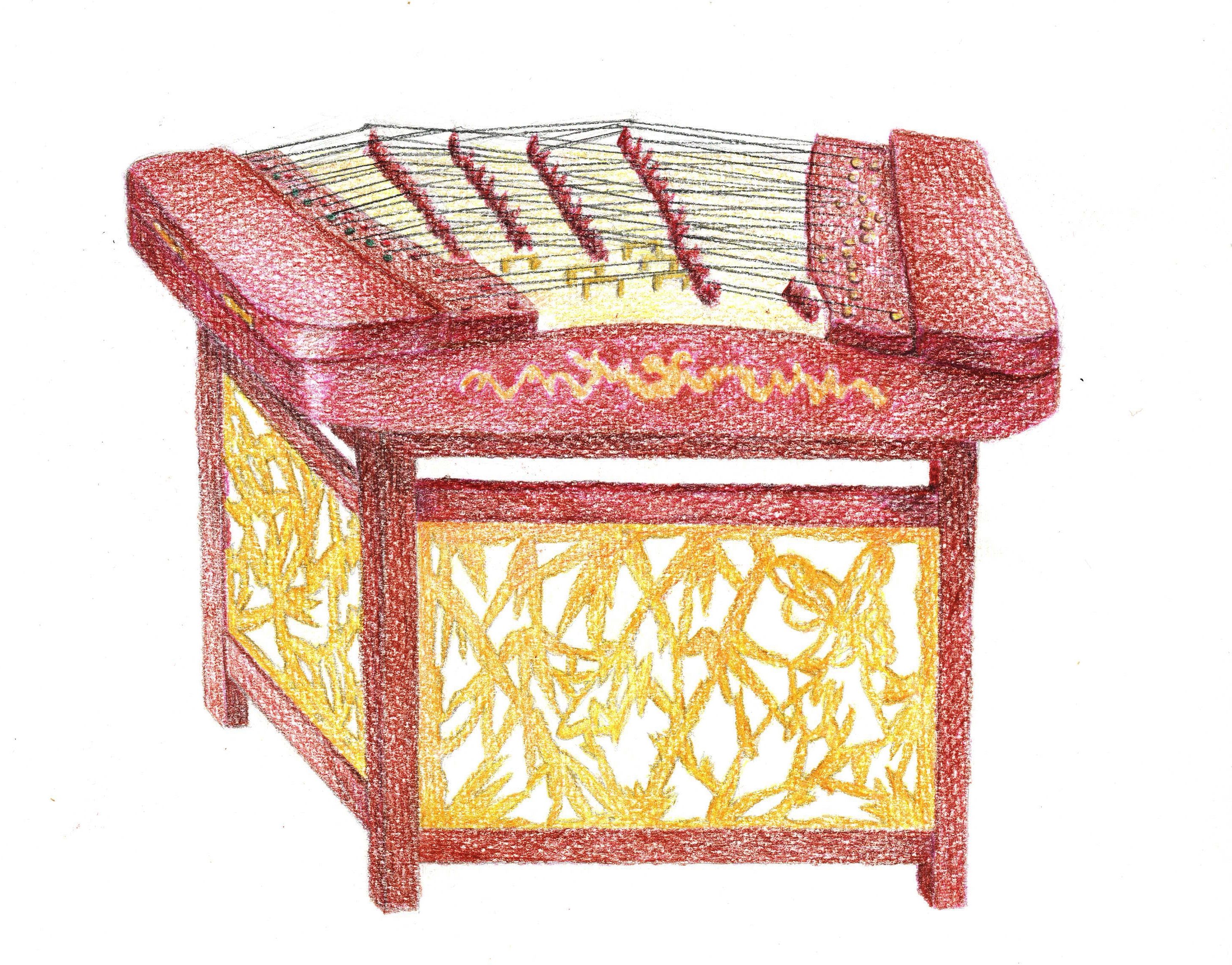
The Yangqin (揚琴) is a hammered zither. With a bright, resonant sound, it is a lead instrument.
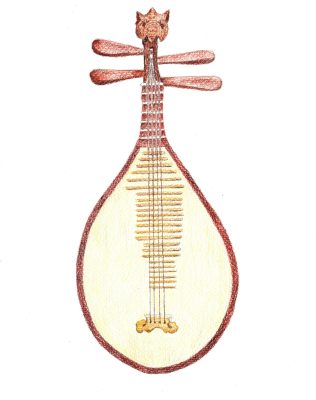
The Yueqin (月琴) is a round-bodied lute often called the “moon guitar”.

The Pipa (琵琶) is a pear-shaped plucked lute known for rapid, virtuosic passages.
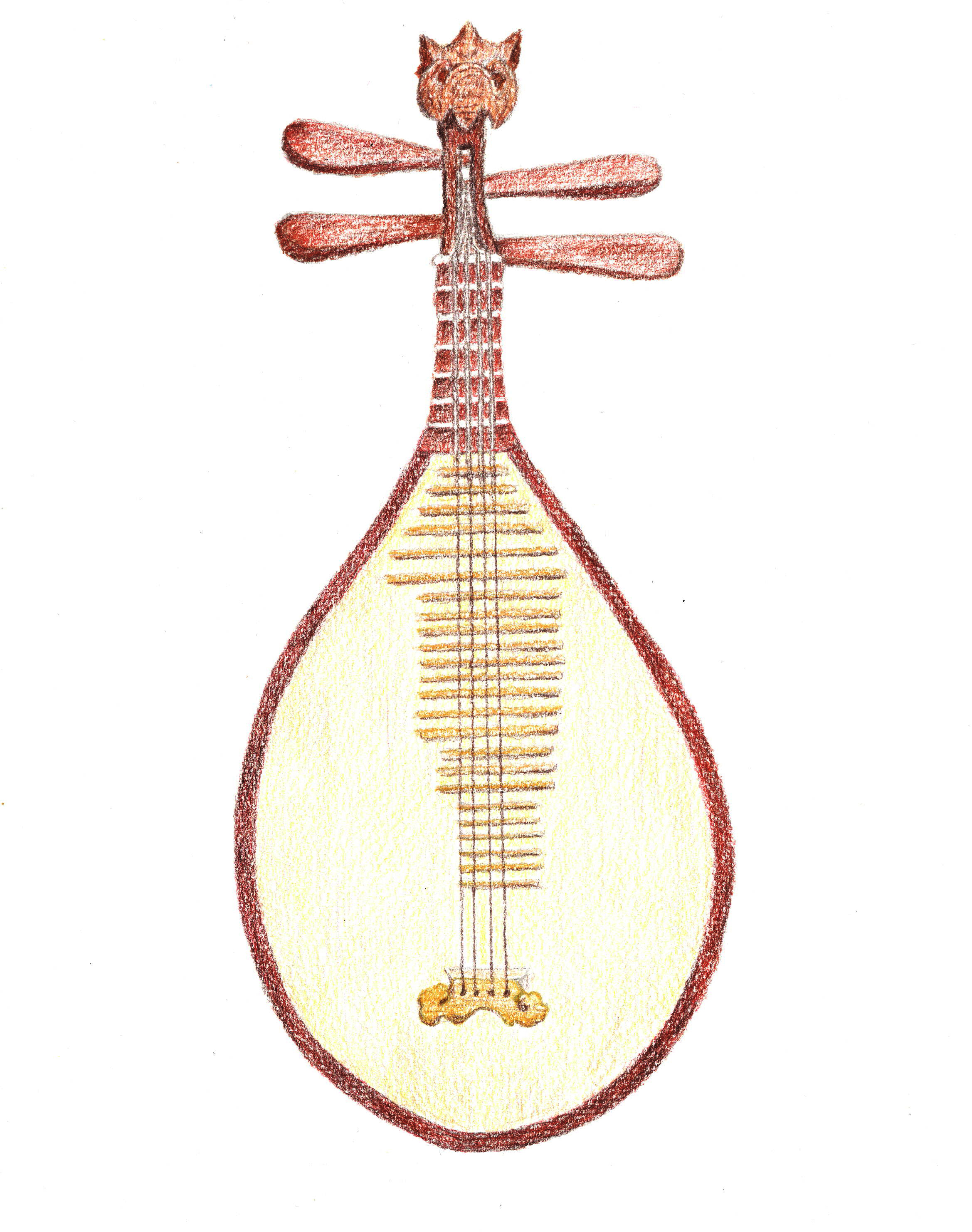
Listen to audio — [Excerpt of Jai’s duet on violin and peipa] <span style="font-weight: 400;">An illustration of a pipa, a pear-shaped, four-stringed lute.</span>
Excerpt from the song Colourful Clouds Chasing the Moon《彩雲追月》 with Raymond and Beatrice Jai on violin and pipa.

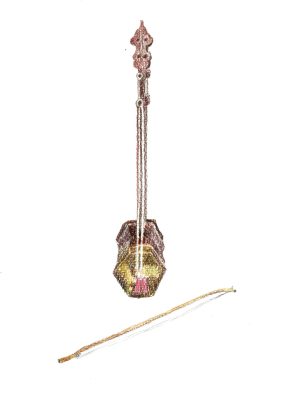
The Erhu (二胡) is a two-stringed bowed fiddle with warm, expressive tones.
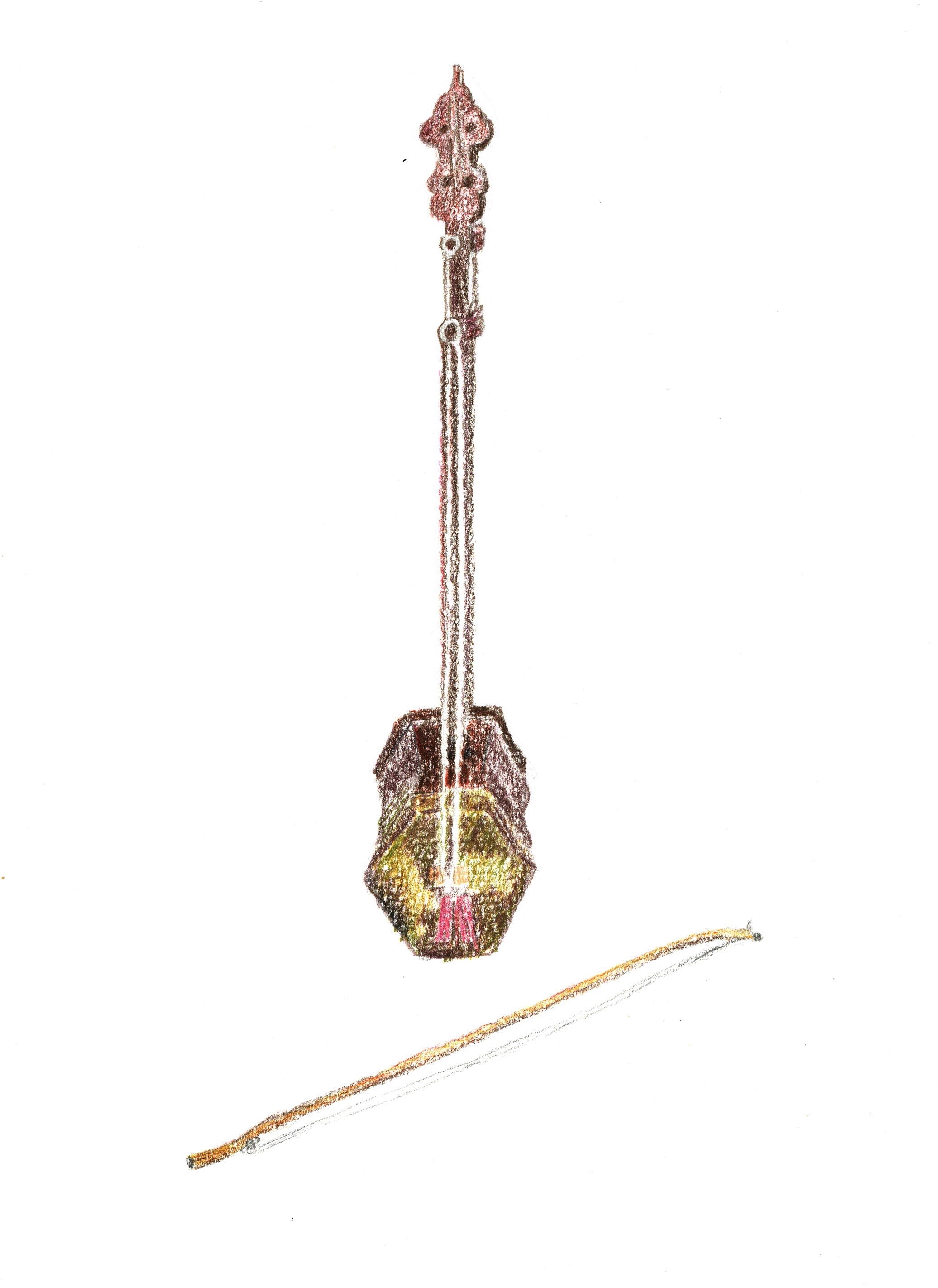
Listen to audio — [Raymond Jai instrumental] <span style="font-weight: 400;">An illustration of a traditional erhu, a two-stringed bowed instrument with a small, hexagonal sound box.</span>
Raymond Jai playing the erhu (二胡).

The violin can double or reinforce traditional melodies, adding warmth and expressive range.

Some of the many instruments of a Cantonese opera orchestra.