Vancouver, British Columbia
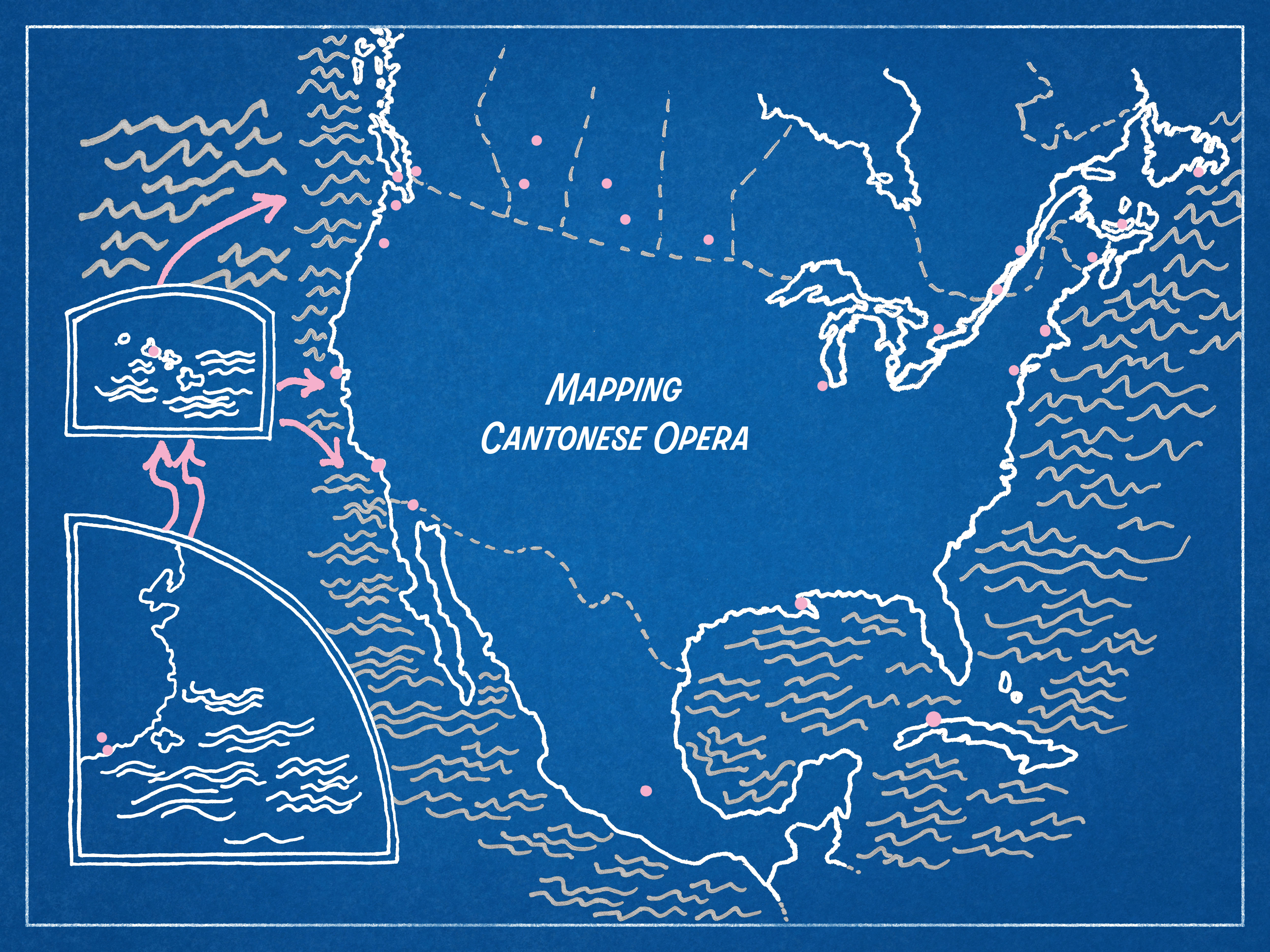
For more than a century, Cantonese opera has been part of Vancouver Chinatown life, sustained by generations of musicians and singers. In the early 1900s, Vancouver connected Hong Kong and southern China with the United States, Mexico, Cuba, and Canada. Performances in theatres and association halls offered migrant communities connection, entertainment, and the sounds of home.
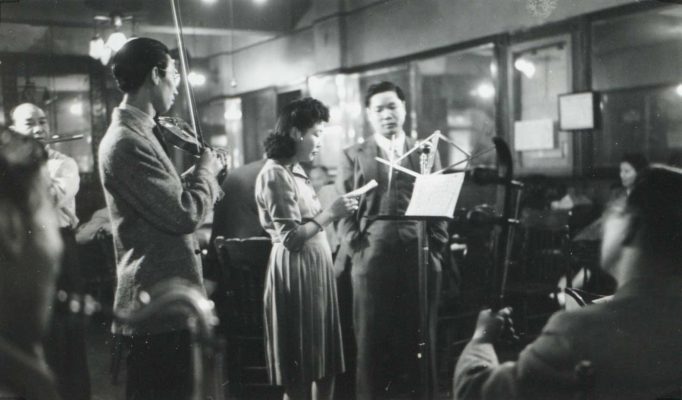
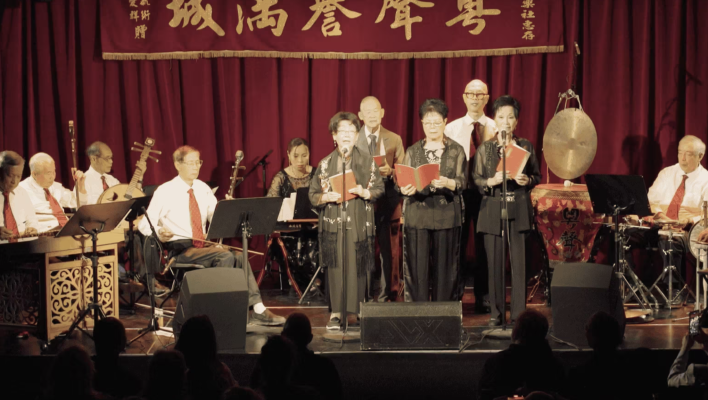
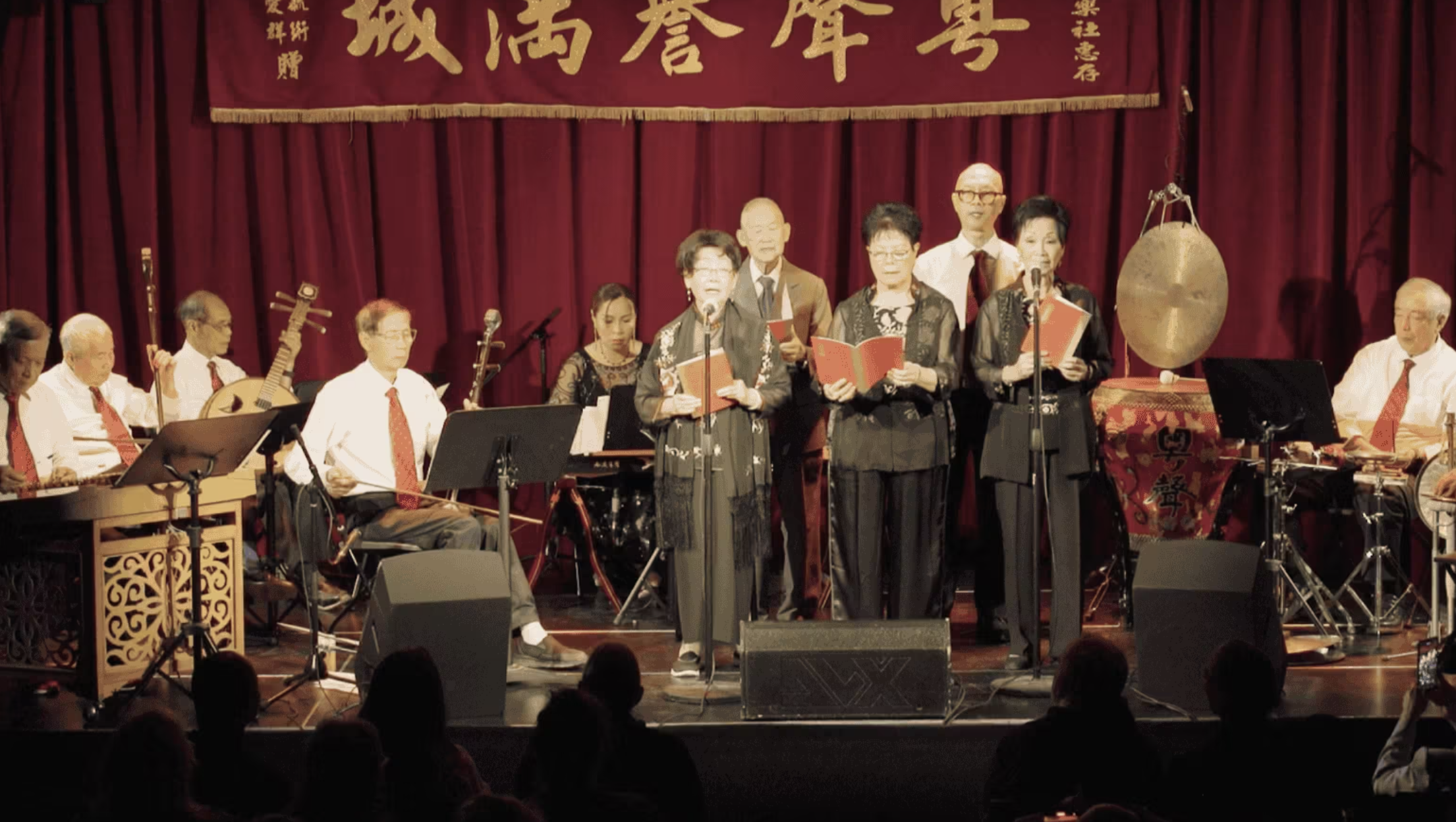
As professional touring troupes diminished and venues like the Sing Kew Theatre disappeared, amateur music societies emerged. Groups such as Jin Wah Sing Musical Association and Ching Won Musical Society (now the two longest-running clubs), became vital anchors in the community through weekly rehearsals, shared meals, and late-night singing.
The arrival of master musician Wong Toa from Hong Kong in 1961 marked a turning point, shaping generations of local performers.
Since the 1980s, waves of immigration have broadened participation. Today, women performers and organizers lead the Cantonese opera scene. One prominent example is Vancouver Cantonese Opera, founded by Rosa Cheng in 2000. They present performances, training programs, and bring Cantonese opera into schools, supporting new performers and expanding audiences across the city.
Toronto, Ontario
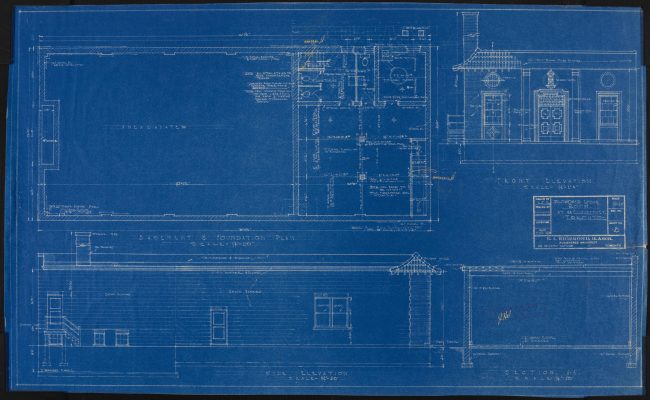
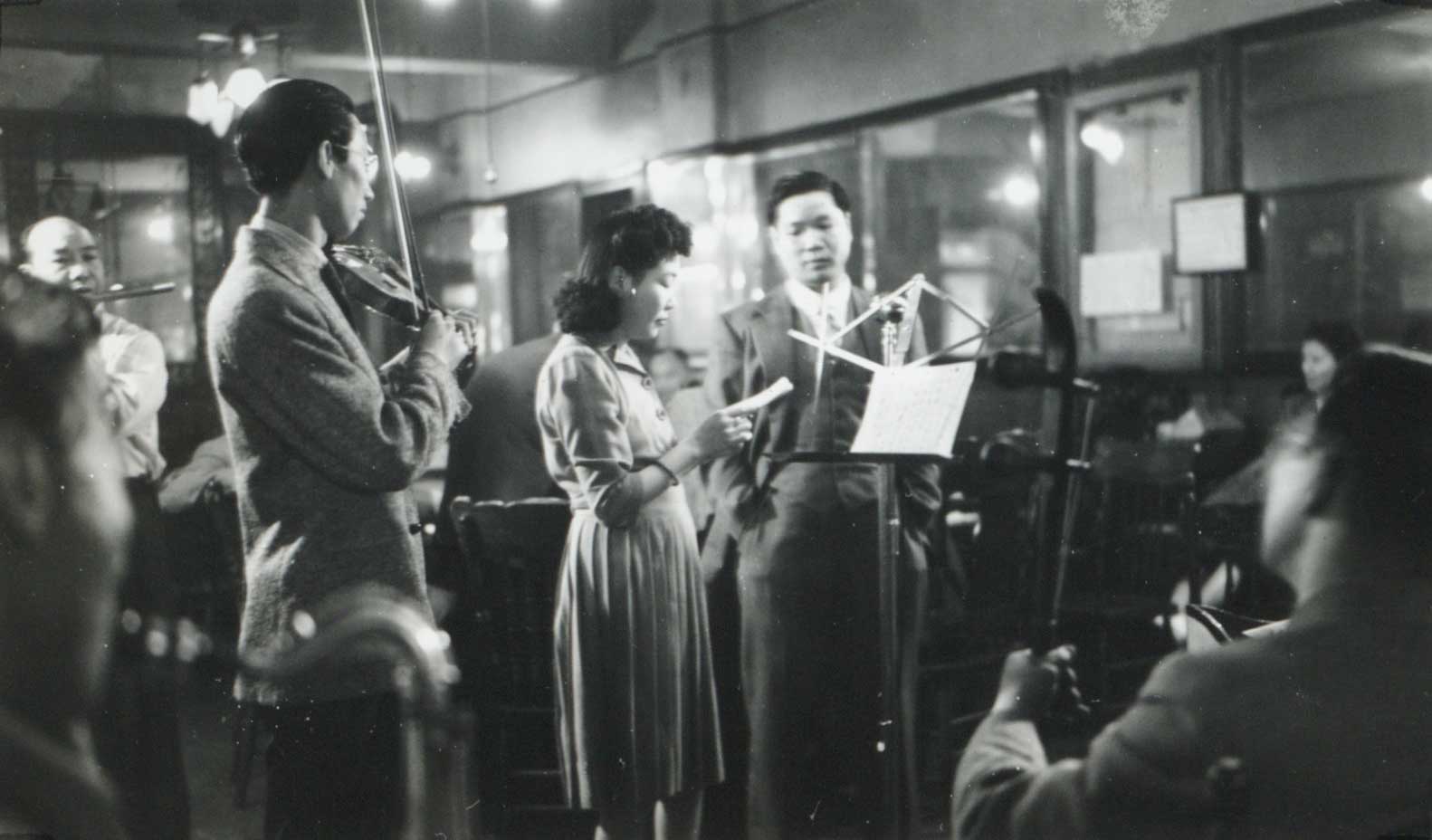
Toronto’s Cantonese opera scene grew through amateur dramatic societies, music clubs, and visiting performers. Amateur ensembles welcomed anyone interested, and members learned singing and movement together. In the 1930s, performers such as D.J. Lumb and his wife Jean Lumb often switched gender roles on stage, reflecting the flexibility of early Cantonese opera in Canada. By 1935, the old Chinatown district had at least three Chinese opera houses including the Chinese United Dramatic Society (Lun Kiu) and Ship Toy Yuen Dramatic Society.
In 1963, Ho Sing-Wah, Billy Hoy, Raymond Jai, Beatrice Jai, and others founded the Yet Hoy Cantonese Music Club, which quickly became a gathering place for local artists and visiting professionals, filling theatres and halls with the sounds of gongs and singing.
Today, organizations such as Starlight Chinese Opera, founded in 2001 by Marianne Wong and now led by Alice Chan, continue this legacy. Women now play a significant role in shaping artistic direction, training performers, and engaging the community through rehearsals, workshops, and performances.
Montréal, Québec
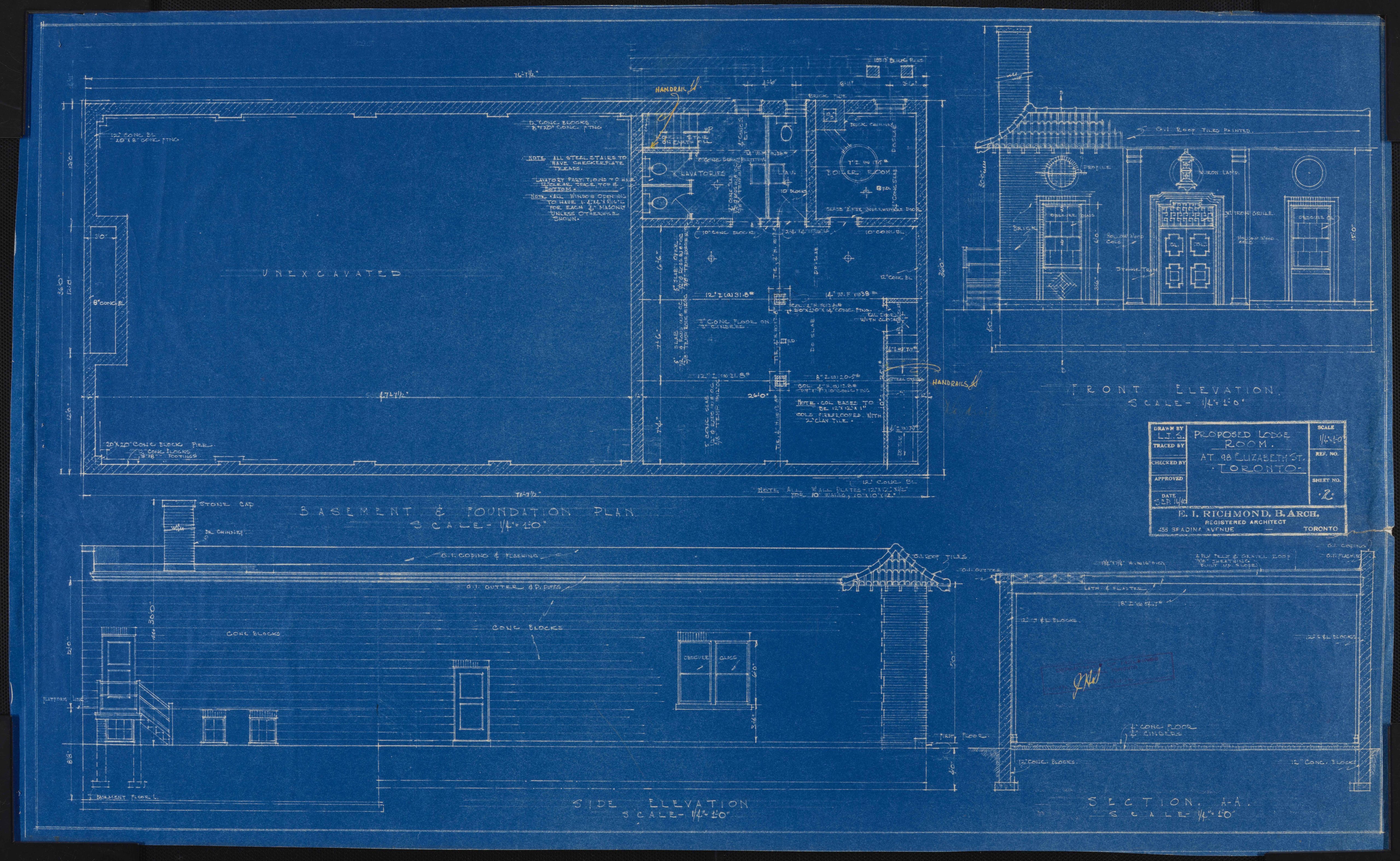
Cantonese opera has been part of Montréal’s Chinatown since the early 1900s, starting as private, clan-based events run by local amateurs. As the community grew, opera moved into public spaces. Between 1913 and 1922, visiting performers appeared at the Théâtre Royal on rue Côté, bringing professional talent to wider audiences.
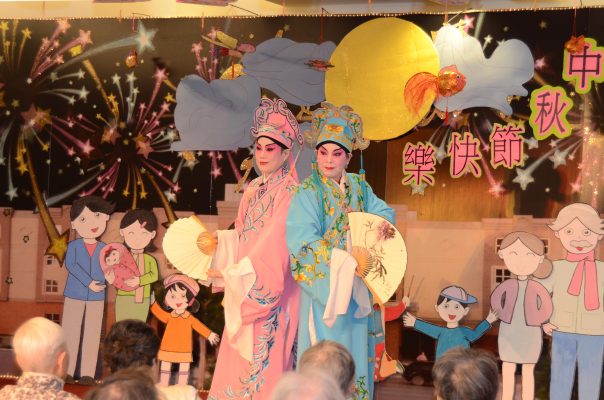
While no permanent professional troupes settled in Montréal, several important amateur groups kept the tradition alive. The Han Yuen troupe, supported by the Chinese Freemasons, staged productions at venues like the Monument-National, between 1954 to the late 1980s. In 1970, a group of enthusiasts founded the Yuet Sing Cantonese Music Club, led by percussionist Cheng Chap Hei. Yuet Sing performed full-length operas and took part in events like the Autumn Moon Festival through to early 1990s. The Chinese Vietnamese Association’s Cantonese Opera Music Group, established in 1987, also performed at many community celebrations. Today, Yuet Sing continues to rehearse in Chinatown and performs for public and private gatherings.
Los Angeles, United States
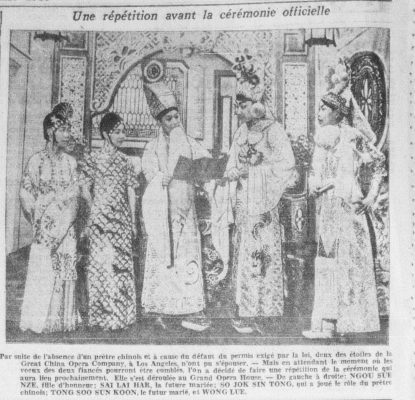
Cantonese opera was staged in early Chinatown theatres like the Chinese Opera Theatre, and today continues through community performances, visiting artists, and groups like Perfect Harmony Cultural Exchange Association.
Guangdong, China
One of the historic birthplaces of Cantonese opera and a training ground for performers.
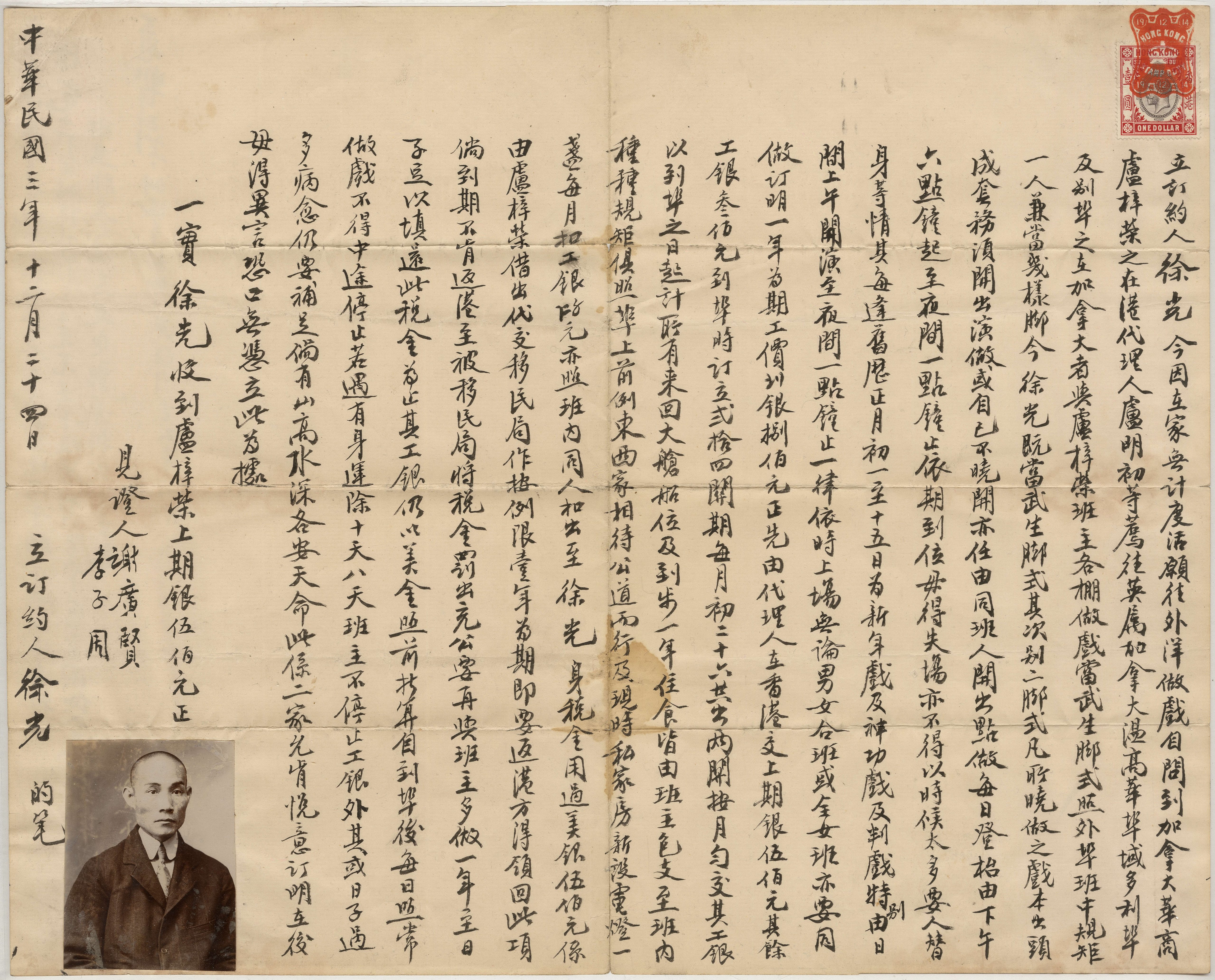
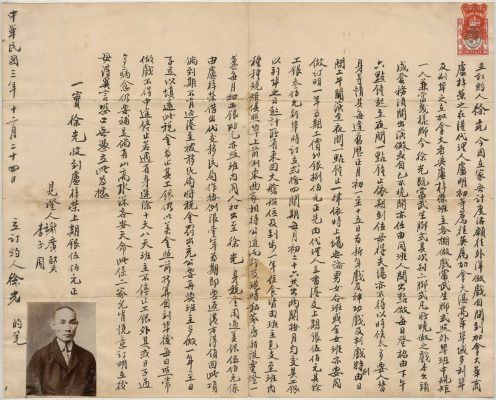
Cantonese opera in Canada, starting in Victoria and Vancouver, emerged through touring networks that linked southern China and Hong Kong to the Americas. Between the 1920s and 1940s, professional opera troupes crisscrossed the globe, touring through cities such as Honolulu, San Francisco, New York, Mexicali, and Havana, performing for Chinese diasporic communities. These circuits crossed Canada, following railways and Chinatowns, making Victoria, Vancouver, Toronto, and Montréal important stops. Touring troupes also appeared in Calgary, Edmonton, Winnipeg, and Moose Jaw.
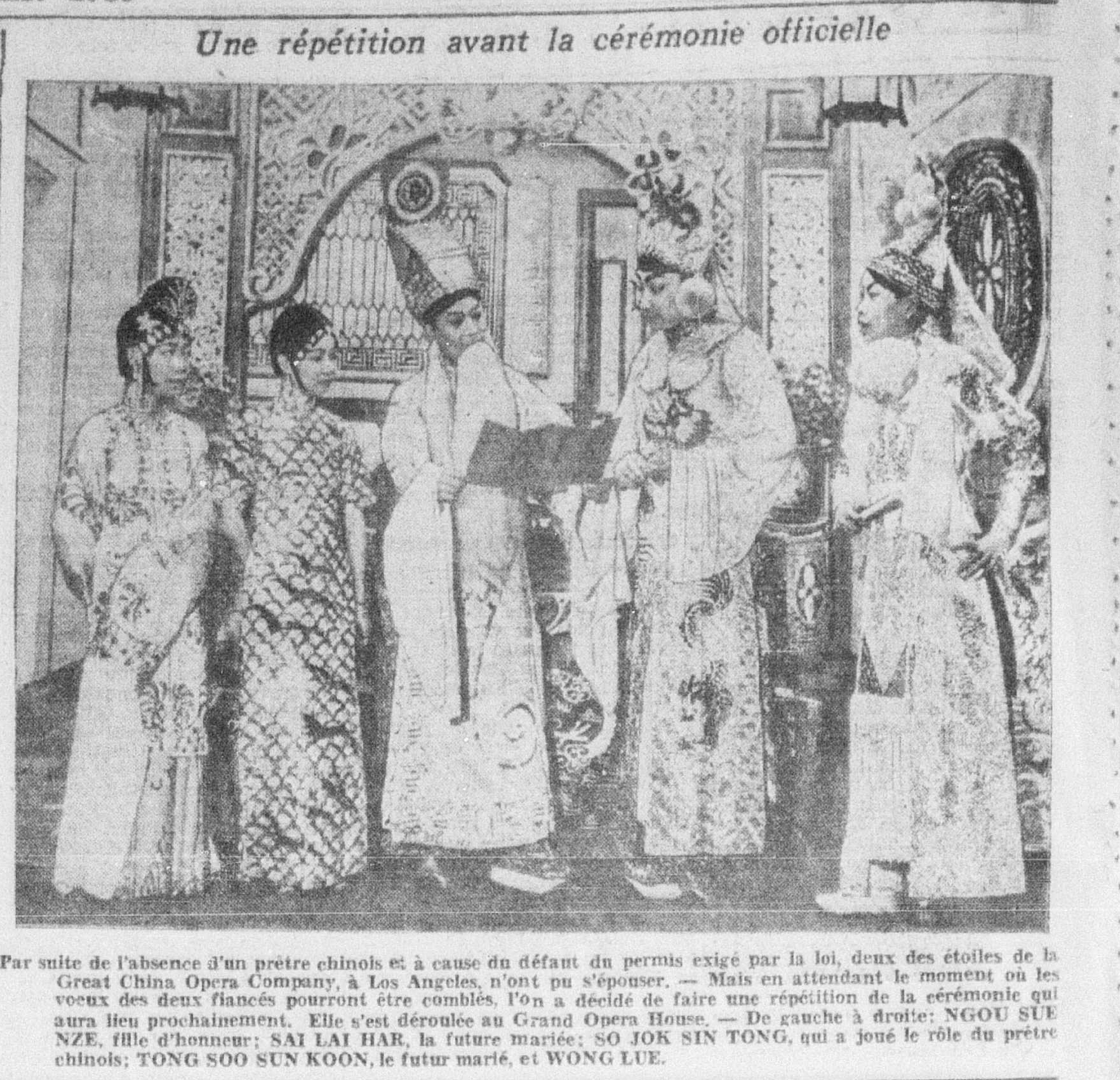
Between 1923 and 1947, the Chinese Immigration Act virtually banned all forms of immigration from China. However, performers could still enter Canada on temporary permits, and a few performers, such as Tse Gar Yin, stayed in the country.
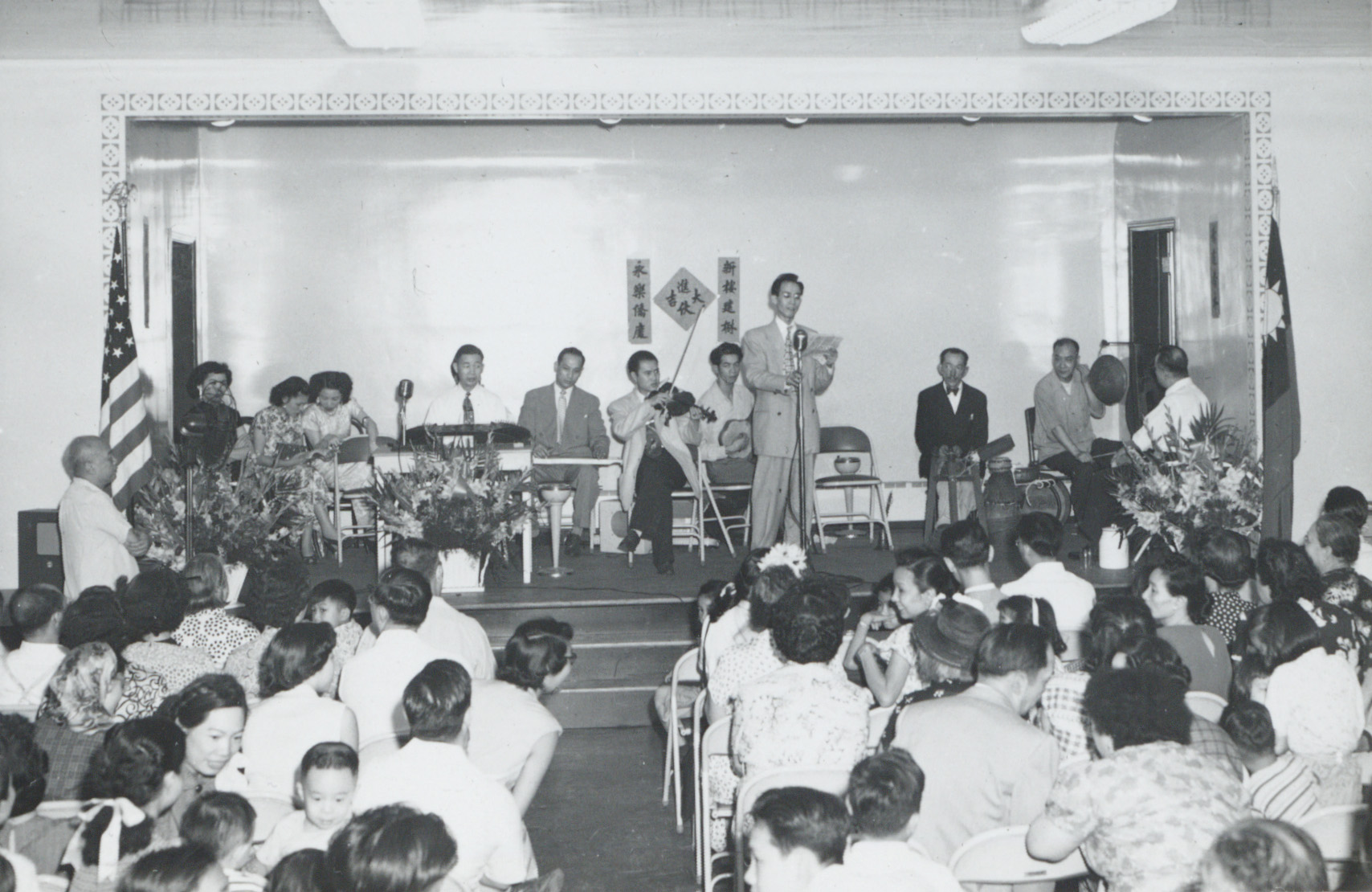
Amateur music clubs played a crucial role in keeping the tradition alive. From the 1930s onward, local opera fans and musicians established opera societies. They performed in theatres, association halls, and community spaces. The tradition’s minimal staging allowed performances to adapt easily to many kinds of venues.
In the past, performances often drew large, dedicated, Cantonese-speaking audiences, with full-length operas filling theatres of over 1,000 seats. Today, audiences are often smaller and aging. At the same time, performers are experimenting with shorter, bilingual productions as well as larger fusion productions to reach wider audiences. These performances can still draw full houses, especially when they are accessible to those unfamiliar with Cantonese opera. In larger Canadian cities, Cantonese opera remains a vibrant but evolving art form, supported by dedicated communities who are finding new ways to connect with future audiences.
The audience loved the story, especially because it was bilingual. It made the opera easier to understand.